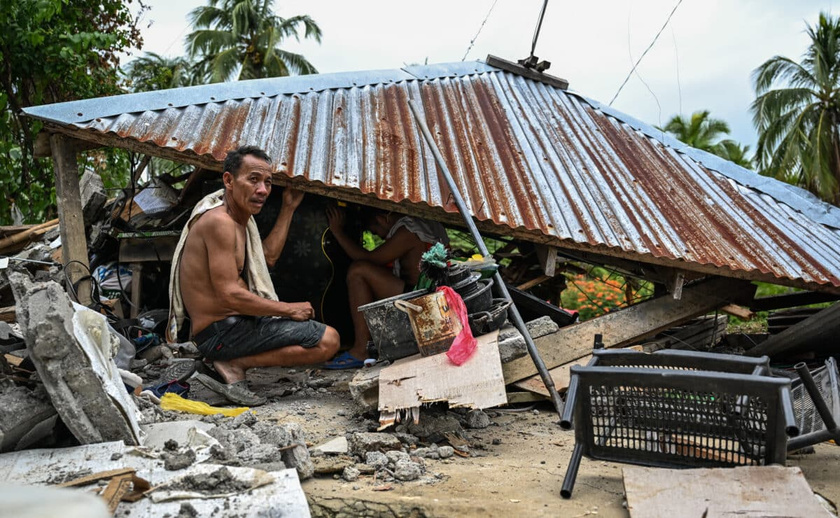
Manay, Davao Oriental — When the earthquake struck before dawn on October 10, 2025, families in Manay ran out of their homes in panic. Some houses cracked beyond repair; others stood, but no longer felt safe. In the days that followed, it was mostly women who stayed awake through the night—listening for aftershocks, calming children, checking on elders, and holding together households shaken by fear and uncertainty.
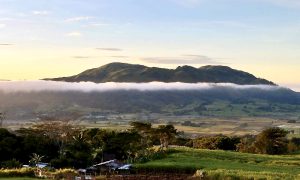
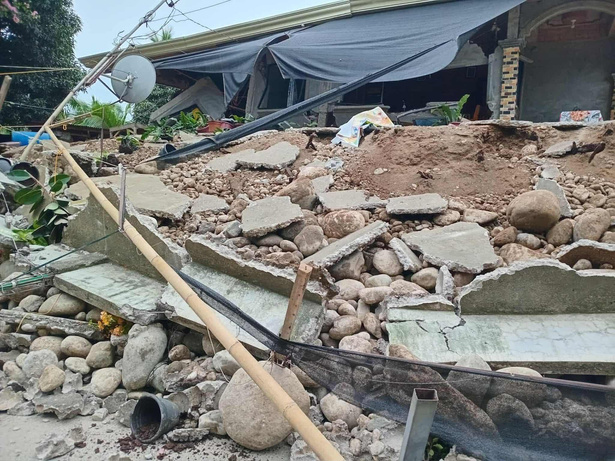
Manay was among the hardest-hit municipalities in Davao Oriental after the offshore earthquake, initially reported at magnitude 7.6 and later revised to 7.4. All 17 barangays sustained damage. Homes collapsed or were severely damaged, schools and health facilities were affected, and repeated aftershocks deepened anxiety—particularly among women, children, and Indigenous families.
Responding Through Trust and Care
Manay is home to the Mandaya Indigenous People, many of whom live in geographically remote areas with long-standing gaps in access to health services, infrastructure, and emergency support. In these contexts, disasters do not strike evenly. Pre-existing inequalities shape who bears the greatest risks and who is left to cope with the aftermath.
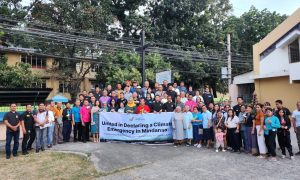
In the days after the earthquake, Mindanao Climate Justice (MCJ) helped convene and shape an interfaith, women-led response, beginning with a rapid needs assessment on October 13 in coordination with the Diocese of Mati’s Social Action Center. MCJ contributed its experience in feminist organizing and psychosocial care to ensure that the response prioritized women’s needs and community trust, while deliberately avoiding bureaucratic delays and the militarized approaches that often accompany disaster operations in rural and Indigenous areas.
For MCJ, this reflects a core commitment: disaster response must strengthen community agency and care—especially where state presence is more often felt through surveillance than support.
Relief, Psychosocial Care, and the Work of Healing
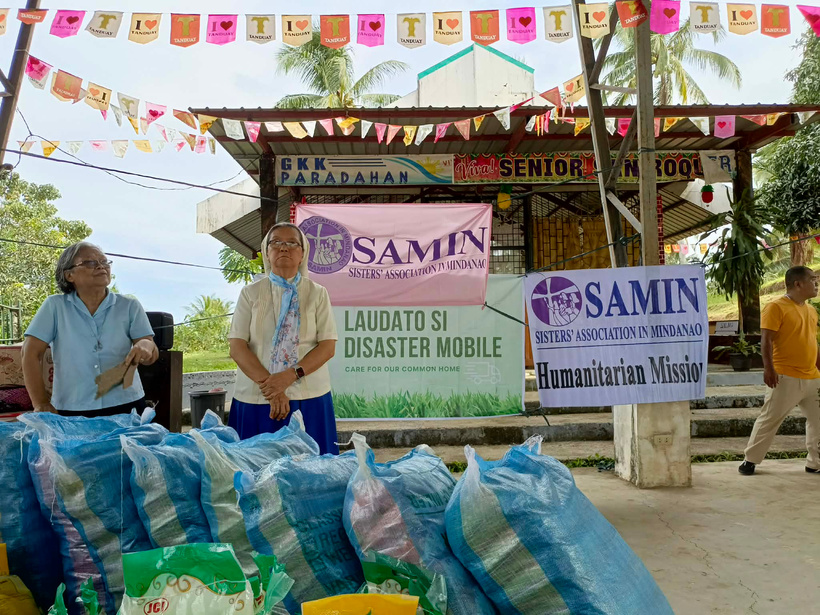
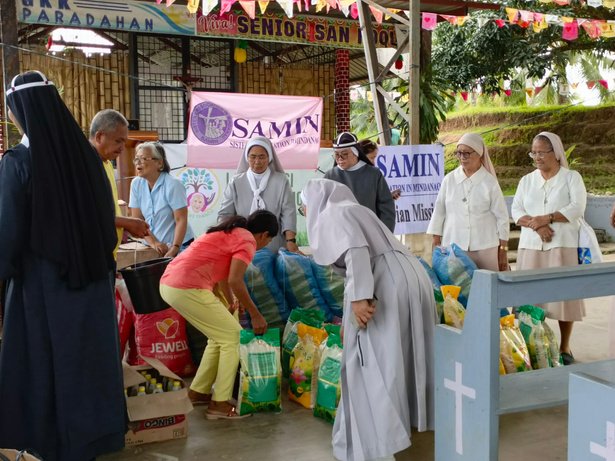
On November 10, 2025, MCJ and its partners reached Barangay San Isidro, with activities centered at GKK Paradahan. The team distributed 150 relief packs to 150 families, reaching an estimated 900 individuals, including around 480 women and girls. Each pack contained essential food items—rice, milk, cooking oil, mung beans, sugar, and coffee—helping families meet immediate needs after weeks of disruption.
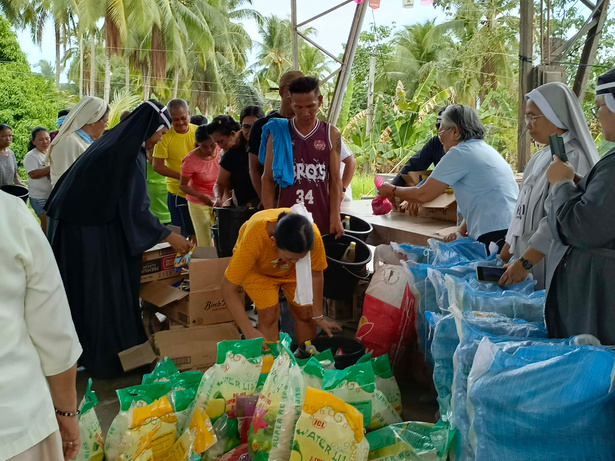
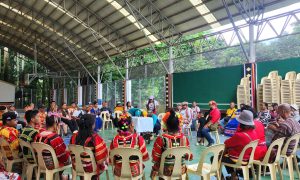
Alongside relief distribution, MCJ helped facilitate a Psychosocial Intervention (PSI) session with around 50 mothers and women caregivers. Many had been carrying the emotional burden of the disaster while continuing to care for children, elders, and injured family members. In a shared circle, women spoke of sleepless nights, fear during aftershocks, and the quiet pressure to remain strong for others.
The session affirmed a reality often overlooked in emergency response: women are central to collective recovery, even as they absorb trauma in silence.
Feminist Solidarity in Practice
The mission was carried out by a 20-member volunteer team composed of women religious, parish and diocesan leaders, and representatives from MCJ and partner networks, including the Missionaries of the Assumption, SAMIN, and the Laudato Si’ Relief Network. Relief goods and volunteers were mobilized using the Laudato Si’ Mobile Disaster Response truck, enabling access to affected communities.
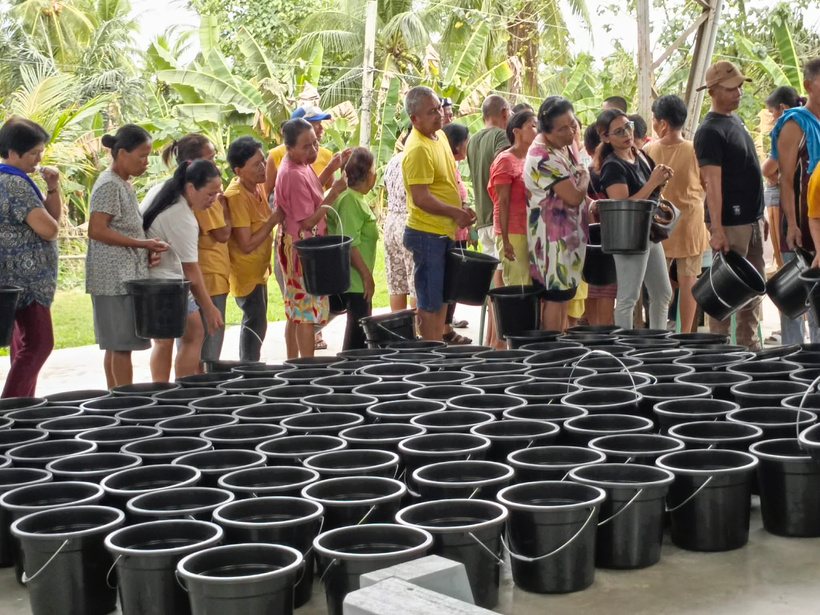
This work went beyond the delivery of aid. It reflected a form of feminist solidarity in practice—one that values listening, shared responsibility, and accompaniment, and challenges disaster responses that treat communities as passive recipients rather than active agents of recovery.
Beyond the Emergency
The Manay mission strengthened partnerships with Mandaya women leaders and local organizers, laying the groundwork for continued collaboration in disaster preparedness, psychosocial care, and climate justice work. It also contributed to expanding a pool of women and community volunteers equipped to respond to emergencies with both practical skills and a politics of care.
As earthquakes, storms, and other climate-related disasters become more frequent and severe, MCJ affirms that response and recovery must go beyond immediate relief. They must address the unequal burdens carried by women and Indigenous communities and support the long, often invisible work of healing that continues long after emergency teams leave.
In Manay, that work is already underway—held together, as it so often is, by women.