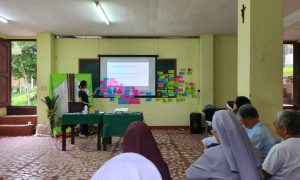
Decarbonization and Justice in Mindanao
November 18, 2025
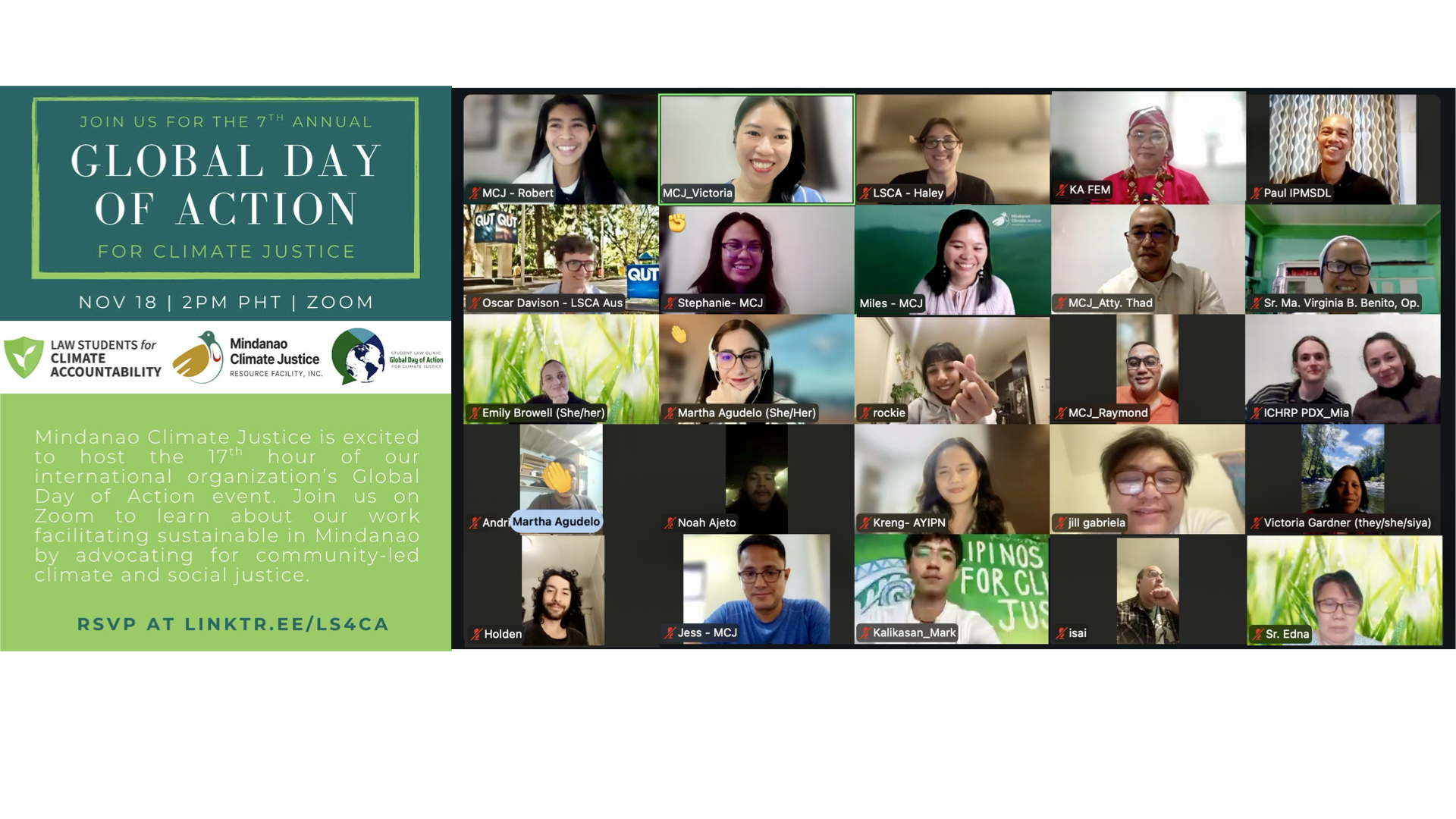
Mindanao Climate Justice (MCJ) was honored to participate in the 7th Annual Global Day of Action on Climate Justice, organized by the Law Students for Climate Accountability (LSCA) with partner institutions across 16 countries.
This year’s gathering coincided with COP30, where key climate negotiations took place in Brazil. While high-level talks unfolded on the global stage, the Global Day of Action served as a parallel space—a platform where the stories, struggles, and demands of marginalized and frontline communities could be heard. These are voices that rarely reach major UN forums, despite bearing the brunt of the climate crisis.
MCJ’s one-hour session, “Decarbonization and Justice in Mindanao,” highlighted how climate solutions must center Indigenous rights, ancestral domain protection, land defense, and community-led transitions in order to be truly just.
Defending Ancestral Domains: Opening Reflections
The session opened with a powerful message from Hon. Eufemia “Ka Femia” Cullamat, Lumad leader and former Bayan Muna Representative.
Ka Femia emphasized that ancestral land is not only a source of livelihood but also the foundation of culture, history, and identity. She spoke of the ongoing threats to Indigenous territories—militarization, displacement, and extractive projects—and called for a just transition rooted in self-determination and respect for Indigenous governance systems.
Mapping Mindanao’s Ecological and Social Realities
Fr. Raymond Ambray, priest of the Diocese of Tandag and long-time Indigenous Peoples’ advocate, situated Mindanao’s environmental challenges within its political and historical context.
He explained how ecological destruction, climate vulnerability, and conflict intersect in Mindanao, underscoring the urgent need for climate action that recognizes community agency and addresses structural injustice.
See Fr. Ambray’s presentation here.
Criminalization of Environmental Defenders
Human rights lawyer Atty. Thaddeus Tuburan (UPLM) presented cases illustrating the growing criminalization of environmental and land rights defenders, including:
- the Lianga Massacre,
- the Talaingod 13 fabricated charges, and
- continuing land struggles in Bukidnon.
His analysis showed how the legal system—often influenced by political and corporate interests—can be weaponized against those defending their territories, echoing global patterns of repression against Indigenous defenders.
Testimonies from Panaad Volunteers: Solidarity Across Borders
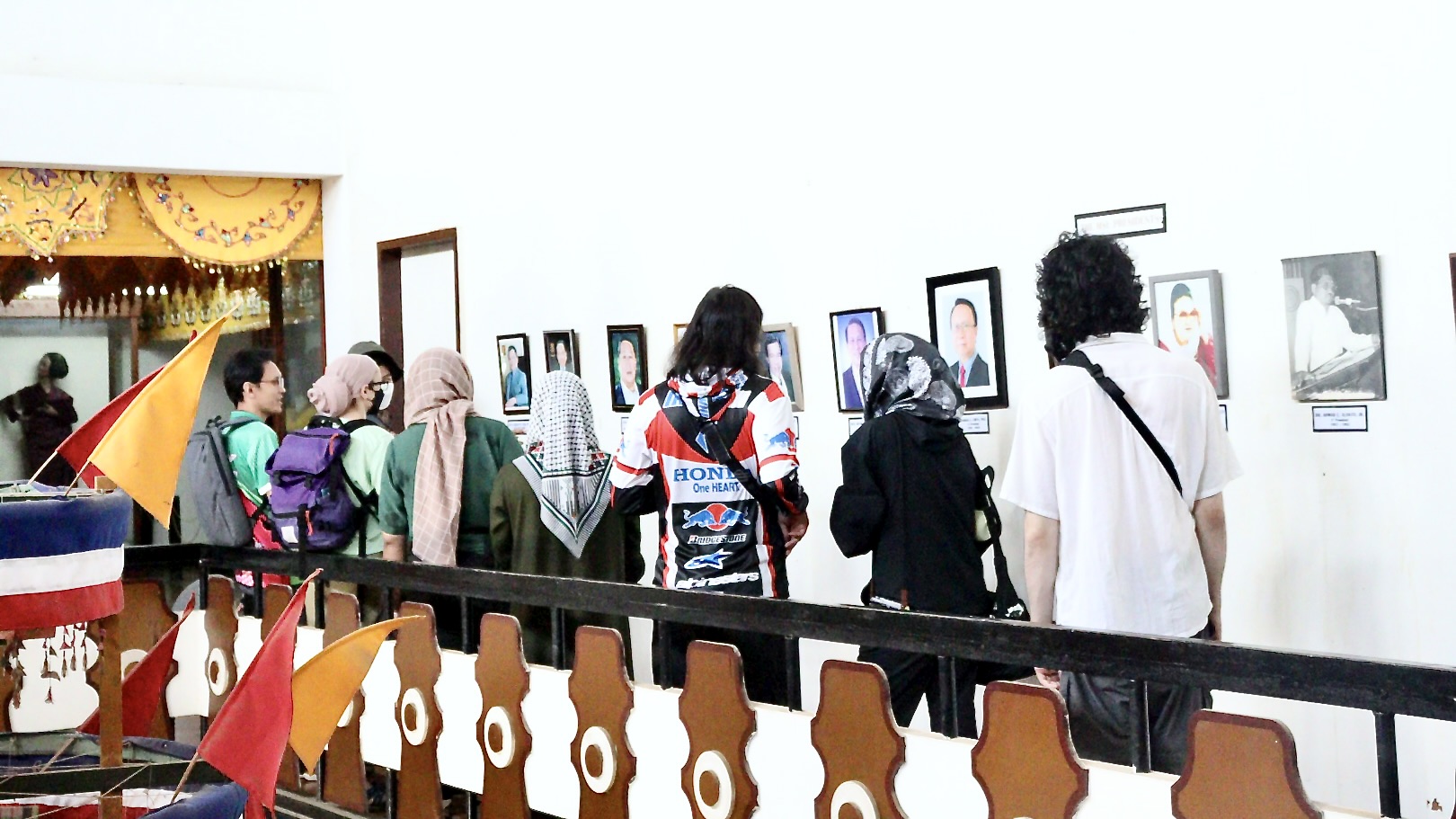
Two Panaad Volunteers, Stephanie and Robert, shared reflections from their recent exposure trip in Mindanao.
They described the generosity, courage, and clarity of the communities they met—from Marawi to Bukidnon to Lumad schools—and reflected on their responsibility to carry these stories into their own networks, professions, and academic spaces abroad.
Their testimonies affirmed the importance of international solidarity grounded in humility, learning, and accountability.
Youth Reflections: Climate Justice as an Intergenerational Responsibility
Nazreema Asimpin, from Kinaiyahan Youth Climate Justice in Mindanao, spoke about the intertwined crises of displacement, environmental degradation, and conflict in Marawi.
She highlighted the vital role of youth in defending the future and sustaining struggles for climate and environmental justice.
Final Synthesis: Global Solidarity and Collective Struggle
The session closed with a powerful synthesis from Paul Belisario, Global Coordinator of the International Indigenous Peoples Movement for Self-Determination and Liberation (IPMSDL).
Drawing together the themes of ancestral stewardship, militarization, extractivism, and resistance, Paul situated Mindanao’s struggles within global Indigenous and frontline movements.
He emphasized that decarbonization without justice and self-determination is another form of dispossession, and that any genuine transition must recognize the demands and leadership of those defending land and life.
Take Action: LSCA’s Global Letter-Writing Campaign
As part of the Global Day of Action, LSCA launched an international letter-writing campaign urging bar associations and legal regulators to uphold climate accountability and recognize the ethical duties of lawyers in the climate crisis.
We encourage partners and allies to join this action: Sign THE CLIMATE JUSTICE PLEDGE
Your voice contributes to a global call for legal institutions to support climate justice and protect frontline communities.
Thank You
MCJ extends heartfelt thanks to all speakers, Panaad Volunteers, LSCA organizers, and participants from around the world. Your solidarity and engagement strengthen the collective effort for justice, dignity, and the protection of our communities and environment.
Padayon. The struggle continues.