Bukidnon’s Seven Lumad Peoples Gather for Indigenous Peoples’ Sunday
In Bukidnon, representatives of seven Lumad peoples gathered with Church, youth, and civil-society partners, affirming that defending ancestral domains means defending culture, human rights, watersheds, and the future of communities across Mindanao.
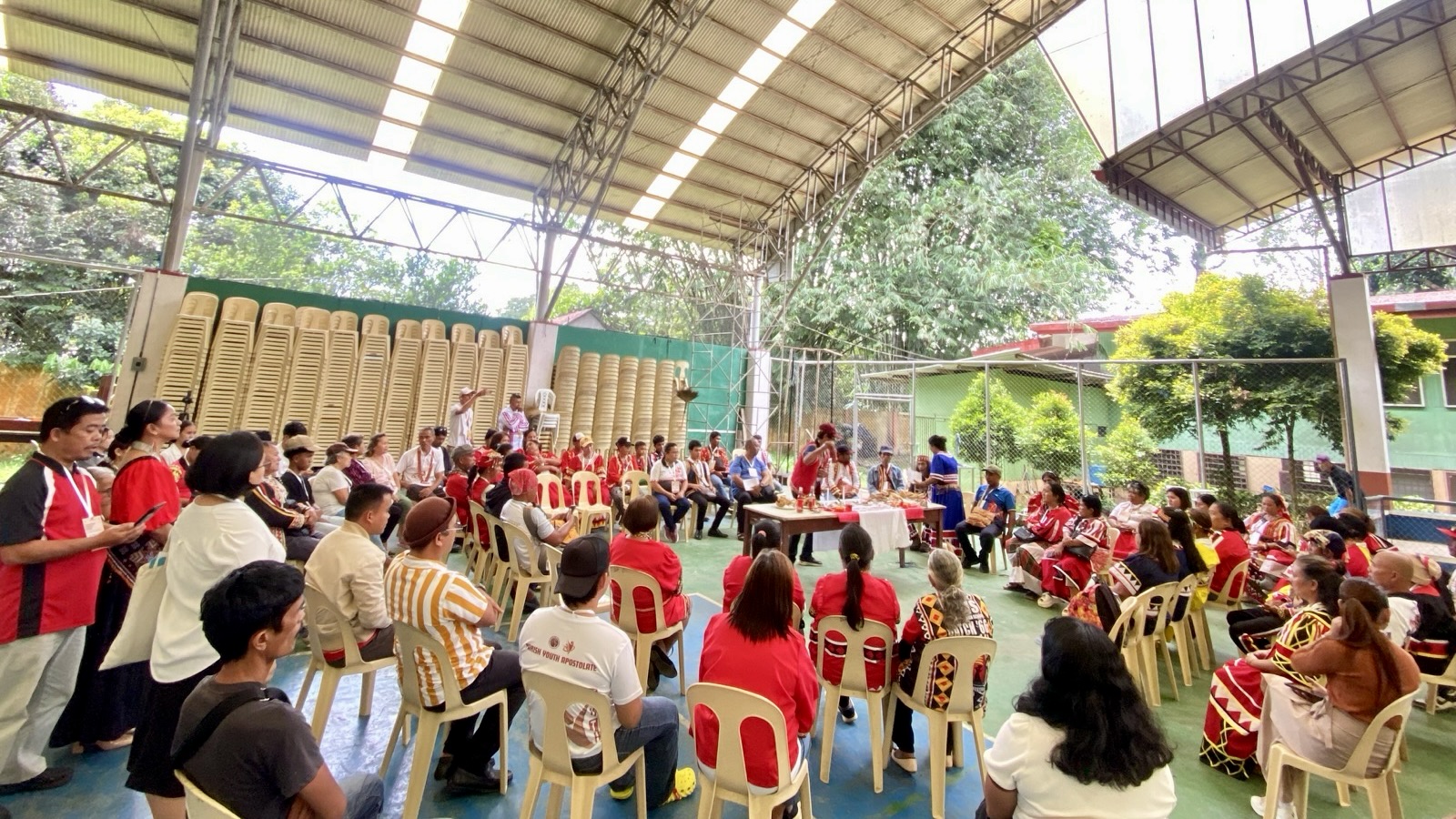
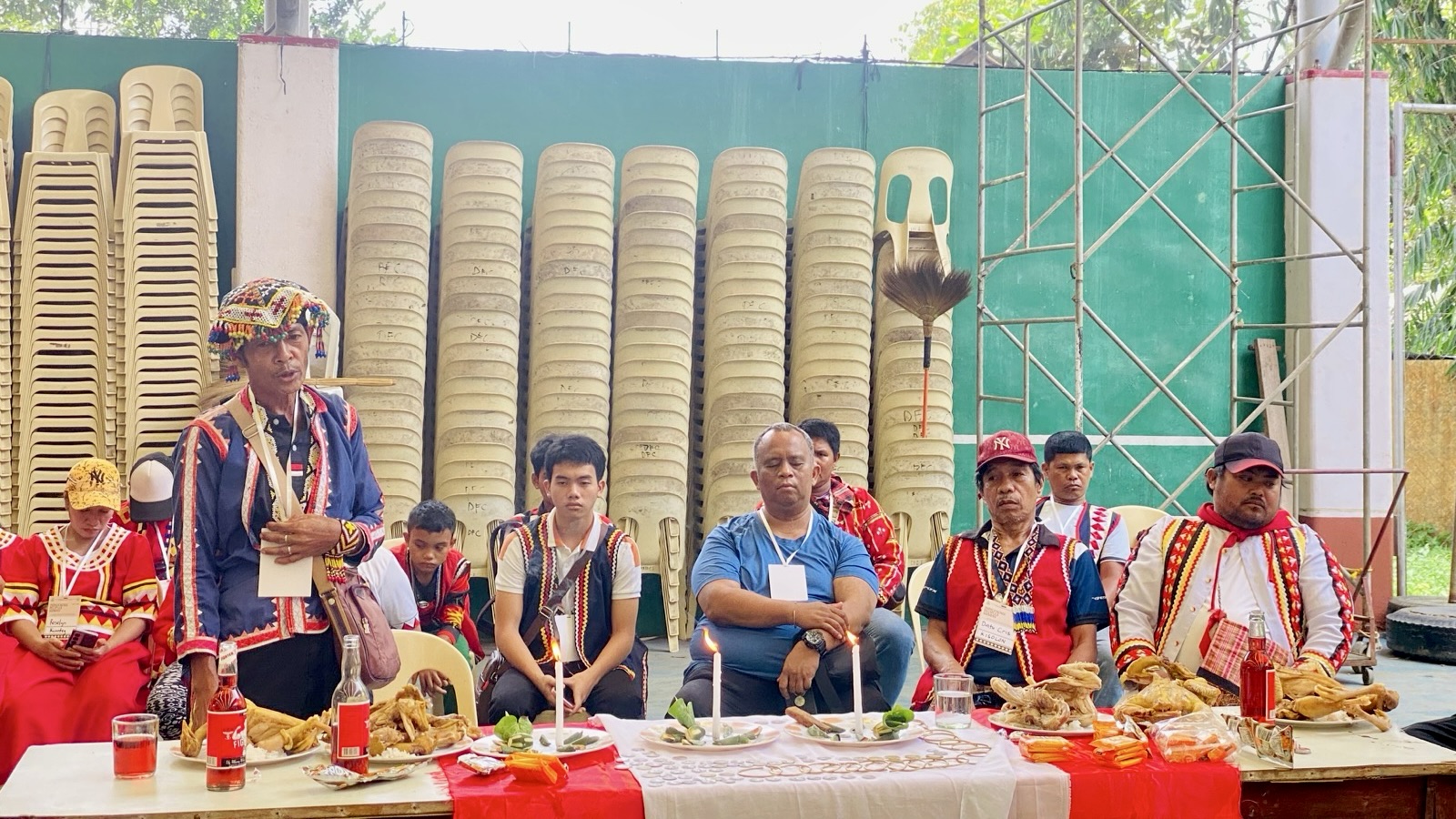
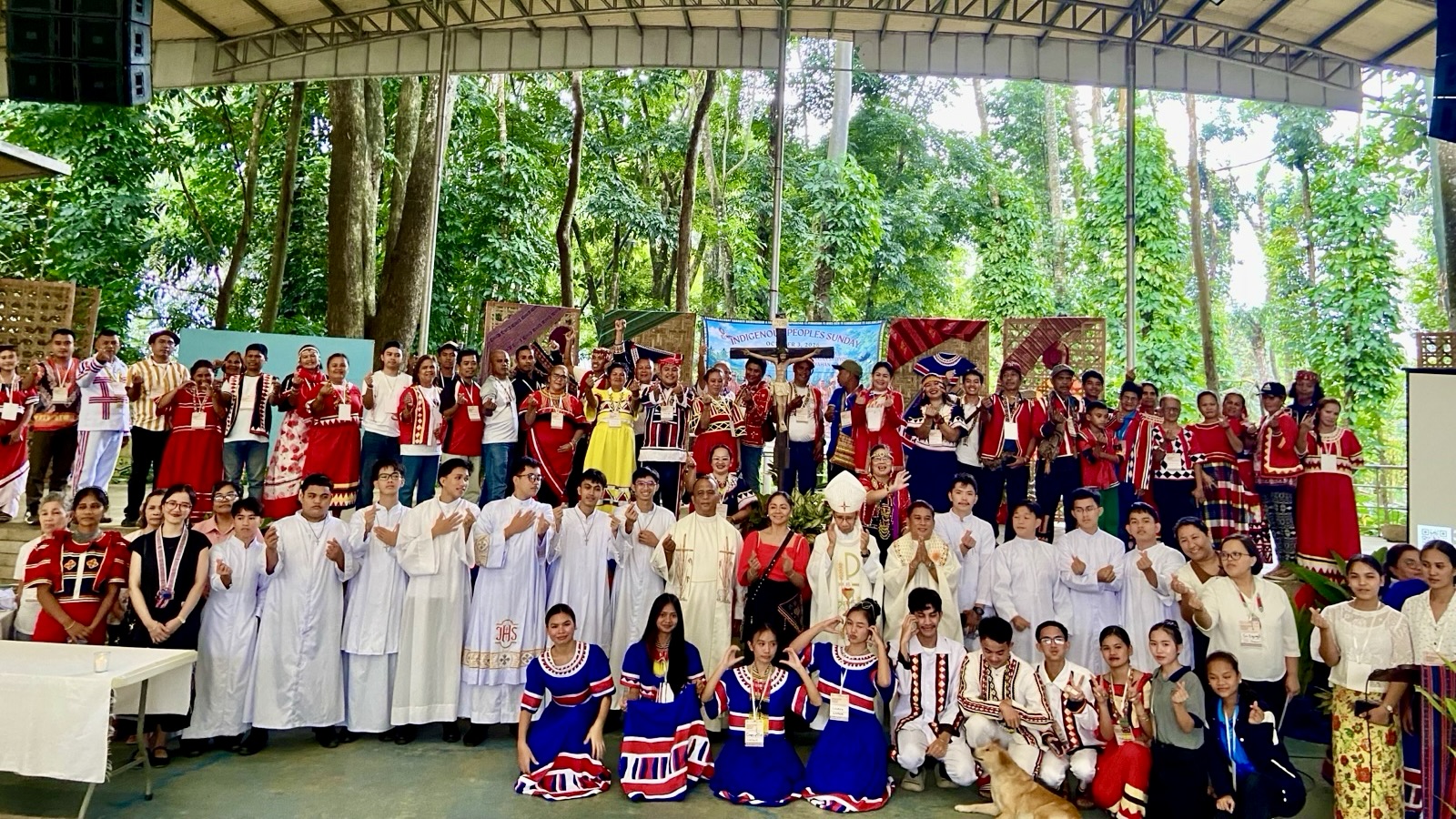
MALAYBALAY CITY, Bukidnon, Philippines — Before the speeches began, elders and participants gathered in a circle for an opening ritual led by Datu Mandesign Talasan, a traditional Indigenous leader from Malaybalay.
The ritual grounded the celebration in the relationship among land, ancestors, community, and the Creator. It affirmed a principle repeated throughout the day: ancestral land is not simply property. It sustains life, memory, culture, spirituality, and the inheritance of generations yet to come.
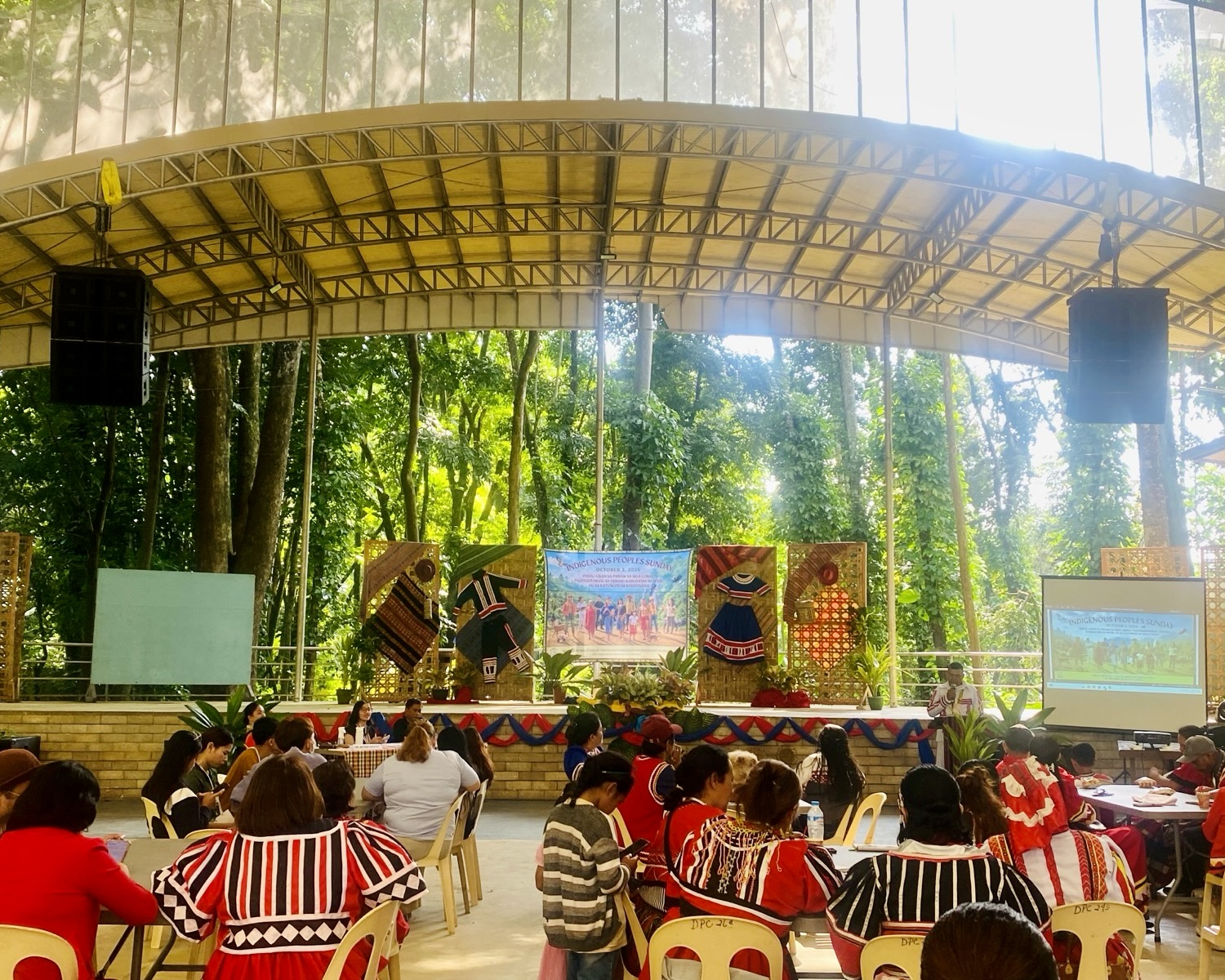
Representatives of Bukidnon’s seven Lumad peoples—the Bukidnon, Higaonon, Manobo, Matigsalug, Talaandig, Tigwahanon, and Umayamnon—came together on October 3, 2026, at the Diocesan Pastoral Center in Impalambong, Malaybalay City, for the Diocese of Malaybalay’s observance of Indigenous Peoples’ Sunday.
The gathering drew 88 participants representing 38 parishes, mission stations, Indigenous communities, schools, and partner organizations. It was organized by the Indigenous Peoples Apostolate of the Diocese of Malaybalay, the Diocese’s ministry working alongside Indigenous communities.
Bukidnon is both the name of the province and one of its Indigenous peoples. The province is home to seven distinct Indigenous peoples whose communities have long inhabited and cared for different parts of what is now Bukidnon.
Lumad is a Cebuano word meaning native or Indigenous. It has been used as a collective identity by many of Mindanao’s non-Moro Indigenous peoples, particularly in shared struggles for ancestral land and self-determination.
But the term does not erase their differences. Each people has its own language, territory, customary laws, leadership, spirituality, knowledge, and history.
At the center of the celebration was the theme:
“Pakig-uban sa Panaw sa mga Lumad, Pagpasidungog sa Tanang Kabuhatan sa Diyos, ug sa Katungod sa Kinaiyahan.”
Journeying with the Lumad, honoring all of God’s creation, and affirming the rights of nature.
The gathering took place during National Indigenous Peoples Month, observed every October under Proclamation No. 1906 of 2009.
Throughout the day, cultural and spiritual celebration remained inseparable from the communities’ present realities. Through ritual, testimony, music, prayer, and collective reflection, participants addressed displacement, discrimination, environmental destruction, and the continuing defense of ancestral domains.
Ancestral domain is home, history, and future
Representatives of the seven Lumad peoples shared testimonies drawn from their distinct histories and present realities.
Their experiences were not identical. Each people spoke from its own territory, culture, and community life. Yet their testimonies returned to connected concerns: the defense of ancestral territories, the survival of culture, the dignity and safety of families, and the right of communities to decide their own future.
Among the community sharers was Bae Rhoda Calupe, a Talaandig leader from the Miarayon-Lapok-Lirongan-Tinaytayan Talaandig Tribal Association, or MILALITTRA, community in Talakag.
Bae Rhoda spoke about 72 families from Sitio Gabunan, Barangay Lapok, who were displaced after their homes were demolished on January 12, 2022.
Families lost their homes and personal belongings. Children, elders, and other members of the community lived through fear, distress, and continuing uncertainty. More than four years later, the families continue their effort to return to their land and seek justice.
Their struggle is not simply a dispute over a piece of property.
Under the Indigenous Peoples’ Rights Act of 1997, or IPRA, an ancestral domain encompasses territories traditionally occupied, possessed, used, and cared for by Indigenous Cultural Communities and Indigenous Peoples, including lands, forests, waters, burial grounds, sacred places, and natural resources.
The law recognizes the cultural and spiritual bonds between Indigenous communities and their territories and describes ancestral domains, under the Indigenous concept of ownership, as private but community property belonging to generations.
For Indigenous communities, displacement can therefore mean losing much more than a house. It can sever access to farms, water, food, medicine, livelihoods, sacred places, and the spaces where younger generations learn their language, history, culture, and responsibilities to their community.
Bae Rhoda thanked the Diocese of Malaybalay and Mindanao Climate Justice (MCJ) for accompanying the community. But her testimony carried an unfinished demand: displaced families must be able to live with dignity and security and pursue justice for their community.
The testimonies throughout the celebration affirmed that Indigenous Peoples are not simply beneficiaries of Church, government, or environmental programs. They are peoples with their own knowledge, leadership, customary institutions, and rights over their ancestral domains.
Pakig-uban, or journeying together, begins by listening to communities in their own words and recognizing their authority over their stories, territories, and decisions.
Culture cannot live without land
In her response, Junelie “Bayang” Barrios, a Manobo artist and trustee of MCJ from Bunawan, Agusan del Sur, spoke about the inseparable relationship among identity, culture, and ancestral land.
Bayang made clear that she did not claim to speak for every Lumad people. Their languages, traditions, histories, and experiences are distinct. She spoke as a Manobo woman, drawing from her own life and her people’s collective memory.
She stood before the gathering not only as an invited artist, she said, but as a fellow Lumad and a sister from Mindanao.
Bayang recalled a time when discrimination made it difficult to claim and take pride in her Manobo identity. Lumad people, she said, have often been portrayed as ignorant, backward, or incapable of deciding for themselves.
Such prejudice has consequences. When Indigenous Peoples are treated as less capable of determining their own future, their voices can more easily be disregarded in decisions affecting ancestral territories, natural resources, and development.
Her name carries part of that journey.
Bayang was born on June 12, Philippine Independence Day. Following a family practice, the first words heard by her mother became her name: “Bayang magiliw,” the opening words of the Philippine national anthem.
As she grew older, she came to understand that bayan is not merely a flag, a map, or a song.
“Ang bayan mao ang katawhan.”
The nation is its people.
For Bayang, the people have land, water, history, culture, dignity, and rights. Freedom becomes incomplete when Indigenous communities are driven from their territories or excluded from decisions about their future.
Many people admire Indigenous clothing, music, and dance but are less willing to listen when Lumad communities speak about land, rights, and self-determination.
Bayang named that contradiction directly:
“Ganahan sila sa atong kultura isip dekorasyon, apan dili nila tahuron ang yuta diin gikan ang maong kultura.”
They like our culture as decoration, but they do not respect the land from which that culture comes.
Culture cannot easily be separated from territory. Language, songs, food, healing practices, rituals, customary laws, and collective memory grow from relationships with particular lands, waters, forests, ancestors, and other living beings.
Through music, Bayang said, she found her way back to her roots. Indigenous songs became vessels of memory—the voices of ancestors, the pain of losing land, the courage to stand, and the hope communities refuse to surrender.
“Ang atong awit mao ang atong handumanan.”
Our song is our memory.
The cultural presentations of participating communities gave visible expression to this relationship among territory, identity, memory, and community life.
Bayang also cautioned against praising Lumad communities as “guardians of the forest” while leaving them without adequate services, protection, or respect for their rights.
Indigenous Peoples are not cultural symbols or decorations for environmental programs. They are rights-holders with their own knowledge, customary institutions, leadership, and aspirations for the future.
Why Bukidnon matters beyond Bukidnon
Bukidnon is a landlocked upland province in north-central Mindanao. Its mountains and forests form part of the headwaters of major river systems that sustain farms, Indigenous and rural communities, towns, and cities within and beyond the province.
These uplands are not empty wilderness. They include ancestral territories—places where Indigenous communities have lived, practiced their spirituality, developed systems of governance, and cared for land and water across generations.
The Mount Kitanglad and Mount Kalatungan ranges are protected areas as well as ancestral and sacred landscapes for Indigenous communities.
In February 2024, the Philippines placed the two ranges on its UNESCO Tentative List for possible future nomination as a World Heritage Site.
Along eastern Bukidnon stretches the Pantaron Range, an extensive mountain landscape whose forests form important watersheds and habitats and sustain Indigenous communities across several provinces.
What happens in these uplands does not necessarily remain there.
Large-scale forest loss, poorly managed land conversion, mining and quarrying, infrastructure development, and other major disturbances can alter watersheds and, depending on their location and scale, contribute to erosion, sedimentation, water-quality problems, landslide hazards, and flood risk.
Climate change can compound these pressures through changing rainfall patterns, extreme precipitation, drought, and other hazards.
Urban flooding has many causes—including drainage, land use, settlement patterns, infrastructure, and watershed conditions. Protecting upland forests and river basins is therefore one part of a broader approach to water security and climate resilience.
But the defense of these territories is not important merely because downstream cities benefit from them.
It is first a question of Indigenous Peoples’ rights, survival, and self-determination.
Bukidnon is also a landscape shaped by a long history of defending forests, rivers, ancestral lands, and communities.
During the gathering, MCJ adviser Meg Yarcia recalled the Bukidnon 13, farmers from San Fernando who travelled to Manila in 1989 and staged a hunger strike at the central office of the Department of Environment and Natural Resources.
Their protest demanded action against destructive commercial logging in Bukidnon. The campaign became part of the broader public pressure that contributed to the declaration of a logging moratorium in the province in 1990.
Meg also remembered Fr. Nery Lito Satur, a priest of the Diocese of Malaybalay who stood with communities protecting Bukidnon’s forests.
Fr. Satur was killed on October 14, 1991, while involved in efforts to enforce the logging ban. His death remains part of the Diocese’s history of defending creation and accompanying communities whose lives depend on the land.
More than two decades later, violence again took the lives of land and environmental defenders in the province.
Jimmy Liguyon, an Indigenous leader and village chairperson from San Fernando, resisted mining and the encroachment of commercial interests on Indigenous territory.
According to Human Rights Watch, relatives reported that Liguyon was killed because he refused to sign an agreement connected to a proposed mining investment. On March 5, 2012, he was shot and killed in front of family members.
Two months later, on May 9, 2012, Margarito “Boy” Cabal, an organizer of the Save Pulangi Alliance, was shot and killed near his rented residence in Kibawe, Bukidnon. Cabal had publicly opposed the proposed Pulangi V hydroelectric dam.
Human rights organizations documented the killings of Liguyon and Cabal in connection with their work as land and environmental advocates.
Their cases illustrate the dangers that can confront people challenging powerful interests over land, forests, minerals, and water.
Remembering these defenders cannot end with tribute. Their lives raise continuing questions of protection, investigation, accountability, and justice for families and communities.
They also remind us that many of Bukidnon’s remaining forests and watersheds have survived not by accident, but because communities, Indigenous leaders, farmers, Church people, and other advocates have repeatedly organized to defend them.
No rights of nature without the rights of people
In her address, MCJ adviser Meg Yarcia explained kabuhatan, the Cebuano word for creation, as more than a collection of separate living things.
It encompasses relationships among land, water, forests, plants, animals, human communities, ancestors, and the Creator.
Human beings do not stand outside nature. People live within creation, depend upon it, and carry responsibilities toward it.
This understanding resonates with the Catholic teaching of integral ecology. In Laudato Si’, Pope Francis describes ecological degradation and human suffering as interconnected dimensions of a single crisis.
Meg made that relationship concrete:
“Ang dalamhati ng kalikasan ay dalamhati ng tao, lalo na ng mahihirap. Kapag sinaktan ang lupa, may taong nagugutom. Kapag nilason ang ilog, may batang nawawalan ng malinis na tubig. Kapag inagaw ang lupang ninuno, may pamilyang nawawalan ng tahanan at may komunidad na nahihiwalay sa kaniyang kasaysayan.”
The suffering of nature is also the suffering of people, especially the poor. When the land is harmed, someone goes hungry. When a river is poisoned, a child loses clean water. When ancestral land is taken, a family loses its home and a community is separated from its history.
For MCJ, the defense of creation therefore cannot be separated from human rights, Indigenous Peoples’ collective rights, and self-determination.
But nature does not matter only because people benefit from it. A river has value beyond the water people can take from it. A forest has value beyond its timber, minerals, or commercial potential.
The gathering placed the emerging legal language of the rights of nature in conversation with Catholic teaching and the knowledge systems of Indigenous communities.
These traditions may share important principles, but they are not interchangeable. Each Indigenous people has its own customary laws, spirituality, knowledge, and relationship with its territory.
The rights-of-nature movement seeks legal recognition of ecosystems as rights-bearing entities, with rights that may include the ability to exist, regenerate, maintain ecological processes, be restored after damage, and receive legal representation.
The Philippines does not currently have a comprehensive national Rights of Nature law.
Senate Bill No. 558, or the proposed Rights of Nature Act of 2025, proposes recognizing natural ecosystems, populations, and processes as legal entities possessing fundamental rights.
Existing constitutional, environmental, and Indigenous-rights protections nevertheless already provide legal foundations for protecting ecosystems and communities.
Meg emphasized the relationship between rights and public responsibility:
“Ang mga pamayanan ang may karapatan. Ang pamahalaan ang may tungkuling igalang, pangalagaan, at tuparin ang mga karapatang iyon. Kapag naninindigan ang mga pamayanan, hindi sila nanghihingi ng pabor. Naniningil sila sa pamahalaan ng tungkulin nito.”
Communities are the rights-holders. The government has the duty to respect, protect, and fulfil those rights. When communities assert their rights, they are not asking for a favor. They are demanding that the government fulfil its duty.
Recognizing the rights of nature must also never become another justification for removing Indigenous Peoples from territories they have governed and cared for across generations.
Conservation that forcibly displaces communities, disregards customary laws, or excludes Indigenous Peoples from decisions over their ancestral domains risks reproducing dispossession under the language of environmental protection.
Bayang stated the principle plainly:
“Ang hustisya magsugod sa pagpahunong sa inhustisya.”
Justice begins by stopping injustice.
For Bayang, a singer and cultural worker, creation is also like a song:
“Adunay tingog ang suba, kalasangan, hangin, ug kabukiran.… Kon putlon ang kalasangan, hugawan ang suba, hukayon ang bukid, o papahawaon ang Lumad, madaot ang tibuok awit.”
The river, forest, wind, and mountains have voices.… When the forest is cut, the river is polluted, the mountain is excavated, or the Lumad are driven away, the entire song is broken.
For MCJ, the defense of creation and the defense of people are therefore not competing causes. They are interconnected struggles for dignity, ecological integrity, accountability, and justice.
When policy enables extraction
The pressures confronting ancestral domains do not arise only from illegal activities. Mining, forestry, plantations, dams, infrastructure, and other large-scale projects can also proceed through government laws, permits, concessions, leases, and development policies.
The Philippine Mining Act of 1995 provides the legal framework for mineral agreements and financial or technical assistance agreements.
For Indigenous communities, however, the existence of a government permit does not settle the most important questions:
Whose territory is affected? Who participated in the decision? Was consent freely given? Who receives the benefits? Who bears the environmental and social risks?
Free, prior, and informed consent, or FPIC, is intended to ensure that Indigenous communities can make informed decisions about projects affecting their ancestral domains according to processes that respect their rights and customary institutions.
Consent has meaning only when communities are able to deliberate without coercion or intimidation and when their decisions are respected.
In 2026, the National Commission on Indigenous Peoples approved revised FPIC guidelines.
Human Rights Watch and Indigenous rights advocates raised concerns that aspects of the revised rules could weaken safeguards for ancestral domains and meaningful community consent.
These concerns have become particularly significant as the Philippine government expands its critical-minerals strategy.
On August 18, 2026, President Ferdinand Marcos Jr. signed Executive Order No. 122, establishing a national policy framework for developing the country’s critical-minerals industry and reorganizing the Mining Industry Coordinating Council.
According to longstanding estimates from the Mines and Geosciences Bureau, approximately nine million hectares—about 30 percent of the Philippines’ land area—have high mineral potential.
This does not mean that nine million hectares have been approved for mining. It refers to areas considered geologically prospective for mineral resources.
In April 2026, the Philippines joined Pax Silica, a United States-led initiative concerned with supply chains for critical minerals, semiconductors, artificial intelligence infrastructure, advanced manufacturing, and related technologies.
Plans have also been announced for an industrial hub in New Clark City in Central Luzon.
No specific Pax Silica mining project has been announced in Bukidnon.
The connection raised by MCJ is therefore about the broader direction of mineral demand and development policy, not a claim that Pax Silica has initiated a mine in the province.
From MCJ’s climate-justice perspective, growing international demand for critical minerals requires close public scrutiny because expanded exploration and extraction could place additional pressure on mineral-rich areas, including ancestral domains in parts of Mindanao.
The issue is not whether minerals needed for modern technologies should never be developed. The questions are how, where, by whom, under whose authority, and at whose cost.
Development must be judged not only by investment figures or minerals extracted, but also by what it does to people, communities, ecosystems, and future generations.
Climate justice begins by stopping climate injustice
MCJ’s climate-justice framework begins with the realities already confronting communities across Mindanao.
Climate change does not affect everyone equally.
Indigenous Peoples, farmers, fisherfolk, women, urban poor families, and other frontline communities often have fewer resources with which to prepare for disasters, absorb losses, and recover afterward.
Climate justice therefore asks:
Who contributed most to the crisis? Who profits from activities that worsen it? Who bears the damage? Who receives protection and resources? And who has the power to decide what happens to land, water, forests, and communities placed at risk?
Mindanao’s climate vulnerability cannot be understood through geography and weather alone.
Political, economic, and institutional conditions—including poverty, land dispossession, environmental degradation, inequality, inadequate public services, and unequal access to resources—can deepen people’s exposure to hazards and make recovery more difficult.
From MCJ’s perspective, climate injustice occurs when development decisions increase environmental risks while affected communities have little meaningful power over those decisions.
The consequences are not identical in every project or community. But where rights are weakly protected, environmental safeguards poorly enforced, and affected communities excluded from decisions, development can deepen existing vulnerability.
Meg explained this relationship in direct terms:
“Kapag nawala na ang lupa at kabuhayan, mas mahirap umiwas sa sakuna at mas mahirap makabangon pagkatapos nito.”
When land and livelihood have already been lost, it becomes harder to avoid disaster and harder to recover afterward.
Climate disasters do not strike communities with equal resources or equal capacity to recover.
A farming family that has already lost access to land, accumulated debt, or suffered repeated crop failures may have far fewer options after a drought, flood, or storm. Likewise, displacement caused by conflict, violence, or insecurity can separate families from farms, forests, water sources, schools, health services, and community support systems.
Red-tagging adds another danger for community leaders and environmental defenders.
Fear and intimidation can also undermine meaningful community participation when people believe that opposing a project could expose them to harassment, accusations, or violence.
Environmental destruction, land dispossession, insecurity, and disaster can therefore reinforce one another.
Breaking that cycle requires more than helping communities endure each new emergency. It requires protecting ancestral domains, respecting Indigenous governance, enforcing environmental and human-rights protections, protecting civilian communities and environmental defenders, and providing effective remedies when violations occur.
Climate justice means addressing not only the disaster, but the conditions that repeatedly place some communities in greater danger.
And it means recognizing Indigenous Peoples and other frontline communities not merely as victims of the climate crisis, but as rights-holders, decision-makers, knowledge-holders, and leaders in building lasting solutions.
Journeying together requires more than sympathy
In welcoming Indigenous elders, communities, parish representatives, and guests, Fr. Ramel “Popoy” Donda, Director of the Diocesan Indigenous Peoples Apostolate, framed the gathering as part of the Diocese of Malaybalay’s continuing commitment to accompany Indigenous communities and defend their dignity and rights.
That commitment was examined more deeply in the reflection of Fr. Art Paraiso on pagpanaw, or journeying.
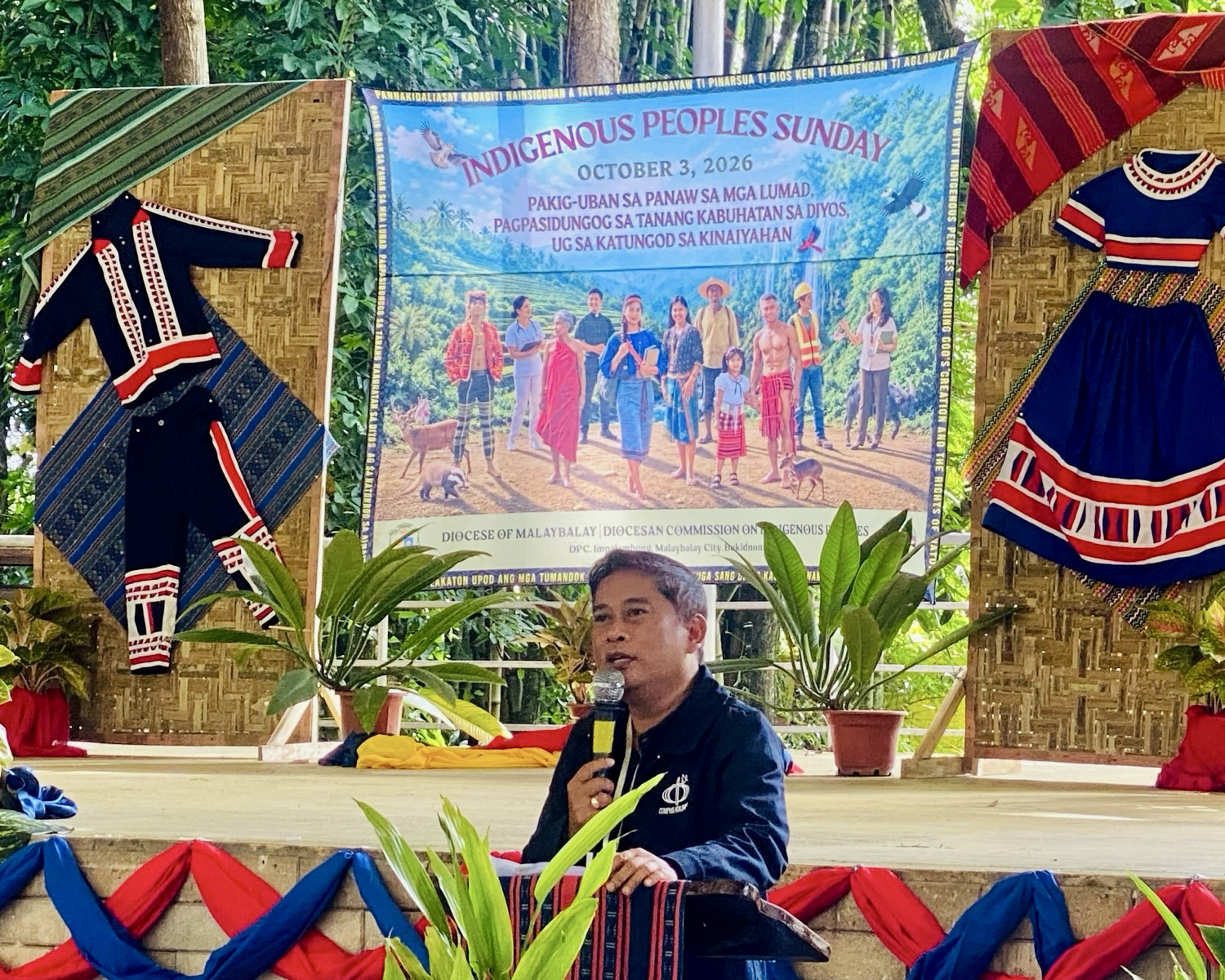
Fr. Art invited participants to reflect on five questions:
Where have the communities come from? Where are they going? Who walks with them? What challenges have they encountered? And how will the journey continue?
These questions opened a reflection on the forces that have shaped Indigenous life in Mindanao: displacement from ancestral territories, the erosion of traditional leadership, poverty, limited access to education, and continuing struggles for land, culture, livelihood, and self-determination.
But pagpanaw is not only a story of loss.
It is also a continuing journey of resistance, return, cultural survival, and collective assertion.
In this journey, the Church does not grant Indigenous Peoples their dignity and rights.
These are inherent.
The Church’s responsibility is not to replace Indigenous leadership, decide for communities, or speak over them. Its role is to listen, respect their decisions, support their efforts to seek remedies, and stand with them when their rights are violated.
Genuine accompaniment also requires humility. It asks the Church to recognize historical failures and build relationships grounded in respect, accountability, and solidarity.
This commitment has taken concrete form in the Diocese’s support for the Manobo-Pulangiyon Kianteg community.
In a pastoral statement arising from their November 2024 assembly, Bishop Noel “Toto” Pedregosa and participating priests and consecrated persons supported the community’s struggle concerning more than 1,100 hectares of ancestral domain in Quezon, Bukidnon.
Meg recalled the words of Bishop Pedregosa during the 2025 Mindanao Climate Justice and Solidarity Conference in Malaybalay:
“No single sector can face this crisis alone.”
But solidarity must follow the leadership and decisions of affected communities rather than take their place.
During the second part of the Indigenous ritual, the gathering held the Pagpaulin-ulin, described by the organizers as bigay-galang. It expressed respect and recognition for priests, religious sisters, MCJ representatives, and others who had accompanied the communities.
The Panampulot, or communion, reaffirmed the relationship among faith, community, creation, and the shared responsibility to care for one another.
Later in the program, Fatima Nicole Canon, Head of Kinaiyahan Youth, reflected on the responsibility of young people within the climate-justice movement.
She distinguished among narrative holders, amplifiers, and connectors.
Communities are the holders of their own experiences and stories. Young advocates and allied organizations may amplify community demands and connect them with wider publics, but they must not claim ownership of experiences that are not theirs.
Their work must begin with listening.
The day’s reflections, testimonies, rituals, and commitments culminated in a Eucharistic celebration presided over by Bishop Pedregosa with concelebrating priests.
The KAPAWA Scholars, joined by seminarians, served as the choir and led hymns in the Manobo language—affirming it as a living language of community, prayer, and faith.
The formal program ended, but the journeys and demands of the communities did not.
Their demands include protection of ancestral domains; meaningful free, prior, and informed consent; protection from violence, displacement, and environmental harm; accessible education, health care, livelihood, and other essential services; effective remedies when rights are violated; and respect for Indigenous self-determination.
Honoring creation and celebrating Indigenous culture have little meaning if ancestral territories, self-determination, and community rights remain unprotected.
Solidarity must therefore be measured not only by who attends a celebration, gives a speech, or joins a ritual.
It must also be measured by who remains when communities are displaced, leaders are threatened, government action is delayed, and struggles continue beyond public attention.
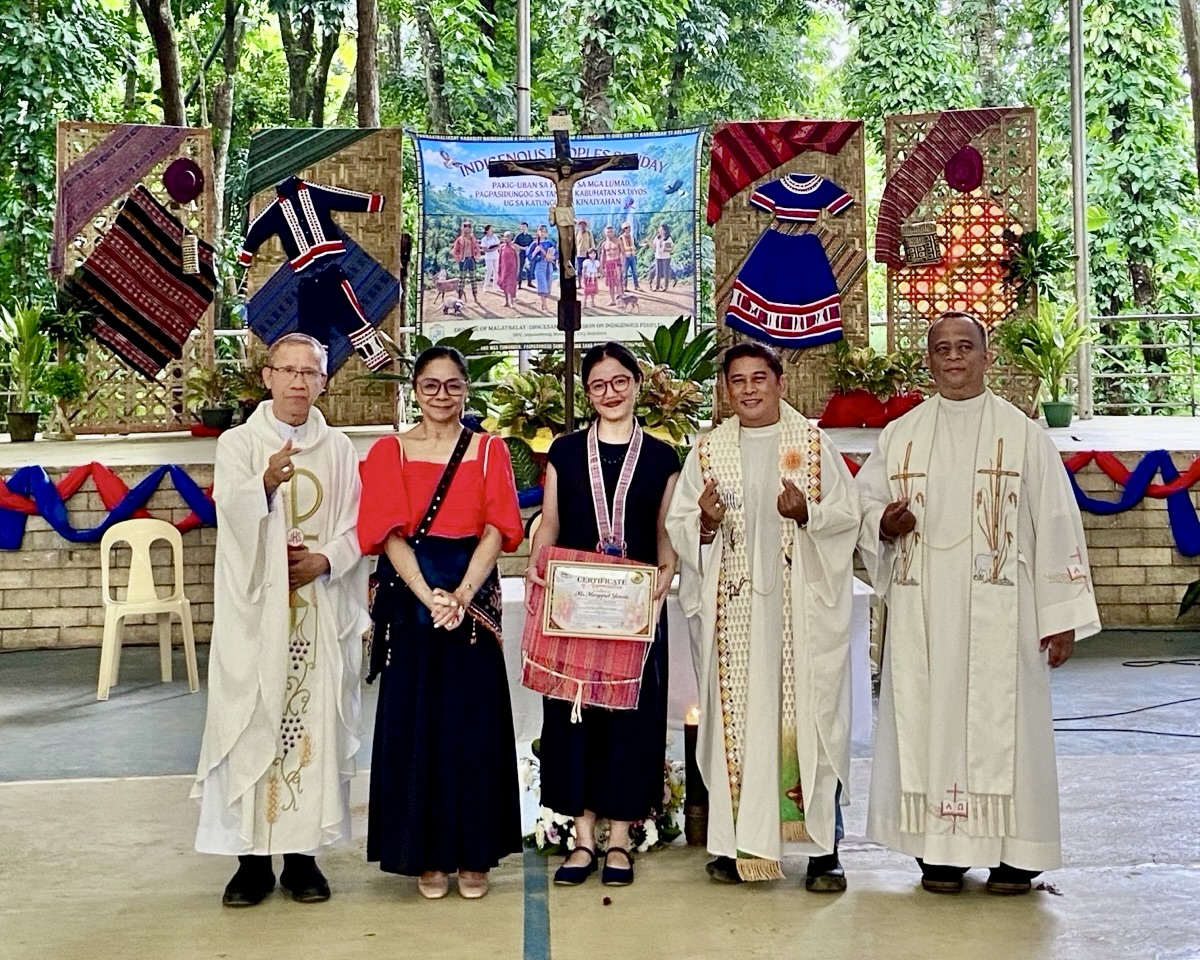
Speaking as an MCJ trustee, Bayang expressed that commitment:
“Ang among pakig-uban dili kutob niining usa ka selebrasyon.”
Our accompaniment does not end with this one celebration.
She spoke of continuing accompaniment in communities, campaigns, and the wider journey toward justice.
But she also reminded the gathering that the deepest source of strength does not lie in any single organization or institution.
It lies in people who understand their rights, organize themselves, protect one another, and act together.
Bayang then led the gathering in a pledge:
Yuta ug kinabuhi, atong panalipdan.
Land and life, we will defend.
Kultura ug katungod, atong barugan.
Culture and rights, we will uphold.
Kabuhatan ug katawhan, dili nato biyaan.
Neither creation nor people will we abandon.
The gathering began with a circle around land, ancestors, community, and the Creator.
It ended with another kind of circle: Indigenous communities, Church people, youth, artists, advocates, and partners committing themselves to continue the journey.
For Bukidnon’s Lumad peoples, the defense of ancestral domain is not an abstract environmental cause. It is the defense of home, memory, culture, livelihood, dignity, and the right of future generations to inherit a living land.
For those who walk beside them, the challenge is equally clear:
Listen to the communities. Respect their decisions. Defend their rights. Protect the land and waters that sustain life. And remain when the celebration is over.
Sources and further reading
Event records
- Proceedings Report: Diocesan Indigenous Peoples’ Sunday, October 3, 2026
- Updated Program for Indigenous Peoples’ Sunday, Diocese of Malaybalay, 2026
- Meg Yarcia, Pagpasidungog sa Kabuhatan ug Katungod sa Kinaiyahan
- Junelie “Bayang” Barrios, Ang Kabuhatan Adunay Tingog
Indigenous rights and Church teaching
- Republic Act No. 8371 — Indigenous Peoples’ Rights Act of 1997
- Proclamation No. 1906 — National Indigenous Peoples Month
- Pope Francis — Laudato Si’
- Pastoral Statement on the Manobo-Pulangiyon Kianteg Struggle
Bukidnon forests, watersheds, and defenders
- UNESCO — Kitanglad and Kalatungan Mountain Ranges
- Human Rights Watch — Philippines: Killings of Environment Advocates Unpunished
Creation, consent, climate justice, and extraction
- Republic Act No. 7942 — Philippine Mining Act of 1995
- Human Rights Watch — Revised FPIC Guidelines Threaten Indigenous Rights
- Senate Bill No. 558 — Proposed Rights of Nature Act of 2025
- Supreme Court — Red-Tagging Threatens Right to Life, Liberty, and Security
- Mindanao Climate Justice: Climate Justice in Mindanao — Addressing Challenges and Imperatives