To Dream of Education Is Not a Crime: Lumad Women of the Talaingod 13 Speak at Adamson
Philippines — To teach, to care, to defend children’s right to learn—these should never be crimes. Yet for the Lumad women of the Talaingod 13, these acts have led to conviction.
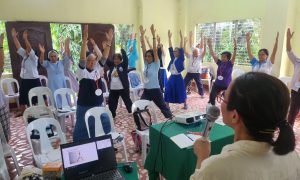
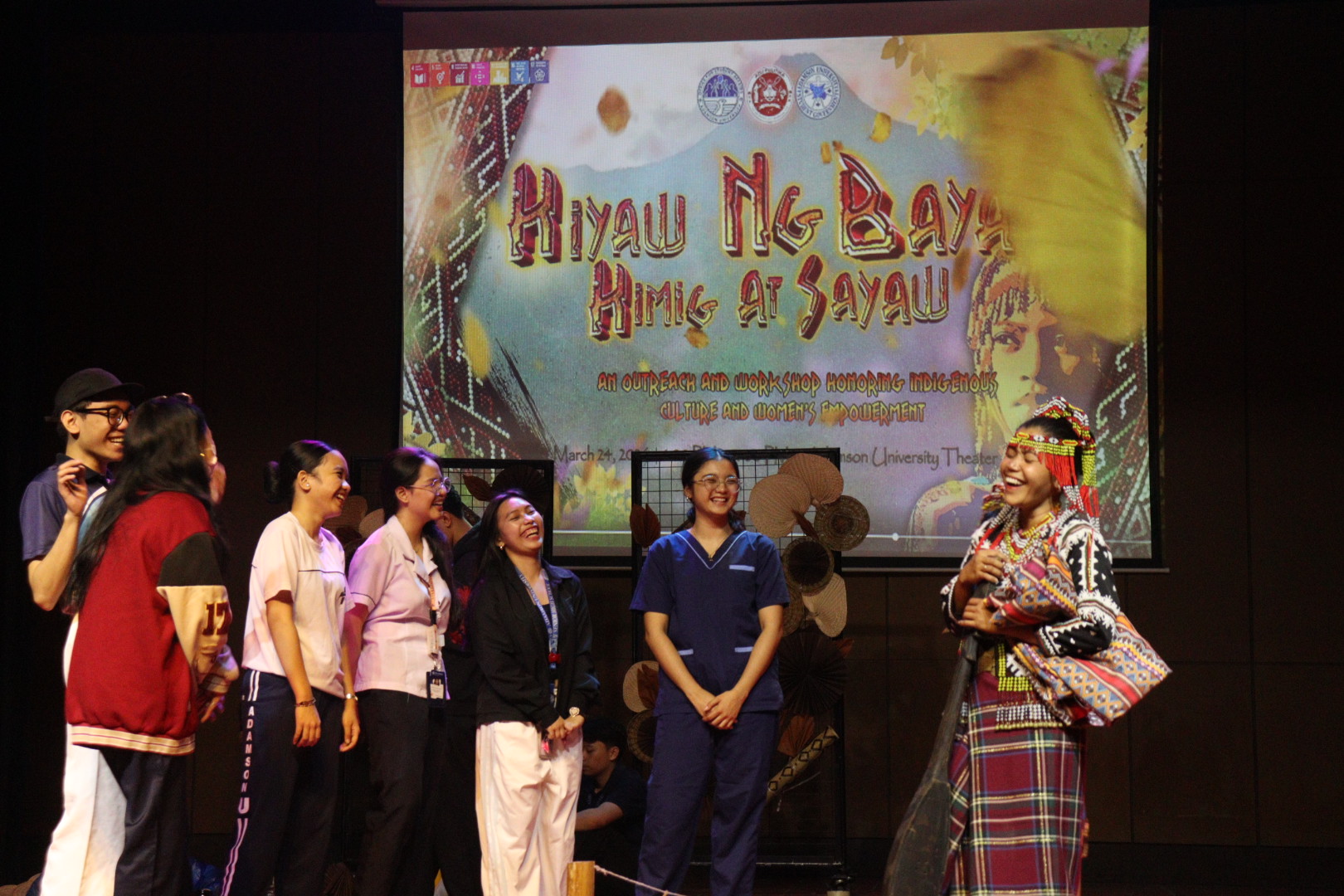
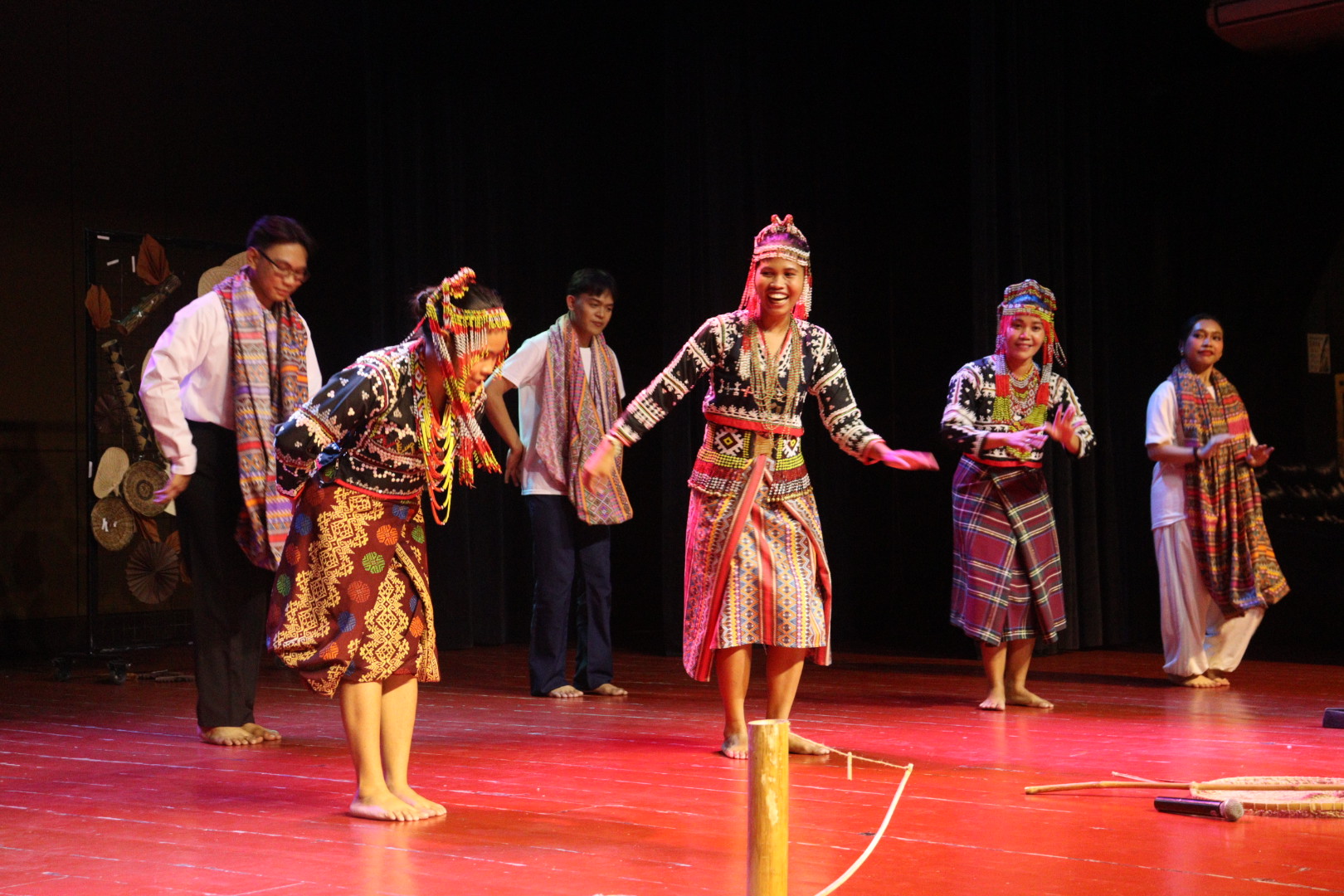
In this year’s Women’s Month, Blaan Lumad women brought this reality to Adamson University—through song, testimony, and images that trace the story of community-built schools, forced evacuation, and the criminalization of those who chose to stand with children.lumad-women-talaingod-13-adamson-education-not-a-crime
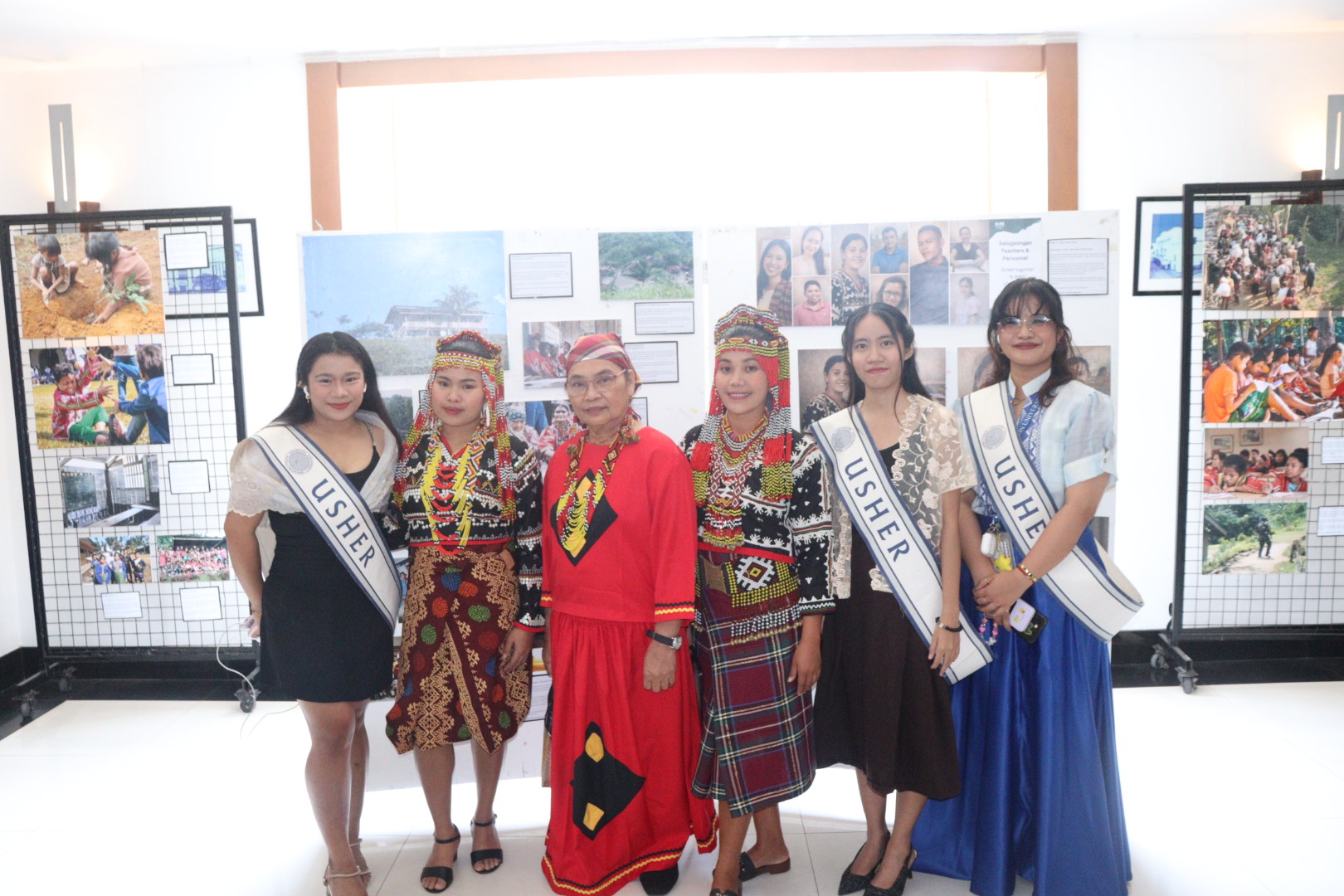
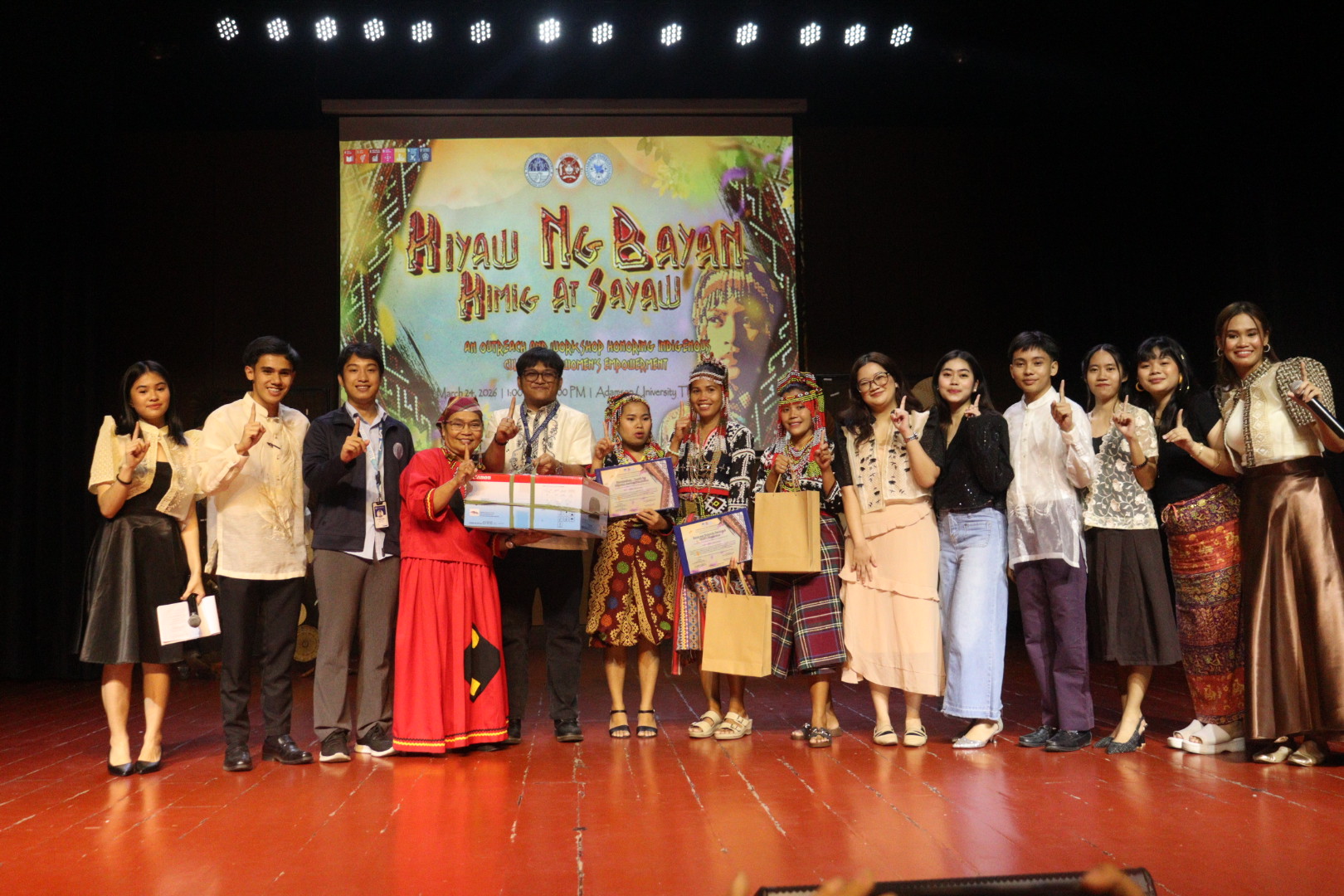
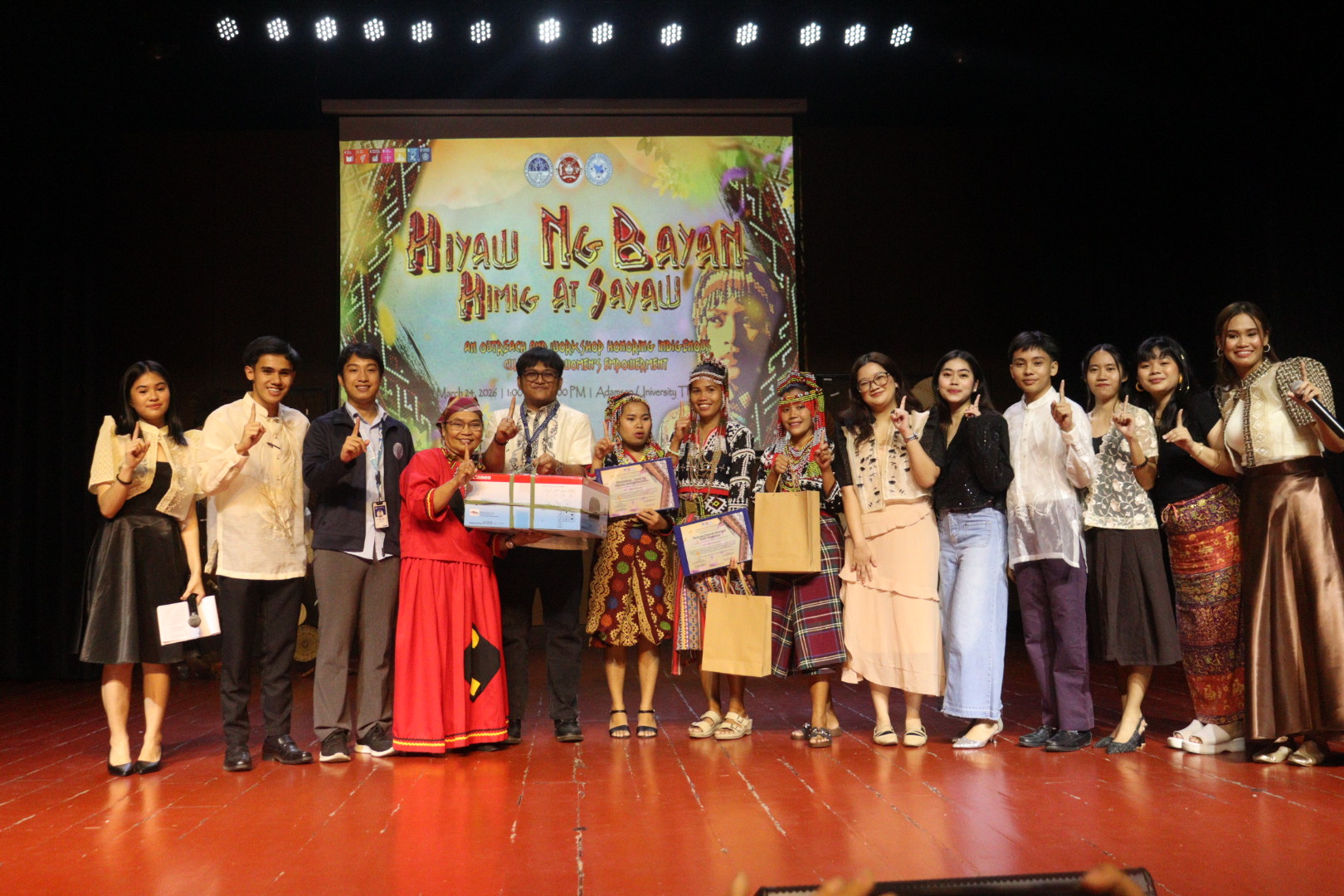
Held on March 24 as part of Hiyaw ng Bayan: Himig at Sayaw, the activity was hosted by ADU–PULITIKA, the Political Science academic organization of Adamson University students, known for promoting critical engagement with social and political issues and fostering values of integrity, social responsibility, and active citizenship.
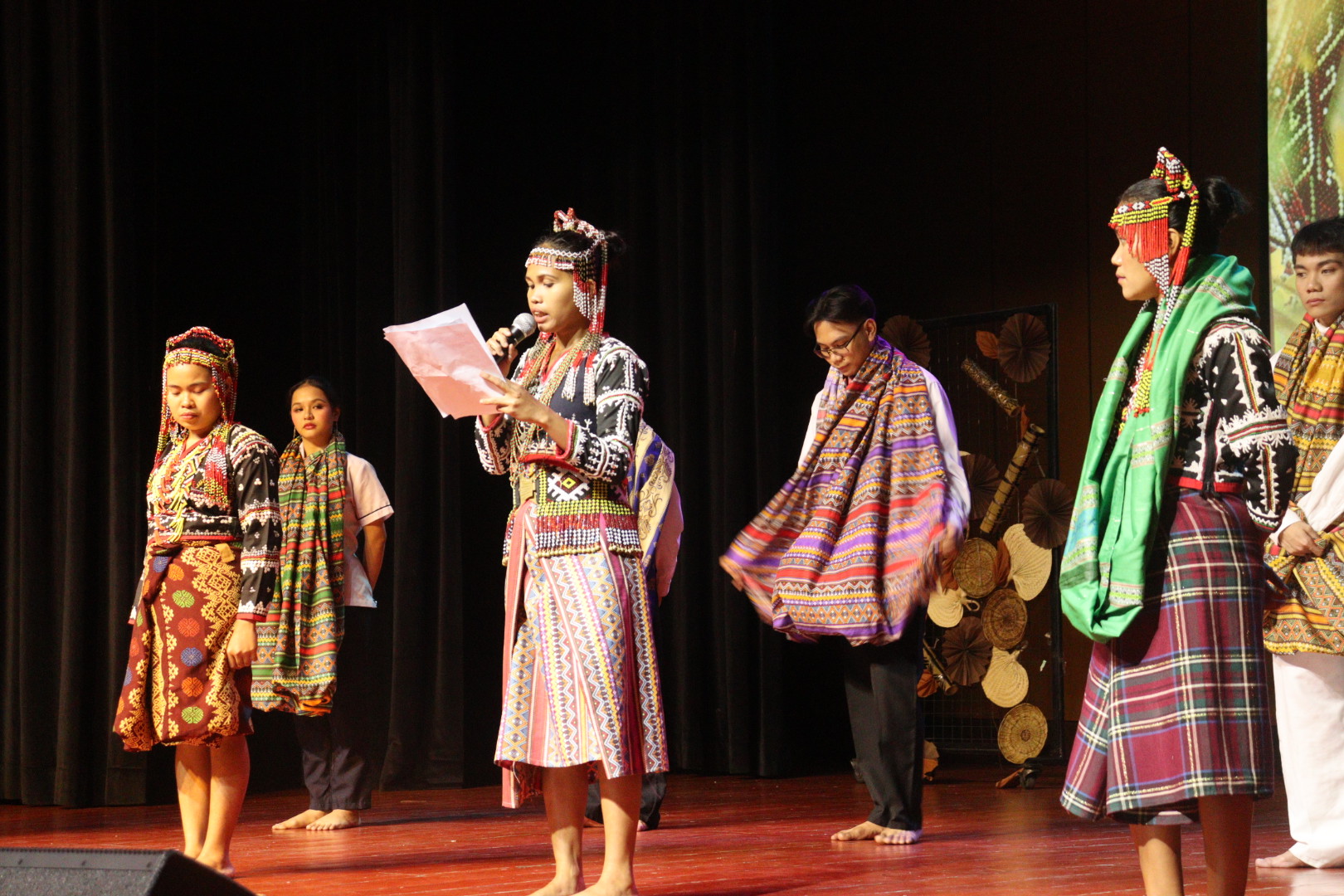
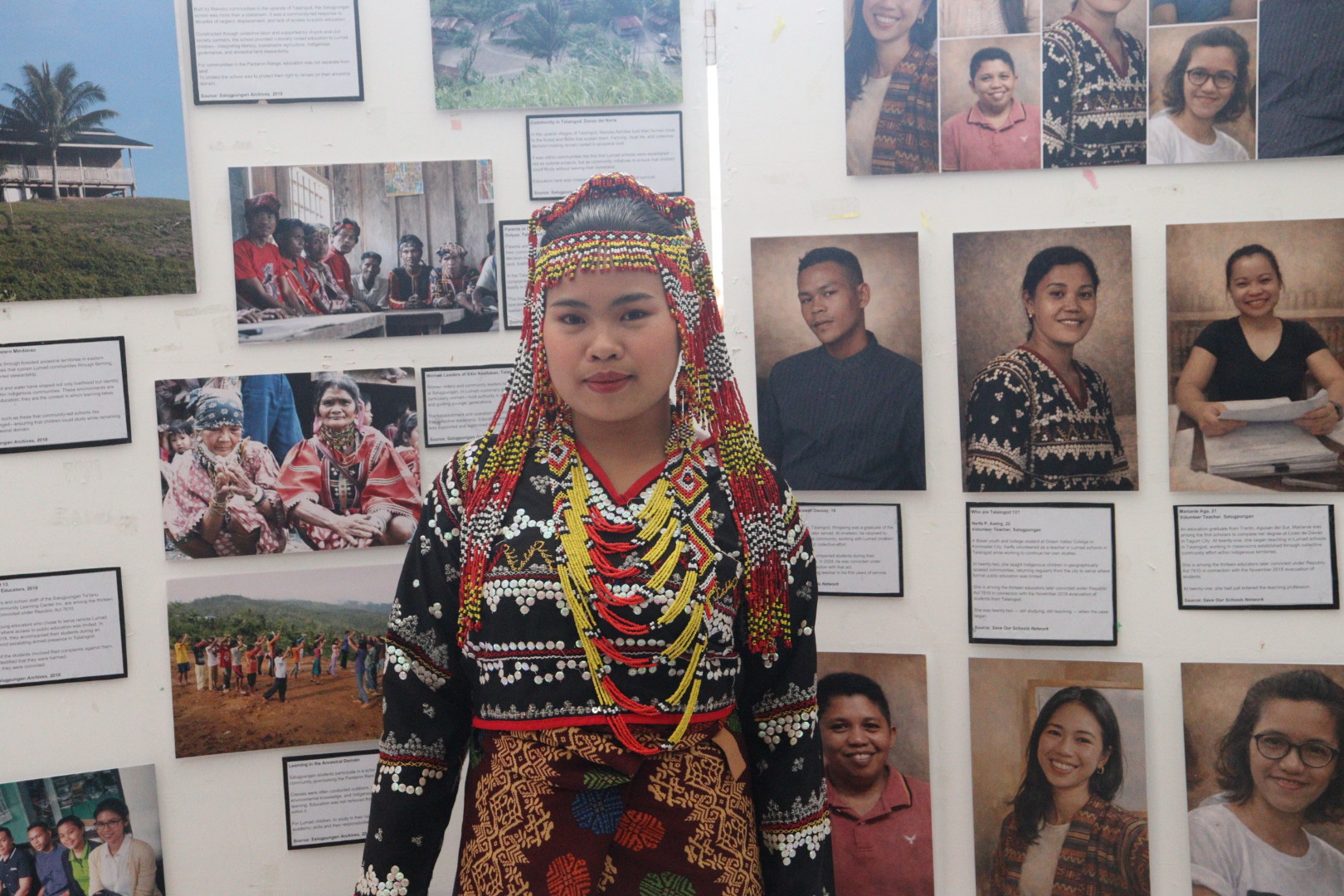
Through cultural performance and a photo exhibit centered on the Talaingod 13, the event confronted a difficult truth: how did the simple act of defending education become a punishable offense?
Women carrying culture—and resistance
On stage were Blaan Lumad women whose lives reflect the very struggle being told—not only as educators and culture-bearers, but as defenders now facing the weight of repression.
Nerfa P. Awing, a 22-year-old volunteer teacher, taught in Lumad schools while saving for her own college education—choosing to remain despite the risks because of her responsibility to her pupils and their future. Like many Lumad women educators, she carried the work of sustaining learning in communities where education is both a necessity and a risk.
Angelika Laguisan Moral, a youth leader and human rights defender, stood as both speaker and witness. She testified on the evacuation of Lumad students and the realities behind the Talaingod 13 case—despite threats, red-tagging, and harassment. Her voice reflects a broader generation of Lumad women who continue to resist silencing.
“Hindi krimen ang mangarap ng edukasyon para sa mga batang Lumad,” she said, asserting that the right to learn—and to defend that right—cannot be reduced to a criminal act.
Lerma Diagone, a former Salugpungan teacher, shared how growing up without accessible schools pushed her to return as a volunteer educator. For her, teaching is not just work—it is a commitment to defend her community’s right to education, identity, and land.
These are not isolated stories. They reflect the lived experience of many Lumad women who sustain schools, hold communities together, and stand at the frontlines even as they become targets of harassment and criminalization.
A story that begins with schools
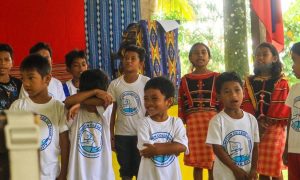
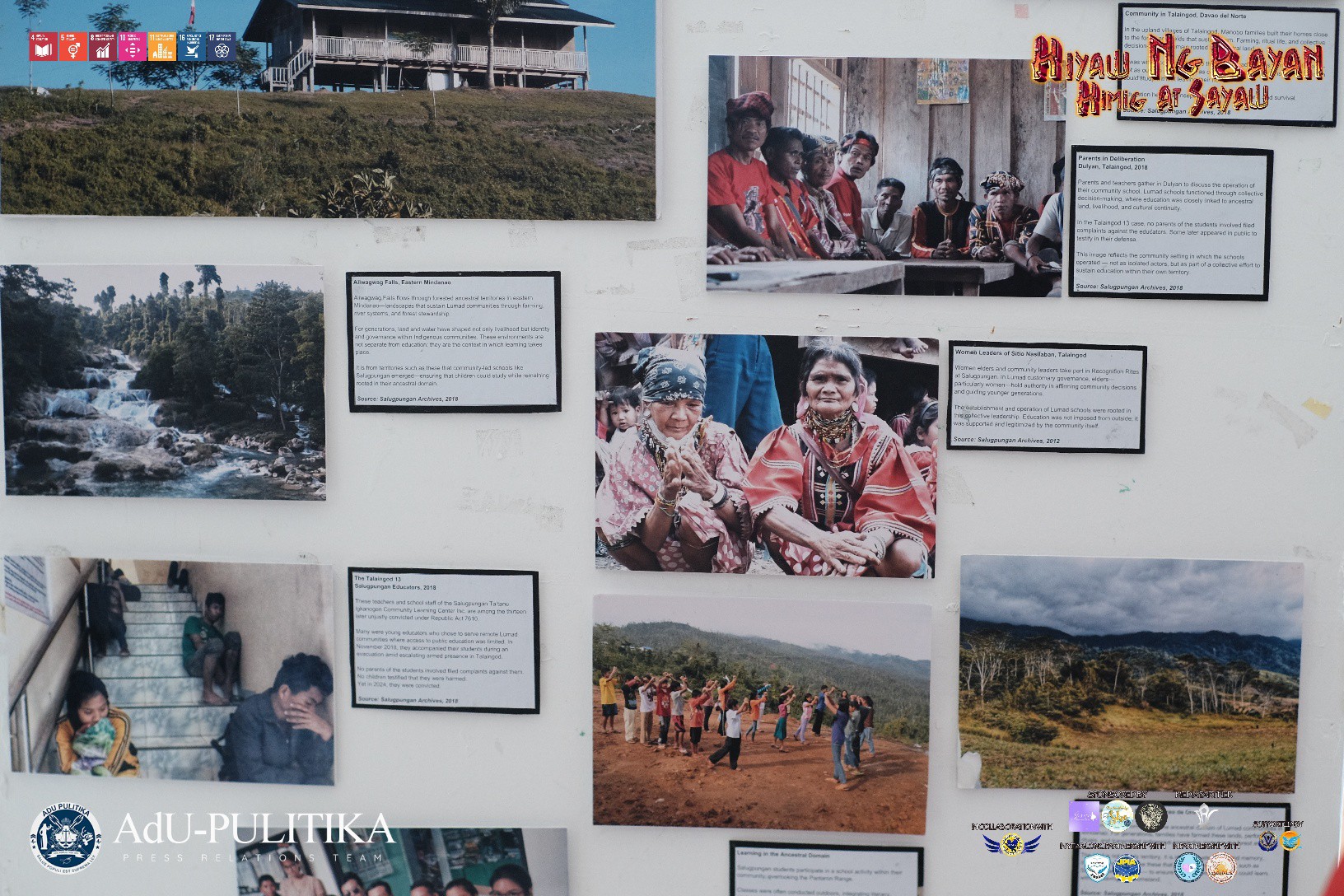
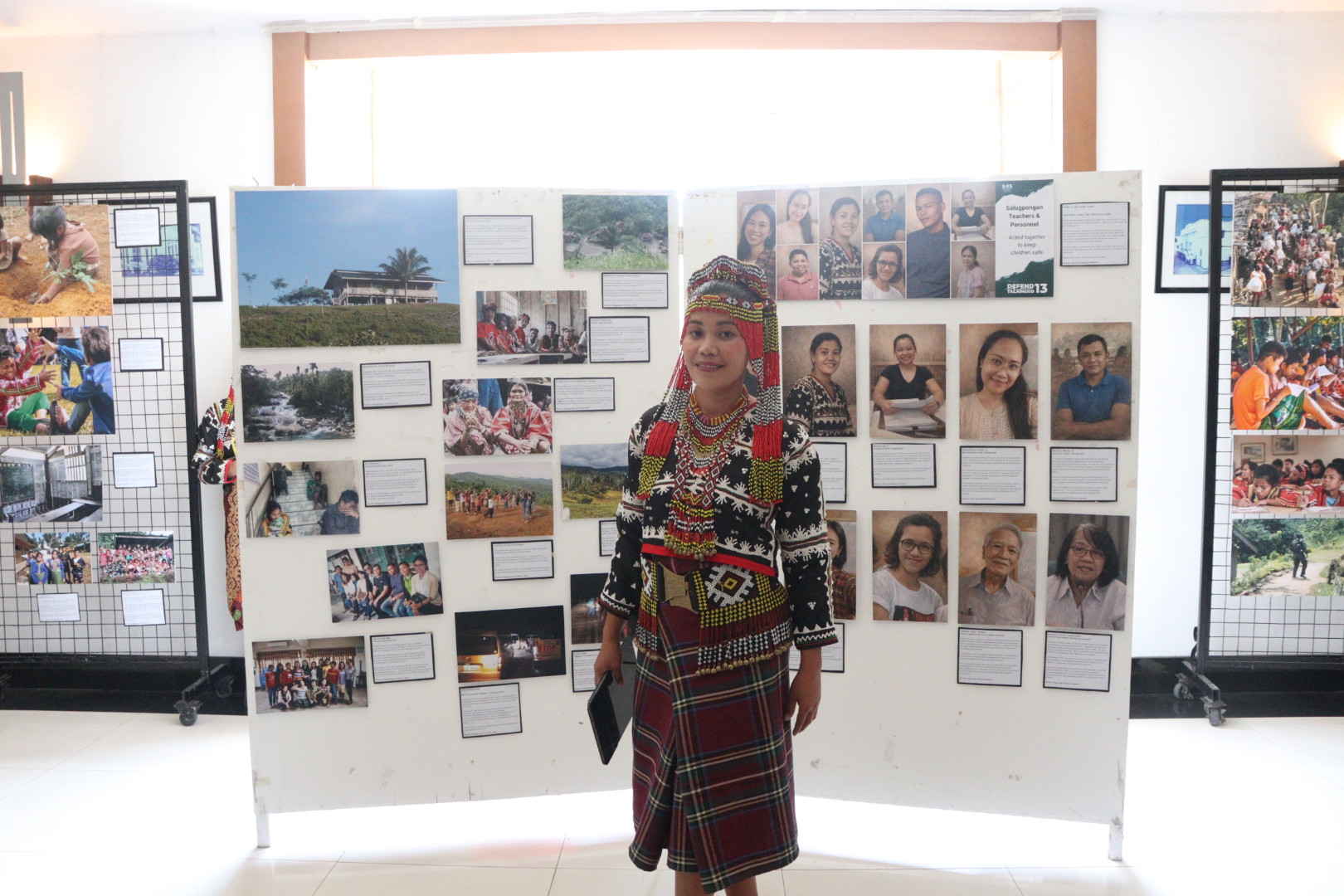
The exhibit opens with images of Lumad schools built by communities—simple classrooms on ancestral land, where children learn in ways rooted in culture, language, and collective identity.
Teachers, parents, and elders work together to sustain these spaces. Many of them are women.
These schools are more than places of learning. They are expressions of self-determination—where communities assert their right to educate their children according to their history, their needs, and their future.
When learning was disrupted
The story shifts.
Children leave their classrooms, carrying what they can. Families move together. Some schools stand empty.
Learning stops—not because children chose to leave, but because staying had become dangerous amid militarization, harassment, and sustained attacks on Lumad communities and their schools.
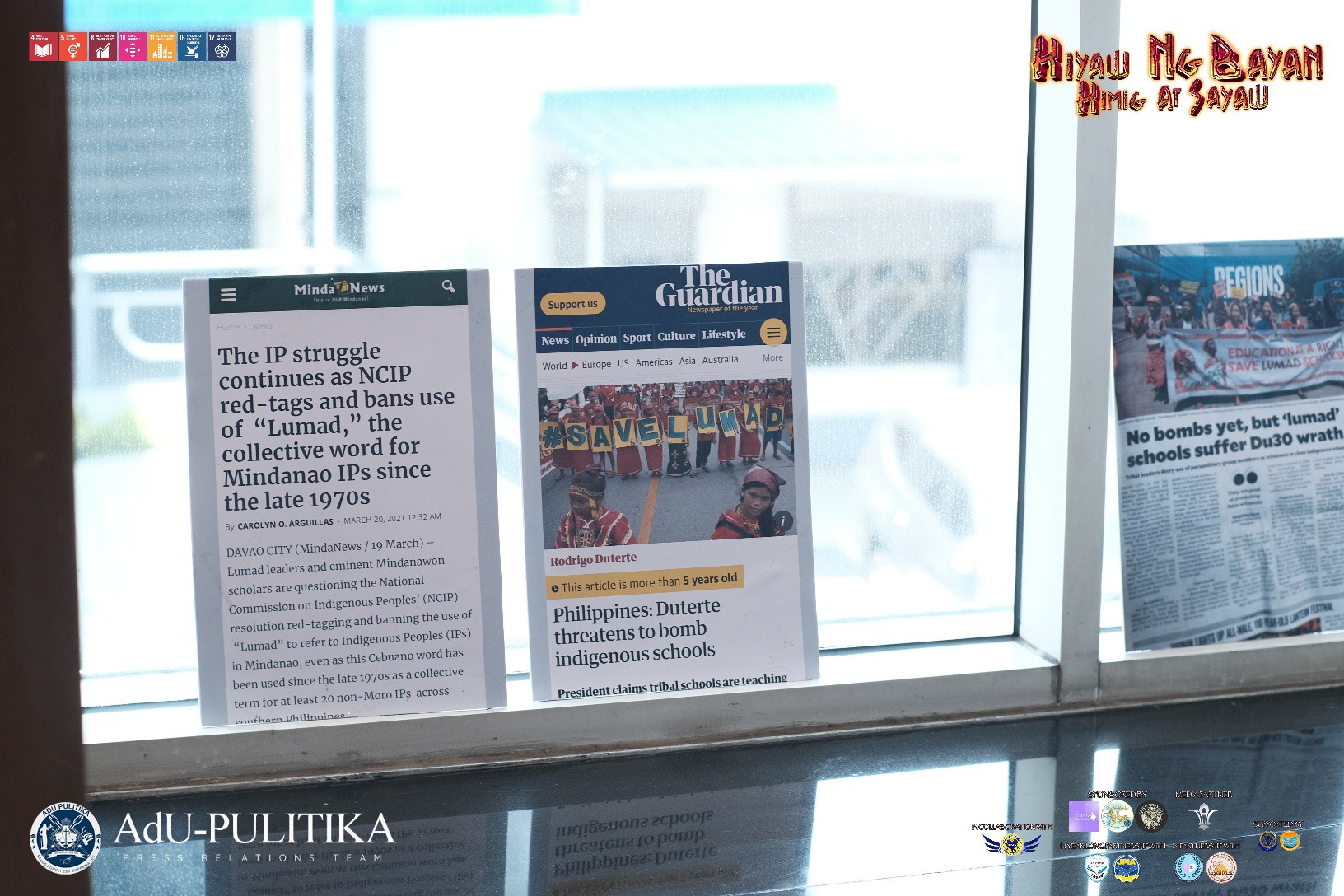
Across Mindanao, Lumad education has long been subjected to red-tagging, forced closures, and military presence—turning schools into contested spaces rather than safe environments for children.
From defending education to facing conviction
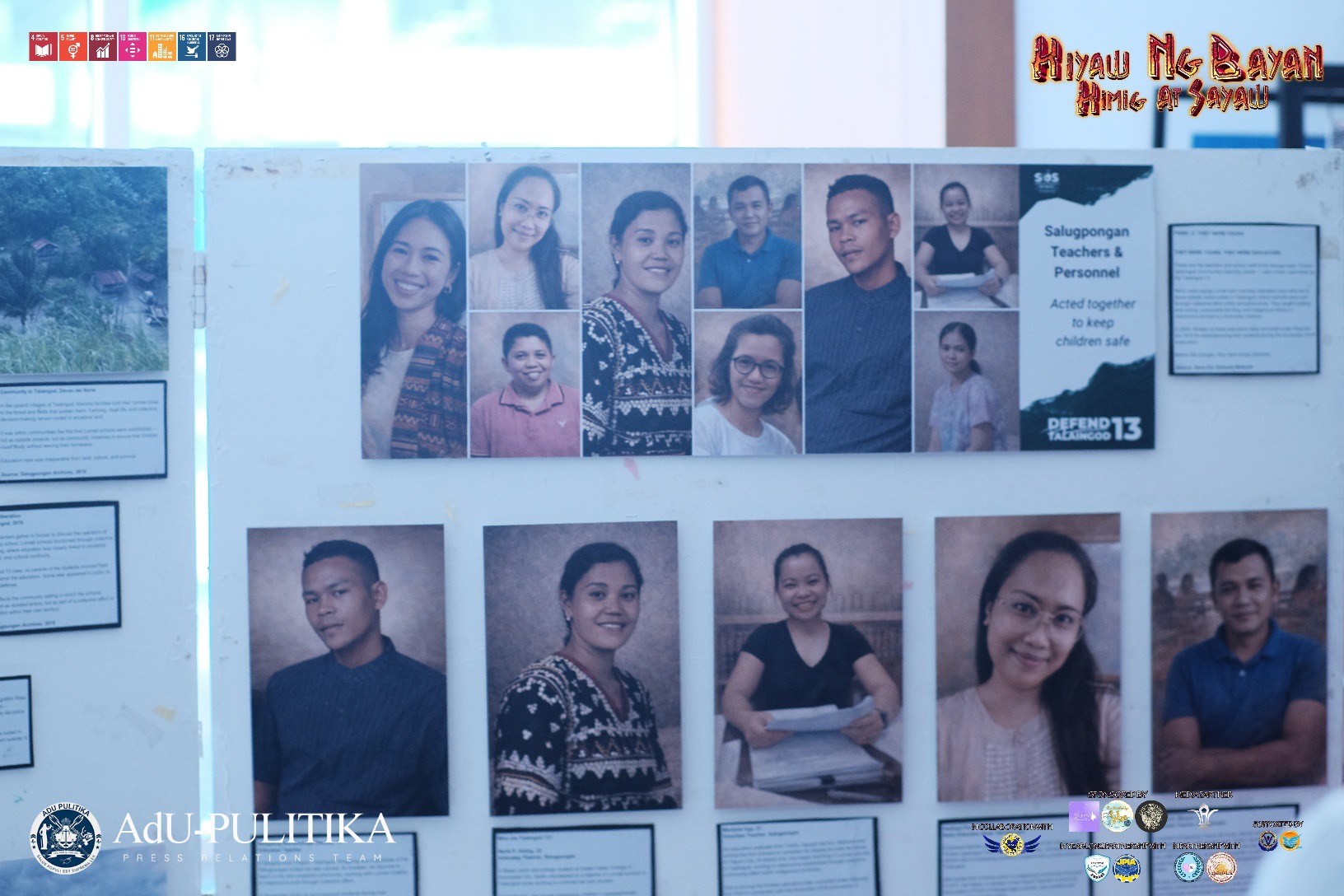
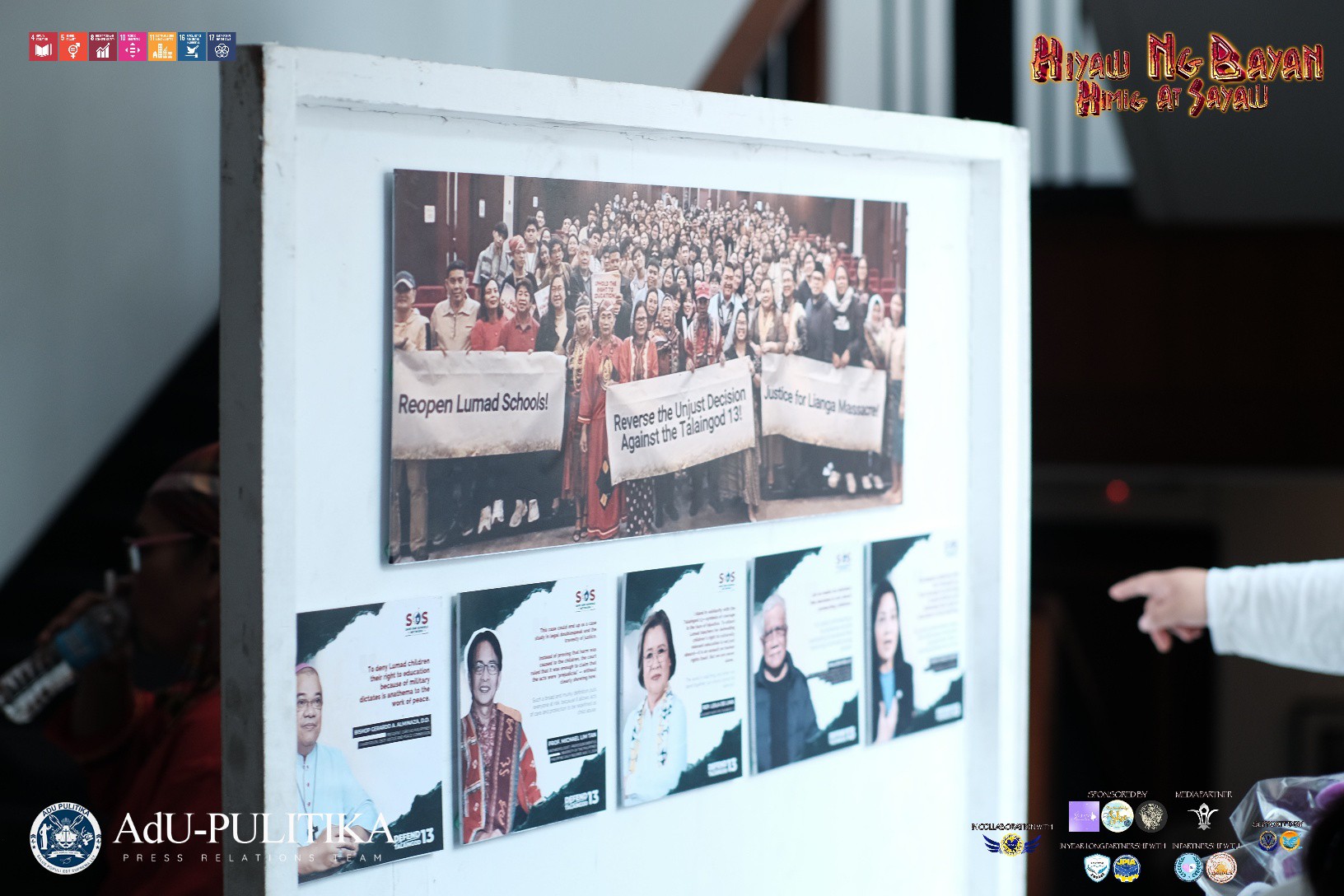
At the center of the exhibit are the faces of the Talaingod 13—teachers, volunteers, and community workers who assisted Lumad students during the 2018 evacuation in Talaingod, Davao del Norte.
They brought children to safety.
They stayed with them.
They ensured learning continued.
For these actions—grounded in care, responsibility, and the defense of children’s rights—they were charged and eventually convicted.
The experiences of Nerfa, Angelika, and Lerma reflect a broader pattern: when Lumad communities defend their children’s right to education, they are met not with support, but with suspicion, harassment, and criminalization.
Students confronting the story
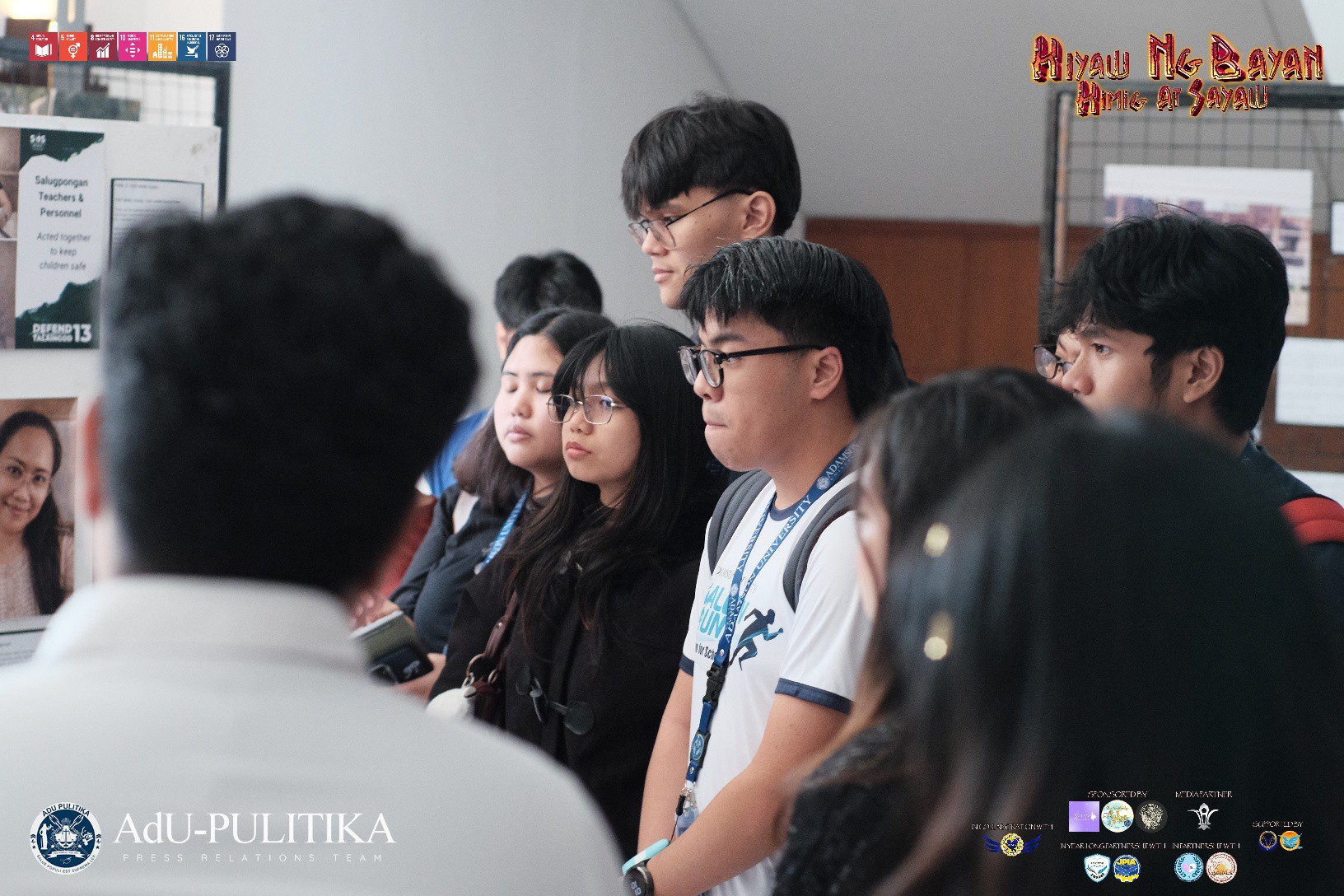
Students moved through the exhibit slowly.
Some paused at the portraits, reading each name. Others returned to earlier panels, tracing the connection between evacuation and accusation.
A quiet question surfaced: “Sila yung kinasuhan?”
The question carried disbelief—an attempt to reconcile two truths that should not exist at the same time: that those who protected children are the ones being punished.
In that moment, the story shifted—from something distant to something urgent, from a narrative of care to a reality of injustice.
Memory as resistance
The exhibit forms part of the ongoing Lumad School Memory Project of Mindanao Climate Justice (MCJ)—an initiative that documents, preserves, and brings forward the lived experiences of Lumad communities, particularly their struggle to build and defend their own schools.
Through exhibits, storytelling, and community engagement, the project creates spaces where these narratives can be encountered, questioned, and understood—not as distant histories, but as continuing realities shaped by displacement, militarization, and resistance. The engagement at Adamson University is one of many efforts to carry these stories beyond communities and into wider public consciousness.
More than documentation, the Memory Project is an act of resistance—against forgetting, against distortion, and against the erasure of Lumad struggles. It asserts that these stories must be told, remembered, and defended.
In Women’s Month, it also foregrounds the role of women—not only as nurturers, but as defenders—educators, organizers, and human rights advocates who continue to stand at the frontlines despite displacement, threats, and criminalization.
A question of justice
To teach is not a crime.
To care is not a crime.
To defend a child’s right to education is not a crime.
Yet today, Lumad women and educators who did exactly these are convicted.
What kind of justice system punishes those who defend children and education—while the violence and conditions that forced them to flee remain unaddressed?