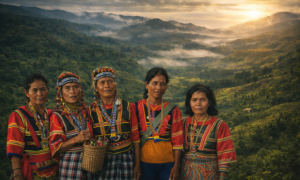
The Sarangani Leg of LUMAD DAY 2026 brought food assistance, communal meals, children’s activities, and community-led solidarity to 209 earthquake-affected families in Glan, Sarangani Province. About 75 percent of the participants were Blaan.
By Mindanao Climate Justice
Glan, Sarangani, Philippines | 22 August 2026
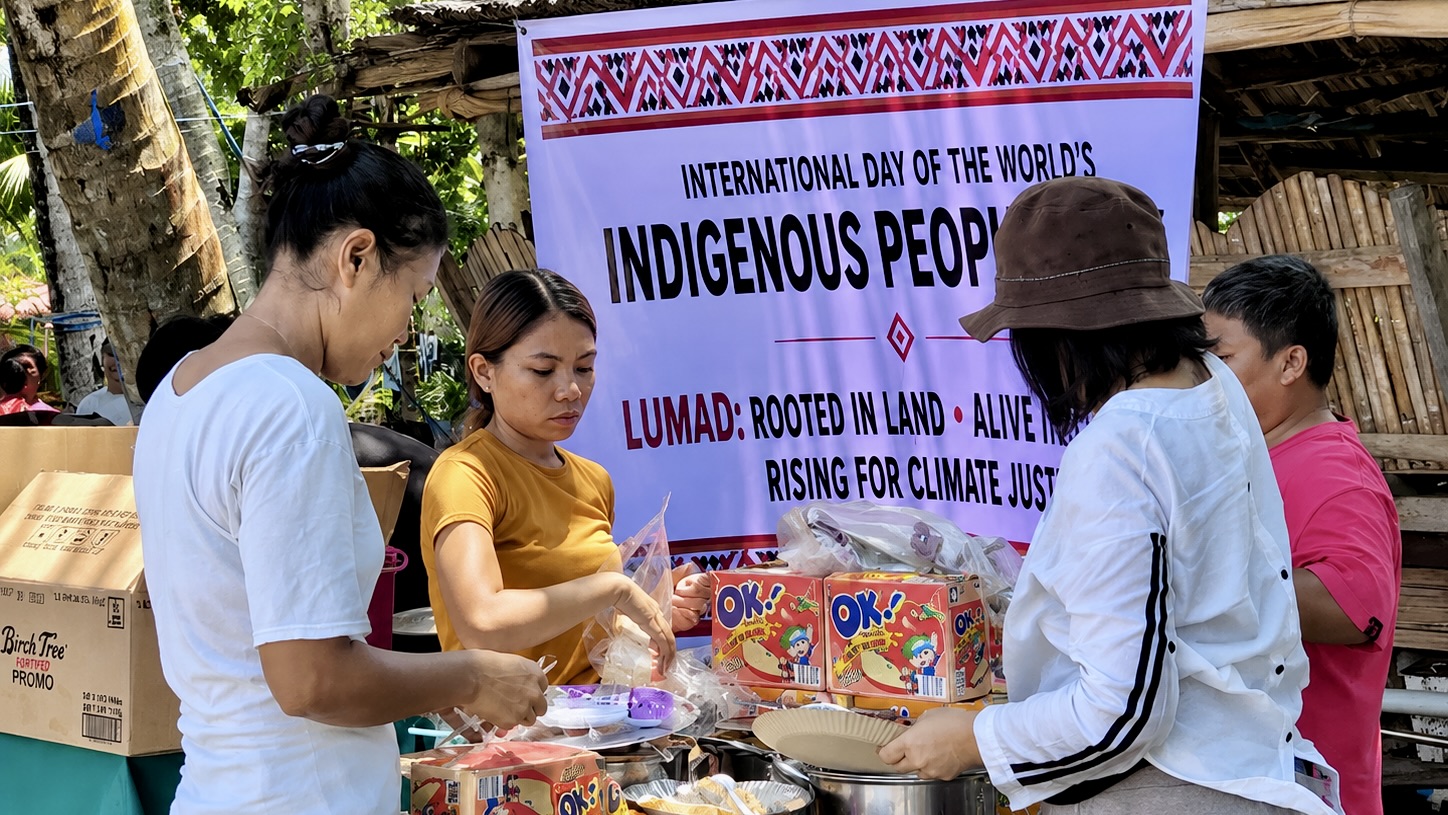
On 22 August 2026, residents, community leaders, young volunteers, and solidarity partners gathered in Glan, Sarangani Province, as part of the continuing Mindanao-led commemoration of the International Day of the World’s Indigenous Peoples (IDWIP).
Under the wider IDWIP 2026 call, “Lumad: Rooted in Land, Alive in Culture, Rising for Climate Justice,” the Sarangani Leg brought the commemoration into a community still recovering from the magnitude 7.8 earthquake that struck offshore Sarangani on 8 June.
The activity also connected with the 2026 global IDWIP theme, “Honouring Indigenous Midwives: Safeguarding Life and Well-being,” translating an ethic of care into concrete solidarity with earthquake-affected families.
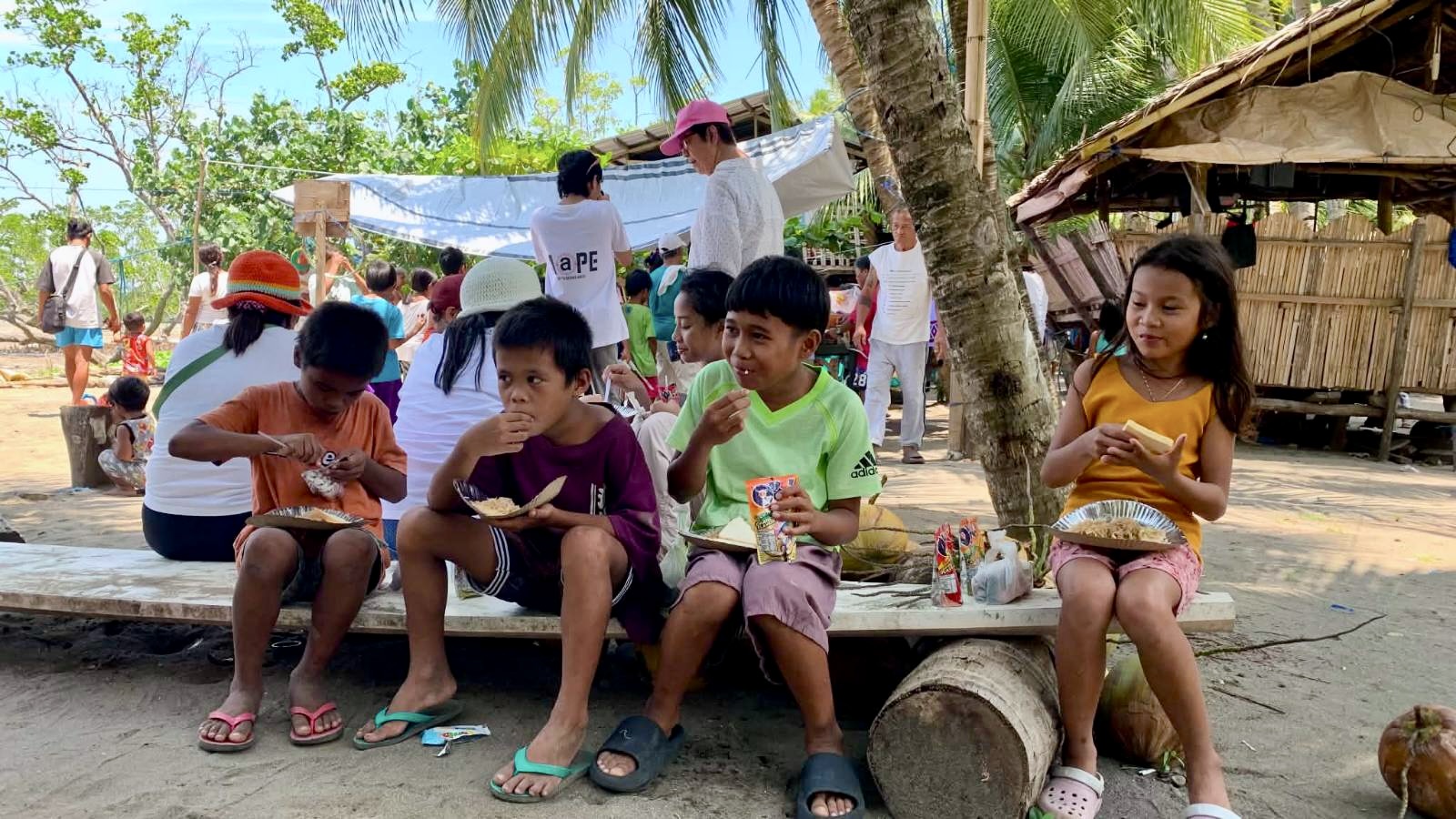
A total of 209 families received food assistance. About 75 percent of participants were Blaan. Residents and volunteers also prepared communal meals, while 52 children ages four to twelve joined recreational and community activities.
The Sarangani Leg was carried out with the support and participation of Mindanao Climate Justice (MCJ), PANAAD Network, Kinaiyahan Youth Organization, PANALIPOD People’s Coalition, community leaders, young volunteers, and local partners.
It served as a second wave of humanitarian assistance and continued the accompaniment begun during the first Duyog Mindanao humanitarian mission in Glan on 4 July.
Recovery does not end after the first distribution of assistance or when public attention moves elsewhere. For families whose homes, livelihoods, food security, and sense of safety have been disrupted, solidarity must remain sustained, responsive, and guided by the priorities of affected communities themselves.
Recovery Amid Overlapping Hazards
At 7:37 a.m. on 8 June 2026, a magnitude 7.8 earthquake struck offshore Sarangani. DOST–Philippine Institute of Volcanology and Seismology (PHIVOLCS) located the epicenter approximately 32 kilometers west of Maasim, Sarangani, at an estimated depth of 33 kilometers. Based on its location, focal mechanism, and aftershock distribution, PHIVOLCS attributed the earthquake to subduction along the Cotabato Trench.
The earthquake caused widespread damage and displacement across parts of Southern Mindanao and was followed by numerous aftershocks.
According to DSWD DROMIC Report No. 80, as of 6:00 a.m. on 21 August 2026, 99,921 families—or 451,981 people—had been affected across the areas covered by the report. In Sarangani Province, more than 26,000 people remained displaced, including 21,842 in Glan. These figures represent conditions recorded by DSWD at that reporting date and may change as assessments and displacement conditions are updated.
The earthquake was tectonic and was not caused by climate change. Its consequences, however, unfolded alongside other hazards.
Government geologists reported that earthquake-induced landslides destabilized slopes and obstructed some waterways, creating temporary landslide dams and raising concerns about sudden flooding if the blockages failed. Heavy rainfall in the weeks that followed brought further flooding and landslides while communities were still recovering.
On 10 July, a rain-induced landslide in Barangay Poblacion, Malapatan, Sarangani, killed ten people. Government disaster authorities attributed the landslide to prolonged heavy rainfall associated with the southwest monsoon and Typhoon Inday. Earlier earthquake damage and continuing slope instability had meanwhile heightened concern over secondary geological hazards in affected areas.
These hazards have different physical causes, but their effects can compound one another.
A home weakened by an earthquake may become more dangerous during prolonged rainfall. Damaged or blocked roads can delay food assistance, medical services, livelihood recovery, and reconstruction. Displacement can interrupt schooling, work, family care, cultural practices, and access to farms, ancestral lands, forests, fishing grounds, or other sources of livelihood.
For Indigenous families already confronting inequalities in land tenure, infrastructure, public services, and political participation, recovery can take longer and impose greater costs.
This is where humanitarian action meets climate justice: not by incorrectly attributing a tectonic earthquake to climate change, but by confronting the unequal social and environmental conditions that determine who is most exposed, whose knowledge guides preparedness and response, who receives protection, and who is able to recover with dignity.
Food Security and Collective Care
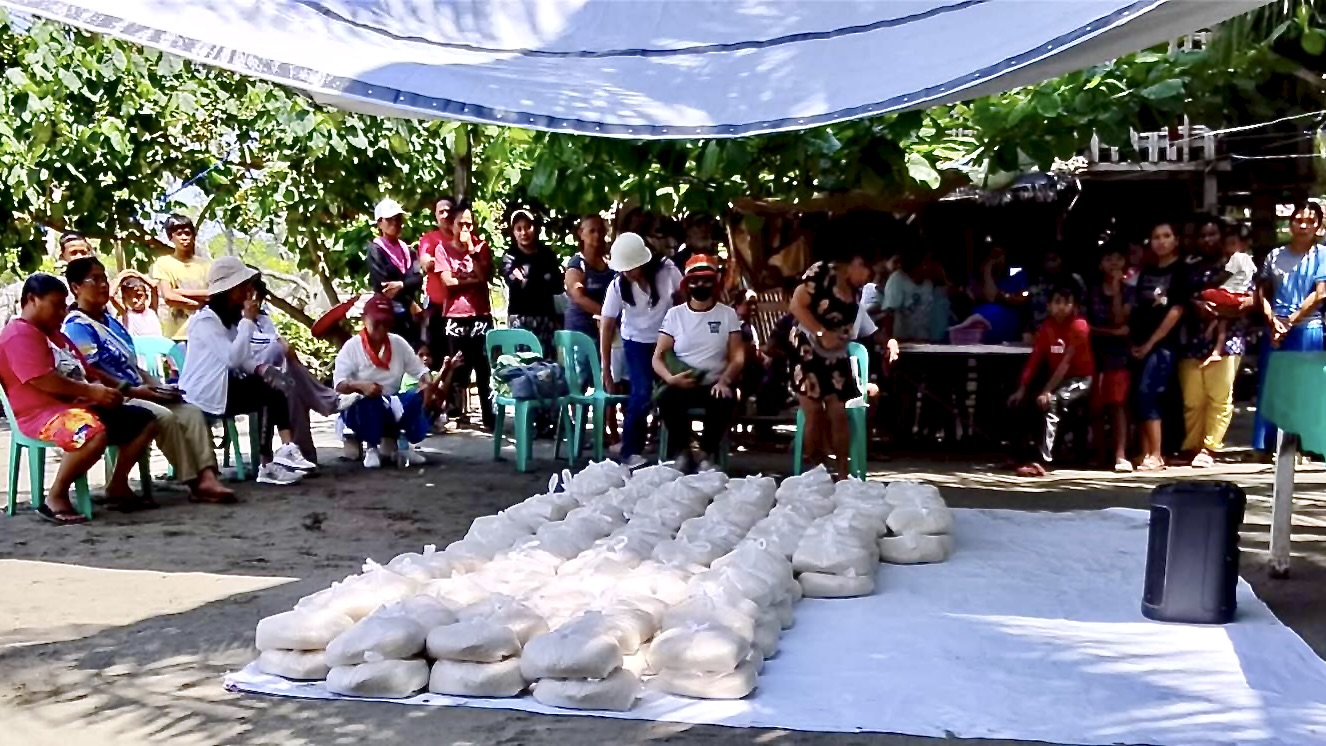
Food was among the most immediate concerns addressed during the Sarangani Leg.
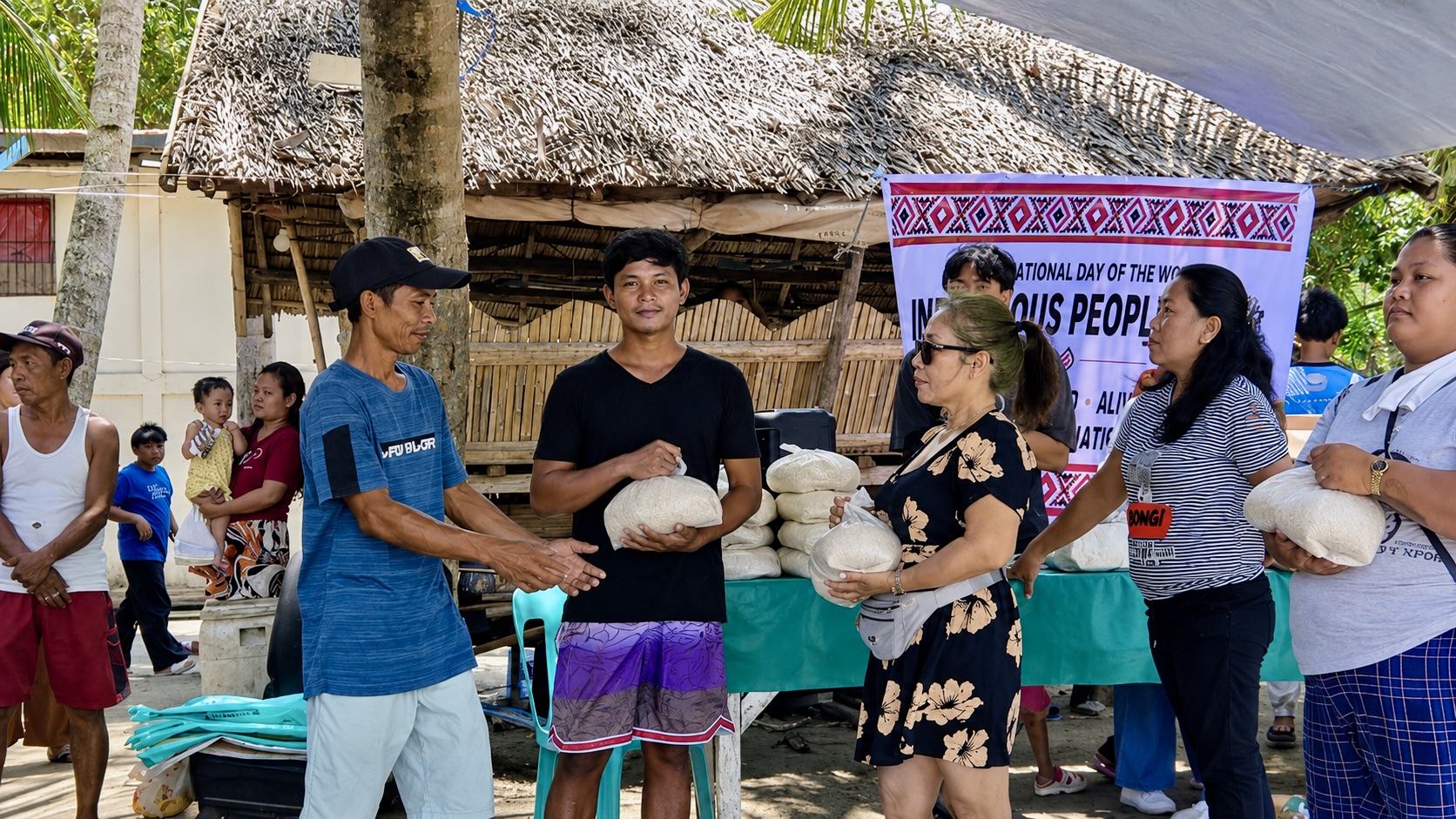
Each participating family received a food assistance pack to help meet household needs during the continuing recovery period.
But the activity was not organized simply as a transfer of goods from organizations to recipients.
Residents, community leaders, young volunteers, and partner organizations worked together in preparing the assistance, organizing the distribution, and setting up a community kitchen and communal meals. The shared kitchen became a space where people could prepare and eat food together, assist one another, and strengthen relationships during a difficult period of recovery.
The program began with a community prayer, followed by a welcome from a barangay official and a discussion on the significance of the International Day of the World’s Indigenous Peoples.
The gathering affirmed that Indigenous Peoples must be recognized not only for their resilience in times of disaster, but for their cultures, knowledge systems, collective rights, dignity, leadership, and continuing pursuit of self-determination.
The participation of residents throughout the activity was equally important. Disaster-affected communities are not passive beneficiaries. They carry knowledge, relationships, leadership, and capacities that should help shape humanitarian response and direct their own recovery.
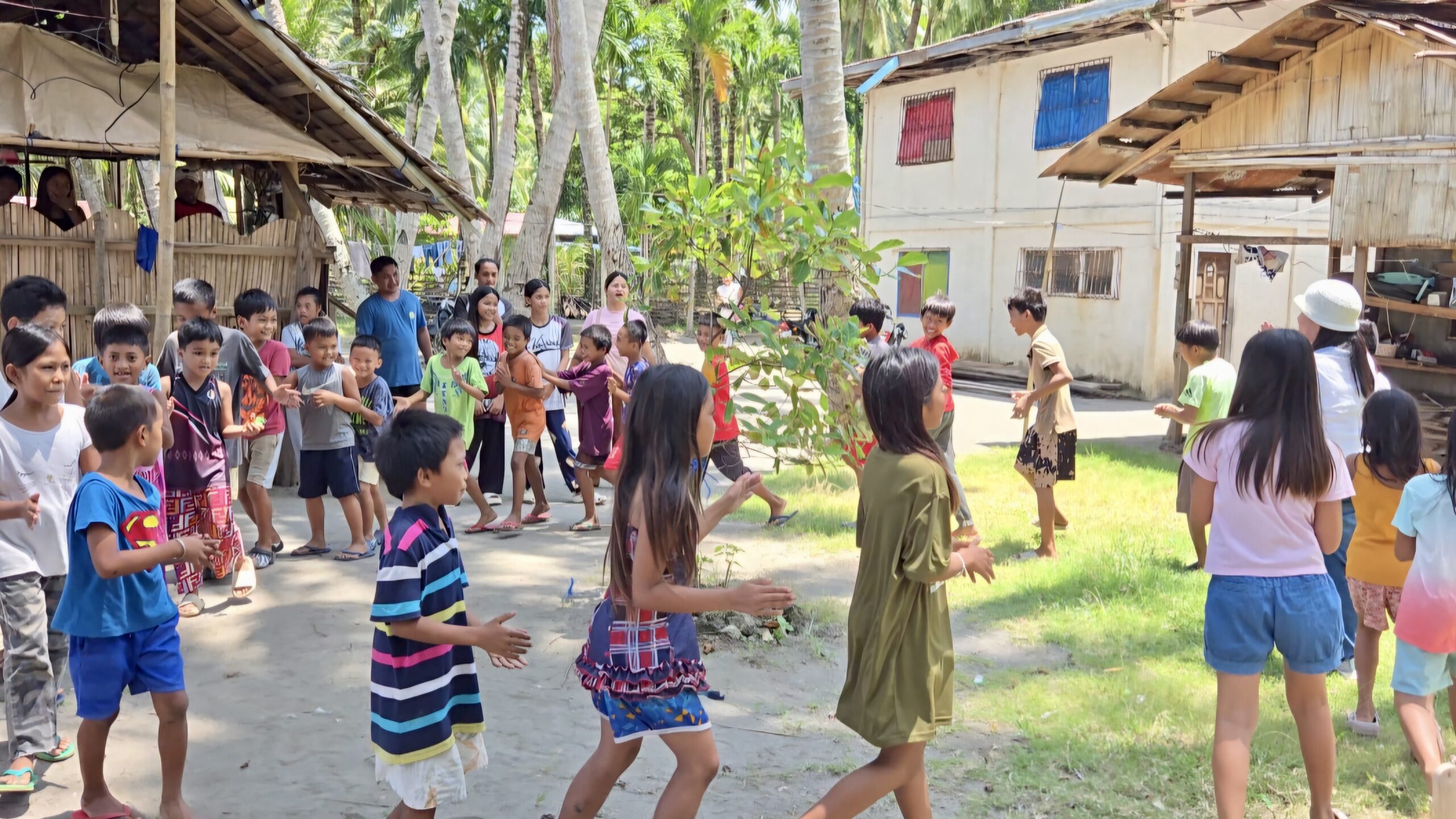
Fifty-two children ages four to twelve also joined recreational and community activities that provided space for play, friendship, interaction, and moments of normalcy.
These activities were not presented as formal psychosocial interventions. They nevertheless recognized that children experience emergencies differently from adults and need safe, welcoming, and age-appropriate spaces during recovery.
Centering Blaan Identity and Knowledge
About three out of every four participants in the Sarangani Leg were Blaan, one of the Indigenous Peoples of Southern Mindanao with a significant presence in Sarangani and neighboring provinces.
The Philippine Statistics Authority’s 2020 Census of Population and Housing recorded 373,392 Blaan members of the household population nationwide, including 138,087 in Sarangani Province. These figures establish the scale of the Blaan presence but cannot capture the diversity of communities, histories, livelihoods, knowledge systems, and relationships with territory.
This article uses Blaan, without an apostrophe, following the spelling affirmed by Blaan cultural advocates and leaders.
The importance of Blaan participation in disaster recovery extends beyond representation. Research with selected Blaan communities in Sarangani has documented locally grounded knowledge concerning weather and environmental change, drought, heavy rainfall, landslides, soil erosion, farming, environmental conservation, and collective coping. Other research has examined how environmental knowledge relevant to disaster preparedness is interpreted and transmitted across generations.
These findings should not be generalized to all Blaan communities. Knowledge is shaped by particular territories, histories, environments, and experiences. They nevertheless reinforce an important principle for humanitarian and disaster work: Indigenous Peoples are not simply populations to be assisted. Their knowledge, leadership, and priorities should help shape preparedness, response, and long-term recovery.
Scientific knowledge, public disaster systems, and Indigenous knowledge need not be treated as competing approaches. Disaster preparedness can be strengthened when locally grounded knowledge informs planning alongside scientific information, while communities retain authority over their knowledge and how it is shared.
Ancestral Domains, Discrimination, and Cultural Continuity
Disaster recovery does not take place in isolation from longer histories of inequality. Across Southern Mindanao, Indigenous communities have faced pressures on ancestral territories from displacement, changing land use, commercial development, infrastructure, and extractive activities. These pressures can affect access to land, water, livelihoods, culturally important places, and the conditions that sustain community life.
Blaan communities elsewhere in Southern Mindanao have also raised concerns over developments affecting ancestral territories, including questions of displacement, Free, Prior and Informed Consent, environmental impacts, and community participation. These experiences should not be attributed to the families who joined the Glan activity; rather, they provide wider context for understanding why ancestral-domain rights and self-determination remain important to Blaan communities.
Indigenous families may also face discrimination and unequal access to health care, education, infrastructure, secure livelihoods, government services, and political participation. During disasters, existing inequalities can shape who is most exposed, what assistance is accessible, and how quickly families are able to recover.
Cultural continuity is part of that recovery. Language, knowledge, customary practices, relationships with territory, and other forms of cultural life endure because communities continue to practise and transmit them across generations. Displacement and prolonged separation from land and community can make that continuity more difficult.
Standing with the Blaan therefore means more than recognizing Indigenous culture during commemorative events. It means respecting ancestral-domain rights, identity, knowledge systems, community leadership, and the right of Blaan communities to participate meaningfully in decisions affecting their lives and territories.
From Immediate Assistance to Longer-Term Accompaniment
The 22 August activity addressed immediate needs through food assistance, communal meals, children’s activities, and community and youth mobilization. Longer-term recovery, however, will require different forms of support depending on the circumstances of each household.
Children, older persons, pregnant women, persons with disabilities, people with existing medical conditions, displaced households, and families whose livelihoods have been interrupted may require additional assistance or referrals. Continuing coordination with community leaders and local partners can help identify these needs and connect families, where appropriate, with health, humanitarian, legal, psychosocial, or government services.
Any follow-up must remain voluntary and grounded in informed consent, confidentiality, safety, and realistic commitments. Accompaniment means responding to priorities identified by affected families and supporting—not replacing—their capacity to determine their own recovery.
Beyond the Commemoration
The Sarangani Leg forms part of wider IDWIP 2026 initiatives connecting Indigenous communities and solidarity partners across Mindanao and beyond. The circumstances differ from one community to another. In Bukidnon, Talaandig families brought attention to ancestral land, farming, livelihood, culture, health, and access to justice. In Sarangani, earthquake recovery brought food security, displacement, disaster preparedness, Blaan identity and knowledge, and community care into focus.
What connects these experiences is not a single issue, but a common principle: Indigenous Peoples must be able to determine their own priorities, sustain their cultures and relationships with territory, and participate meaningfully in decisions affecting their communities.
For the families who gathered in Glan, the work of recovery continues after the activity has ended.
The food packs will be consumed. The communal kitchen will be dismantled. Volunteers will return home. But families will continue rebuilding their homes, livelihoods, routines, and sense of security long after the distribution is over.
That is where the meaning of “Safeguarding Life and Well-being” extends beyond a commemorative theme. It becomes a responsibility to remain in solidarity with communities through the longer work of recovery—and to ensure that humanitarian action respects the dignity, knowledge, leadership, and self-determination of the people it seeks to accompany.
No community should face recovery alone.
Duyog sa Katawhan. Duyog sa Mindanao.
Duyog ta. Makighiusa ta.
Editorial Note on Community Representation, Consent, and Humanitarian Documentation
This article draws from MCJ documentation of the IDWIP 2026 Sarangani Leg, observations and information gathered during humanitarian activities, community and partner accounts, and government, academic, and public sources consulted in preparing the story.
The article seeks to document humanitarian conditions without reducing Indigenous participants to disaster victims or beneficiaries. Blaan participants are recognized as members of communities with their own identities, knowledge systems, leadership, relationships, and capacities.
Information concerning individual or household circumstances should be documented and published only with appropriate consent and consideration of safety, privacy, dignity, and potential harm. Participation in humanitarian assistance must not be treated as consent to public identification, photography, interviews, or publication of personal circumstances.
Population and disaster figures represent conditions recorded by the cited sources at particular dates and may be revised as government assessments are updated.
Research concerning particular Blaan communities is presented as evidence of knowledge documented in those communities and should not be generalized to all Blaan people.
MCJ’s humanitarian documentation and public communication are guided by informed consent, community dignity, confidentiality, accuracy, cultural respect, fairness, and do-no-harm principles.
Substantive corrections, additional records, and relevant community perspectives may be reviewed and, where appropriate, reflected in subsequent updates.
Sources and References
Department of Science and Technology–Philippine Institute of Volcanology and Seismology (DOST-PHIVOLCS). Primer on the 08 June 2026 Magnitude (Mw) 7.8 Offshore Sarangani Earthquake.
Department of Social Welfare and Development, Disaster Response Operations Monitoring, Information and Communication (DSWD DROMIC). Report No. 80 on the Effects of the Mw 7.8 Earthquake Incident in Maasim, Sarangani, situation as of 6:00 a.m., 21 August 2026.
Philippine Statistics Authority. 2020 Census of Population and Housing: Ethnicity in the Philippines.
Philippine Statistics Authority Region XII. Regional Social and Economic Trends: Household Population by Ethnicity by Province/City, Census Year 2020.
Regional and national disaster authorities and government reporting on the July 2026 Sarangani rain-induced landslides.
Research on Blaan Indigenous knowledge, environmental hazards, and community adaptation in Sarangani. Journal of Health Research and Society, Vol. 1, 2018..
Research on Indigenous knowledge and earthquake preparedness among Blaan communities. Asian Journal of Education and Social Studies, 2025.
United Nations. International Day of the World’s Indigenous Peoples.
Source for the 2026 global observance and theme, “Honouring Indigenous Midwives: Safeguarding Life and Well-being.”
MCJ Field Documentation
Mindanao Climate Justice. Field documentation from the IDWIP 2026 Sarangani Leg and second-wave humanitarian assistance in Glan, Sarangani Province, 22 August 2026.
Mindanao Climate Justice and partners. Documentation from the first Duyog Mindanao humanitarian mission in Glan, Sarangani Province, 4 July 2026.