On the third leg of MCJ’s IDWIP 2026 journey across Mindanao, Siargaonons spoke about coastal access, unequal tourism, climate pressures—and the power of communities to shape the future of their island.
By Mindanao Climate Justice (MCJ)
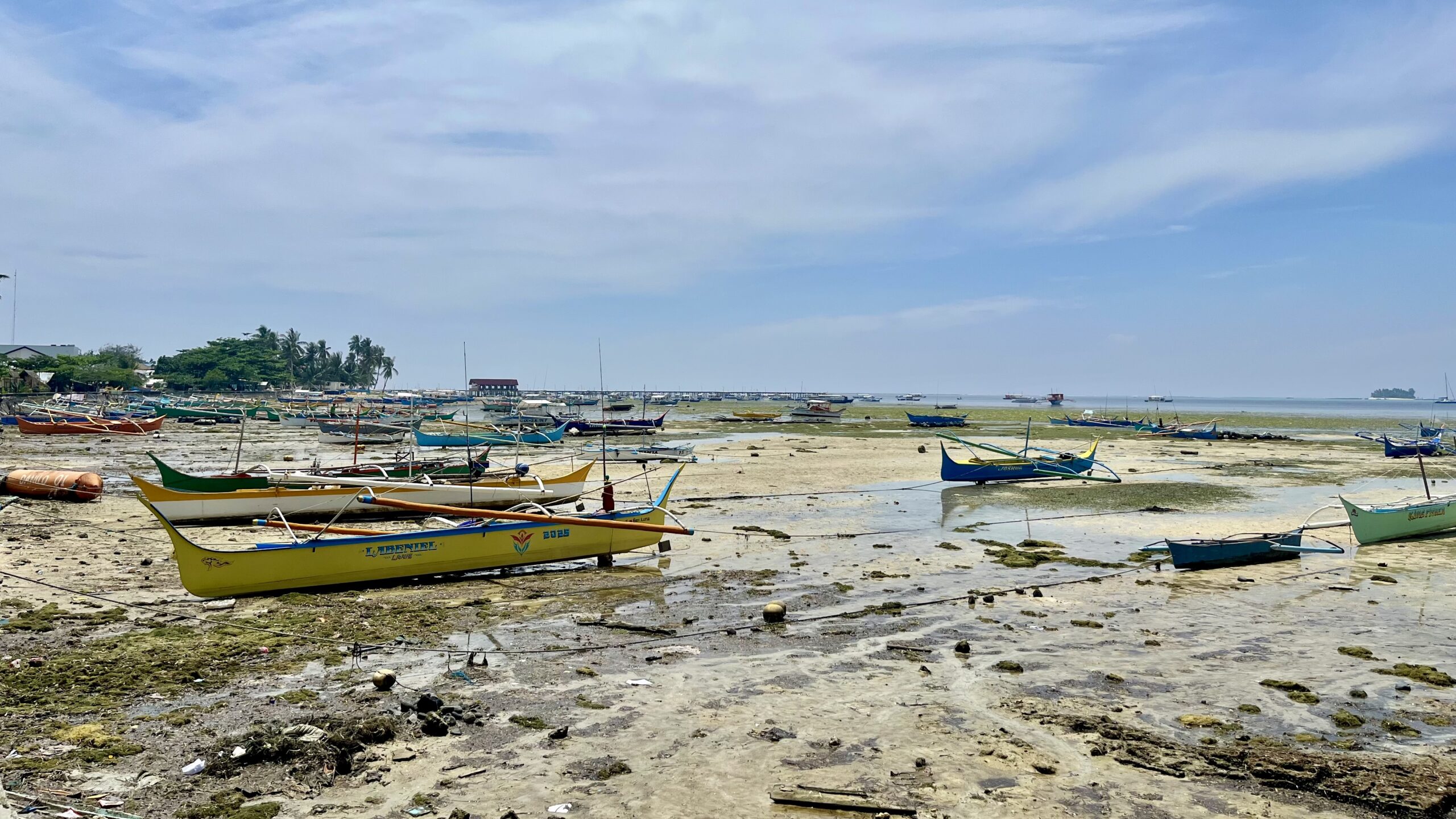
Along Tourism Road in General Luna, fisherfolk remembered when reaching the sea required only a short walk from their homes.
The shoreline connected their families to fishing grounds, food, income and generations of knowledge about the sea. During a community visit by Mindanao Climate Justice (MCJ), fisherfolk said resort-related development had obstructed or restricted routes they had traditionally used to reach the coast.
Some said they must now ride motorcycles to another access point before they can begin fishing. The additional journey costs fuel, time and money before a family even knows whether the day’s catch will provide an income.
For visitors, Tourism Road offers convenient access to resorts, restaurants and surf breaks. For these fisherfolk, development along the same corridor has made reaching the sea more difficult and expensive.
Their experience raises a question that followed MCJ throughout the third leg of its 2026 International Day of the World’s Indigenous Peoples (IDWIP) journey in Mindanao:
Who gets to decide what development means—and whose lives, livelihoods and relationships with land and water are protected as places change?
The third leg of an IDWIP journey
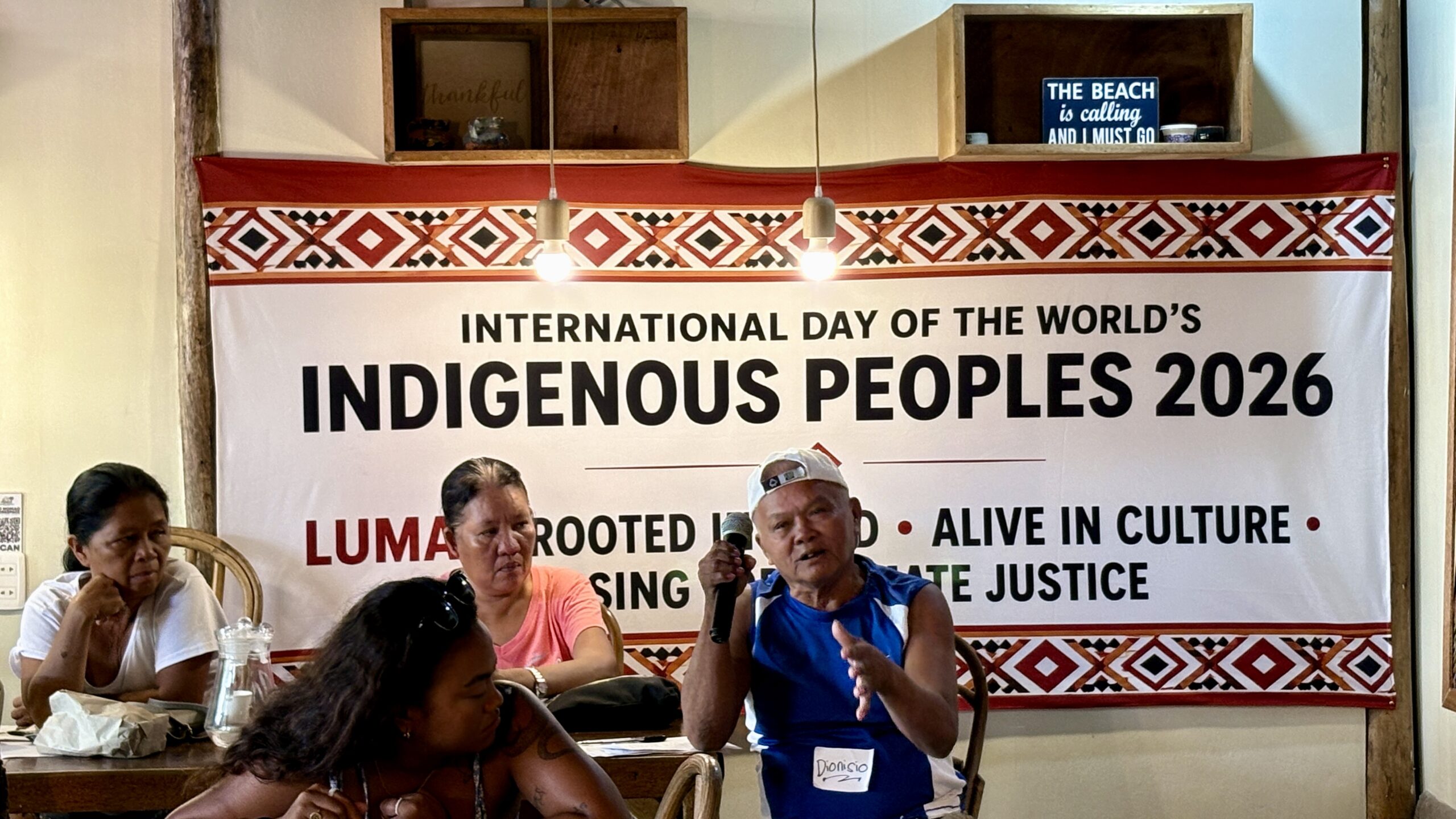
MCJ came to Siargao as part of its Mindanao-wide commemoration of IDWIP 2026.
Across the different legs of this year’s observance, the places, peoples and experiences are not the same. But the journey is connected by a common concern: how communities protect rights, relationships, knowledge, culture and collective well-being amid environmental and economic change.
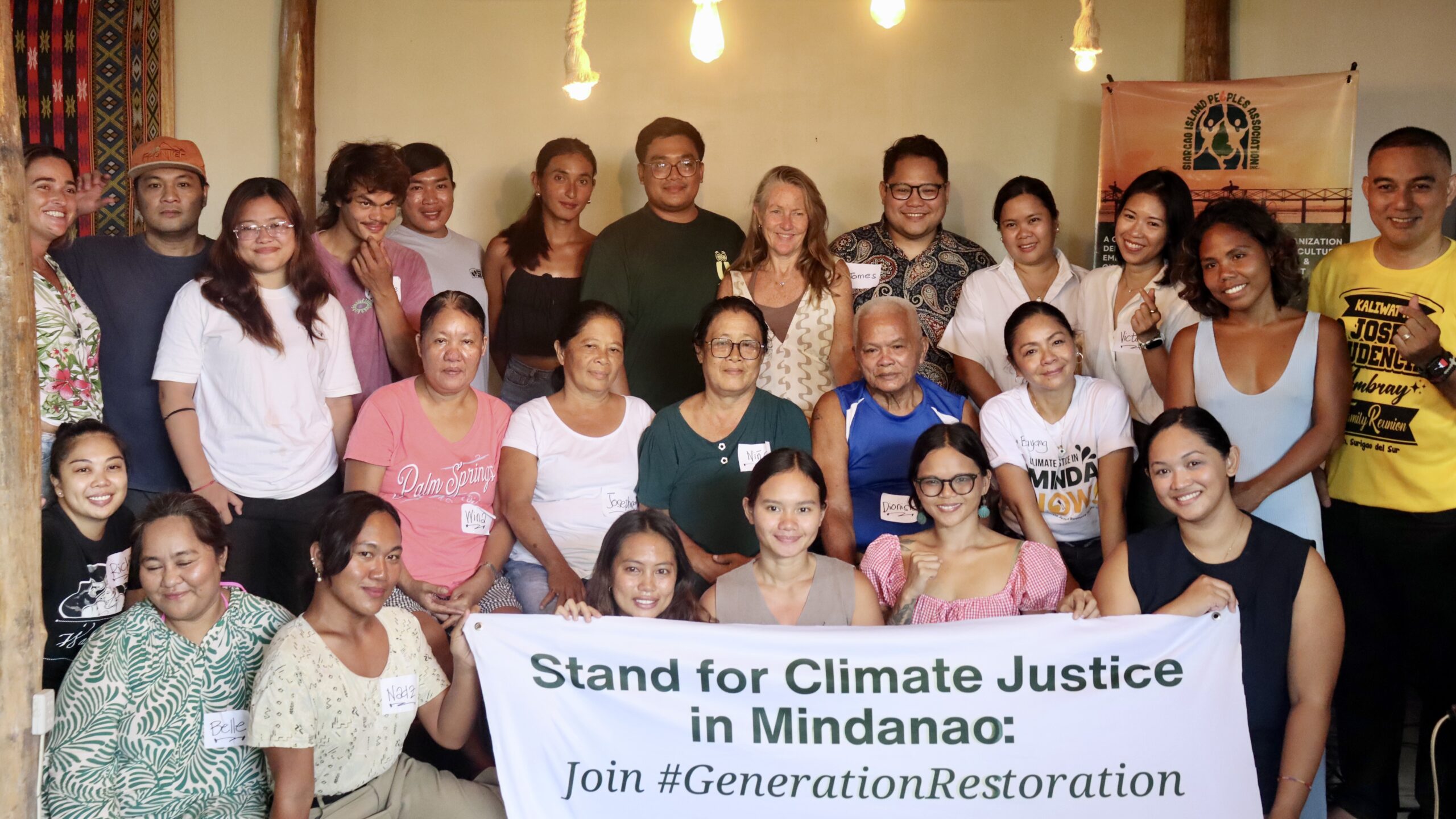
On 27 August 2026, fisherfolk, women, young people, workers, community leaders and advocates gathered in General Luna for Katungod sanan Tingog: Basic Rights, Climate Justice and Collective Well-being.
Convened with the Siargao Island Peoples Association (SIPA), the gathering brought together community representatives and partners for discussions on basic rights, climate justice, psychosocial first aid and collective care.
It formed part of MCJ’s observance of IDWIP under the United Nations’ 2026 theme, Honouring Indigenous Midwives: Safeguarding Life and Well-being. The theme recognizes Indigenous midwives as knowledge holders whose care connects health, culture, spirituality, land and the continuity of Indigenous Peoples.[1]
Siargao required a particular kind of listening.
The gathering did not assume that all Siargaonons identify as Indigenous. Instead, the Siargao leg approached IDWIP as a space for solidarity and learning around questions deeply connected to Indigenous and local-community struggles: Who participates in decisions over land and water? Whose knowledge counts? Who benefits from development? Who bears its costs? And how can communities protect both their rights and their collective well-being?
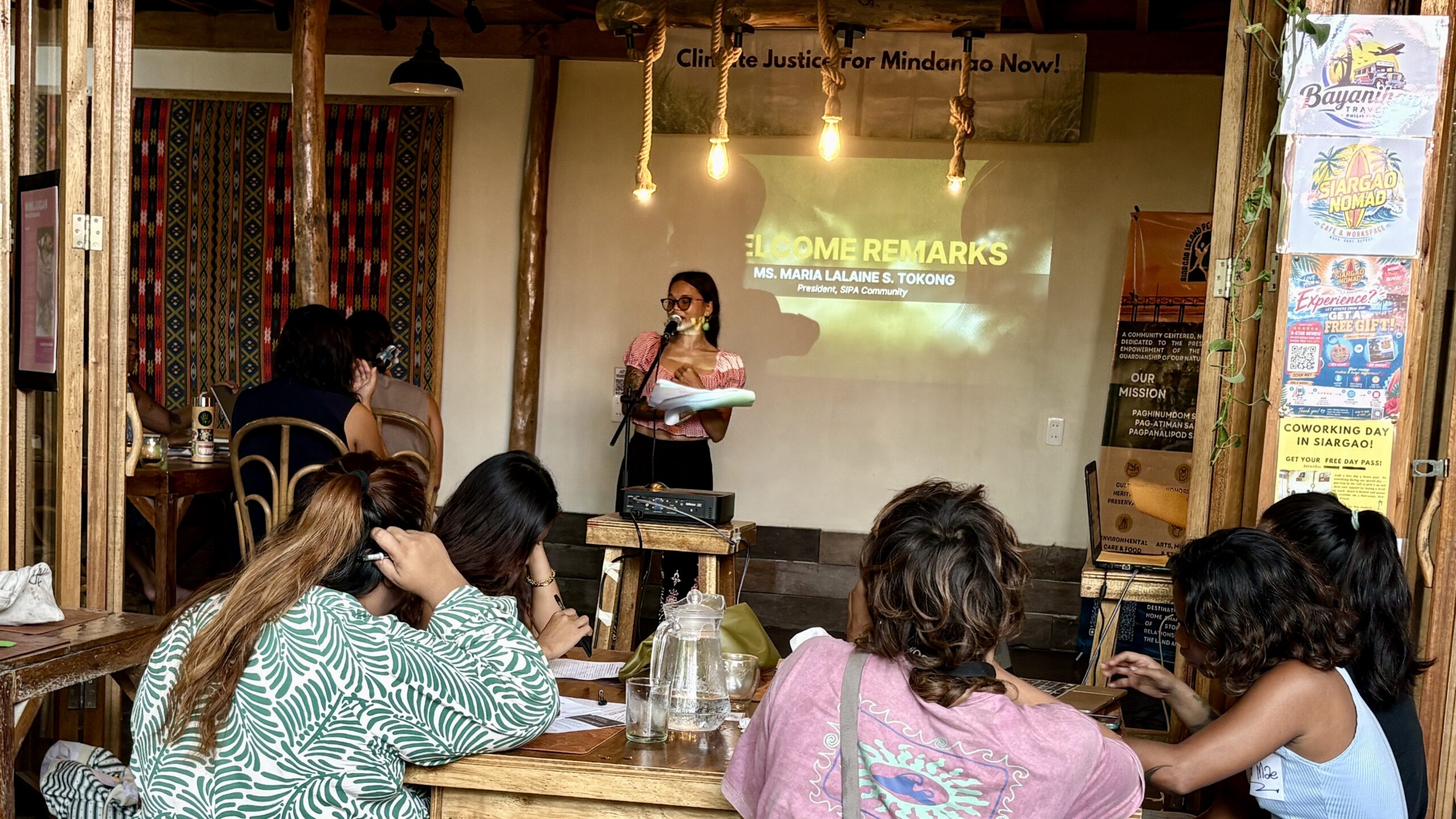
SIPA President Maria Lalaine S. Tokong described the gathering as a “community pulse”—a space where people could name what gave them hope, what worried them and which concerns they felt deserved further conversation.
Tourism had brought jobs and opportunities to some families, she said. But progress should not require communities to surrender environmental protection, community spaces or dignity.
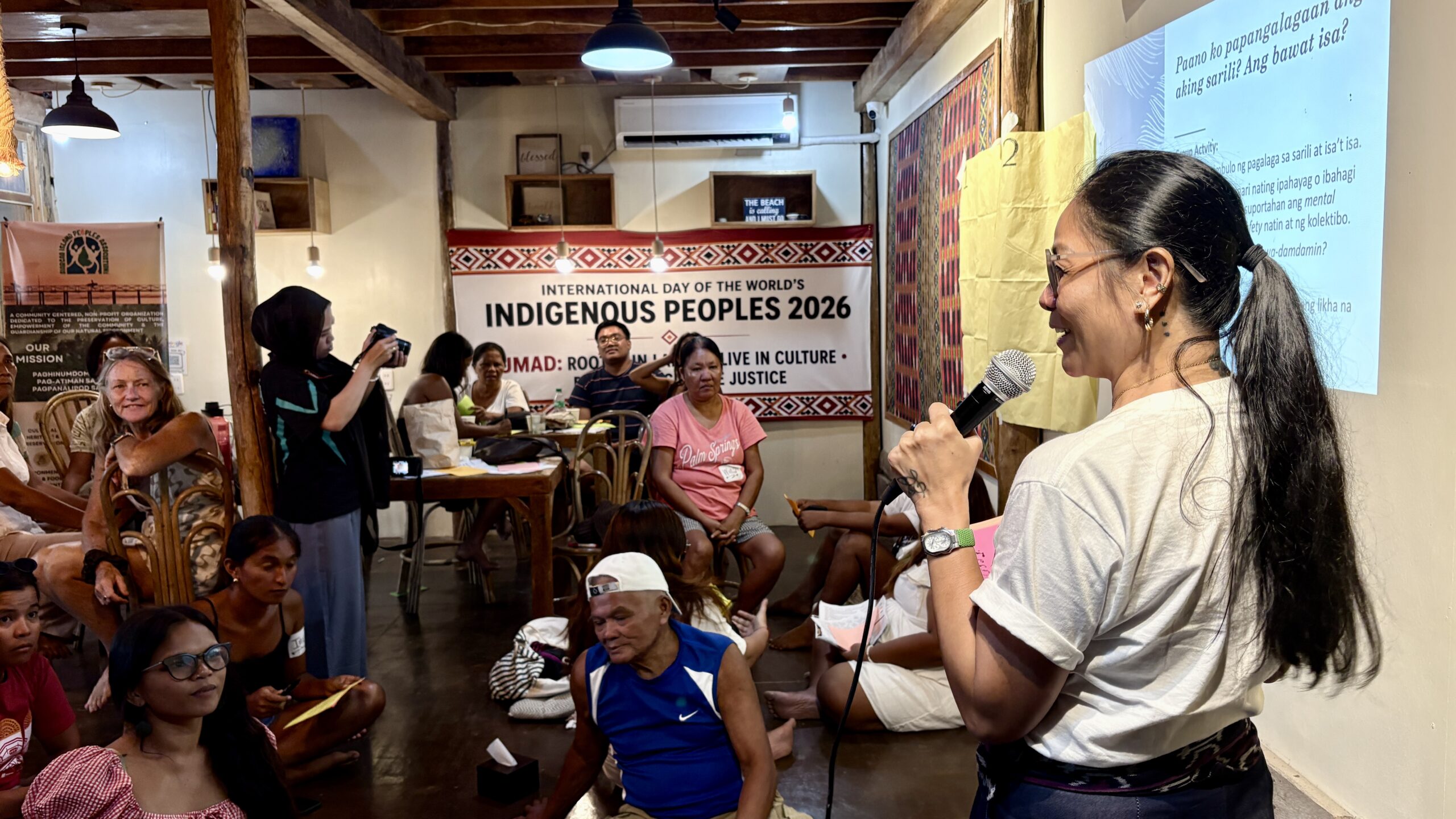
MCJ Trustee Bayang Barrios, the multi-awarded Manobo singer-songwriter, cultural advocate and one of the country’s leading voices for Indigenous culture through music, brought another dimension to the gathering. For more than three decades, her work has brought Indigenous music, identity and stories into the wider Filipino cultural landscape.[11]
Barrios emphasized that solidarity begins with listening. Siargaonons know their island through lived experience, livelihood, memory and culture, and outside organizations should not arrive with predetermined answers.
Rights written in law matter, she reflected, but they become meaningful when people understand them, can participate in decisions affecting them and have the confidence and protection to speak.
Tourism grows, but who benefits?
Siargao is internationally known for surfing, particularly the Cloud 9 break in General Luna. But before it is a destination, it is a home.
Fishing, farming and coastal communities depend on reefs, mangroves, seagrass beds, coconut lands, watersheds and municipal fishing grounds not simply as environmental assets, but as foundations of livelihood and community life.
The eight municipalities on Siargao’s main island had a combined population of 117,370 in the 2024 POPCEN, based on MCJ’s sum of municipal population counts published by the Philippine Statistics Authority.[2]
Department of Tourism–Caraga data released through the government’s Freedom of Information portal recorded 529,822 tourist arrivals in Siargao in 2023, comprising 476,074 domestic and 53,748 foreign arrivals.[3]
That annual flow was about 4.5 times the island’s 2024 resident population, although the comparison does not mean that all those visitors were present at the same time.
Tourism has generated work in accommodation, food service, transport, construction, guiding and retail. At the same time, participants described growing pressures around land, housing, water, roads, beaches, livelihoods and community spaces.
There is no sufficiently detailed, publicly accessible island-level account showing how much visitor spending reaches Siargaonon households, how much accrues to locally or externally owned businesses, or how much leaves the island through airlines, booking platforms, suppliers and investors.
Money spent in Siargao is not automatically wealth enjoyed by Siargaonons.
Historical municipal poverty estimates provide additional context. The Philippine Statistics Authority’s 2021 city- and municipal-level Small Area Estimates placed poverty incidence across Siargao’s municipalities at approximately 26 to 32 percent.[4]
From 1 May 2026, the statutory minimum daily wage in Caraga, including Siargao Island, rose to ₱475 under Wage Order No. RXIII-20.[5]
A minimum-wage rate by itself cannot tell us whether a particular household can meet its needs. Employment may be seasonal or insecure, households differ in size and income sources, and living costs change.
The broader question is therefore not whether tourism creates income. Clearly, it does.
The question is how the opportunities and costs of tourism are distributed.
Participants spoke about fisherfolk access to livelihood spaces, insecure work, pressures on land and resources, and the future available to young Siargaonons.
Tourism’s success should therefore be measured not only by visitor arrivals and investment, but also by whether local people retain access to livelihoods, dignified work, housing, water, community spaces and meaningful participation in decisions affecting their island.
The right to reach the sea
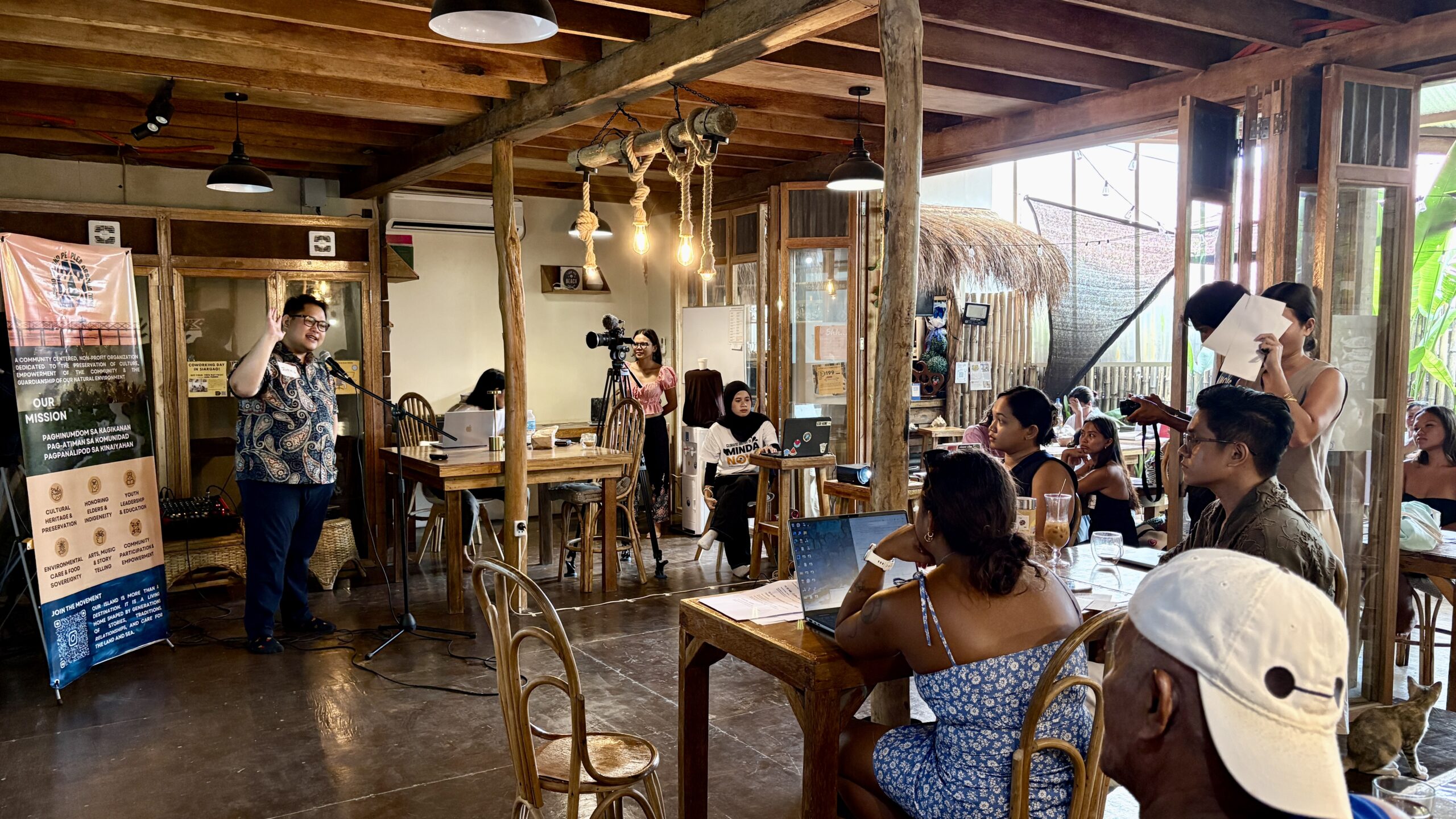
During the 27 August dialogue, participants asked what fisherfolk could do when structures or establishments obstruct routes they use to reach the shoreline.
Atty. James Gregory A. Villasis of the UP Law Center–Institute of Human Rights discussed coastal easements and legal protections relevant to municipal fisherfolk.
Knowing that a right exists, the discussion emphasized, is only a beginning. Communities may also need to understand which laws and agencies apply, document what is happening, organize around shared concerns and seek qualified legal assistance where necessary.
The testimonies MCJ heard about coastal access require further documentation. The gathering did not determine whether particular establishments had violated specific easement or access requirements.
But the experience described by fisherfolk raises a legitimate public question:
Can people whose livelihoods depend on the sea still reach it safely, directly and lawfully?
Affected fisherfolk, community organizations and appropriate government offices could begin by documenting existing access routes, coastal easements, boat-landing areas and reported obstructions.
Any determination that a particular structure violates Philippine law must come through the appropriate legal and administrative processes.
Meaningful coastal access, however, should be evaluated from the perspective of the people who actually use the shore—not only tourists entering beaches, but fisherfolk carrying boats, repairing gear and going to sea for their livelihood.
Santa Fe: concerns that require answers
MCJ also visited residents of Barangay Santa Fe, where another set of concerns emerged.
An existing Chabad presence in Siargao is publicly verifiable. Chabad of Siargao’s own website identifies a Chabad House/Jewish center in General Luna and lists religious, meal and visitor services.[6]
Residents told MCJ that a larger Chabad House was planned or being pursued. A public online petition opposing a proposed Chabad House in General Luna also emerged in 2025.[7]
Residents and SIPA estimated that the reported site was approximately 50 meters from Sta. Fe National High School. The distance has not been independently confirmed through an official site plan.
Proximity to a school is not, by itself, evidence of danger or wrongdoing.
Residents’ concerns centered instead on the scale and status of the proposed development, the information available to the surrounding community, and questions about construction, traffic and pedestrian safety, emergency access, water, wastewater, waste disposal, crowd capacity and security.
They also spoke about community discussions examining experiences in other countries and what those experiences might mean for questions of outside influence, development and community control.
The questions raised are ultimately concrete ones:
What is being proposed? Who owns and operates it? What permits and clearances apply? What is its intended scale? What effects could it have on the surrounding community and school? And how are residents able to participate in decisions that affect the place where they live?
These questions should be answered through transparent information, appropriate government processes and meaningful community participation.
They should also be addressed without prejudice. Jewish identity, Israeli nationality, religious affiliation and political ideology should not be conflated. Accountability should rest on conduct and the equal application of Philippine law.
Hospitality does not require silence. Accountability does not justify prejudice.
Both principles can be defended at the same time.
Odette’s unfinished lessons
Questions about development and inequality in Siargao cannot be separated from the island’s exposure to climate hazards.
Super Typhoon Odette, internationally known as Rai, struck Siargao on 16 December 2021. Human Rights Watch reported that the typhoon affected 99 percent of Siargao’s population, destroying homes and infrastructure and displacing residents.[8]
The effects extended deeply into livelihoods. Vera Files reported that 5,494 tourism workers across Siargao were affected, half of them from General Luna.[9]
But disasters do not affect everyone equally, and neither does recovery.
Families with fewer savings, insecure livelihoods or uncertain tenure may have less capacity to rebuild. Relocation can also create new difficulties if people are separated from fishing grounds, employment, schools, markets, water or support networks.
In research conducted in Del Carmen, Pilar, San Isidro and Santa Monica, Human Rights Watch documented problems involving meaningful consultation, accessible information and inclusion in planned relocation. It also reported inconsistent water access and accessibility problems at a San Isidro relocation site and regular flooding reported at a relocation site in Pilar.[8]
These experiences underline a basic climate-justice principle:
A roof is not full recovery if a family loses its livelihood. A relocation site is not safe simply because it is farther from the sea.
Climate adaptation should reduce risk without creating new forms of exclusion or dispossession.
During MCJ’s August visit, one resident recalled a prolonged period without significant rain. This was a personal observation, not an official rainfall measurement.
PAGASA’s monitoring provides a wider climate context: as of 26 August 2026, the country’s ENSO alert status was El Niño.[10]
Local rainfall conditions and household water experiences require local data and should not be inferred from national ENSO status alone. But water scarcity raises its own questions of inequality. Households and large establishments do not necessarily have the same capacity to store, purchase or secure water.
As tourism grows and climate pressures intensify, transparent information about water availability, extraction and demand becomes increasingly important.
Care, culture and solidarity
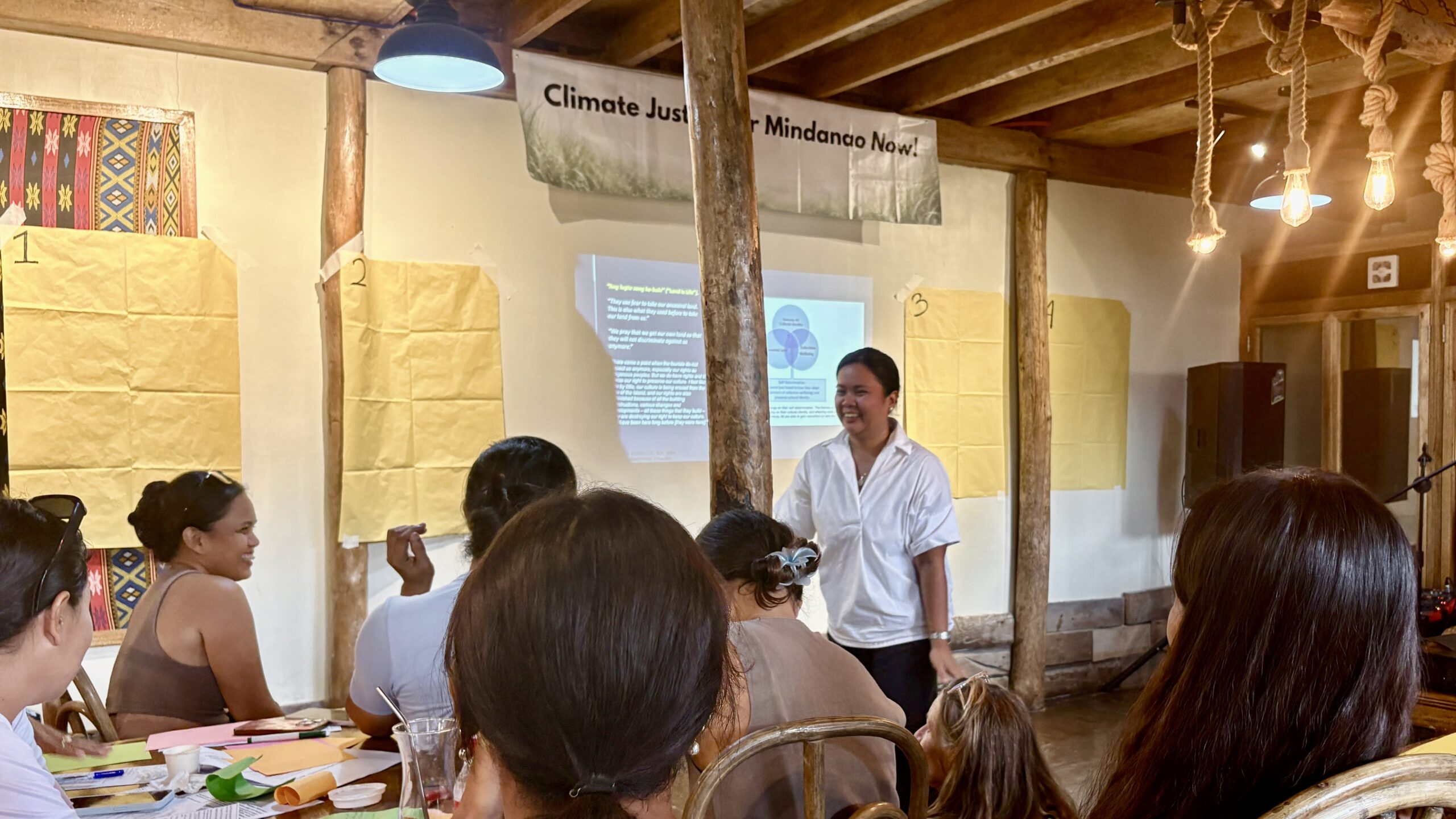
Not every form of protection begins with a permit, complaint or court.
During Katungod sanan Tingog, Hannah Misha M. Morillo of the Mindfulness, Love and Compassion Institute for Psychosocial Services introduced psychosocial first aid and collective care through pakikipagkapwa-damdamin—a fellowship of feeling grounded in listening, presence and culturally responsive accompaniment.
The conversation recognized something communities often already know: people facing disaster, conflict, uncertainty and rapid change rely not only on formal institutions but also on families, neighbors, organizations, culture, faith and everyday practices of mutual care.
This resonated with the wider spirit of MCJ’s IDWIP observance.
The 2026 theme honoring Indigenous midwives calls attention to people whose knowledge and care sustain life across generations.[1] In Siargao, it opened a broader reflection: Who are the people holding communities together, and who cares for those who repeatedly care for others?
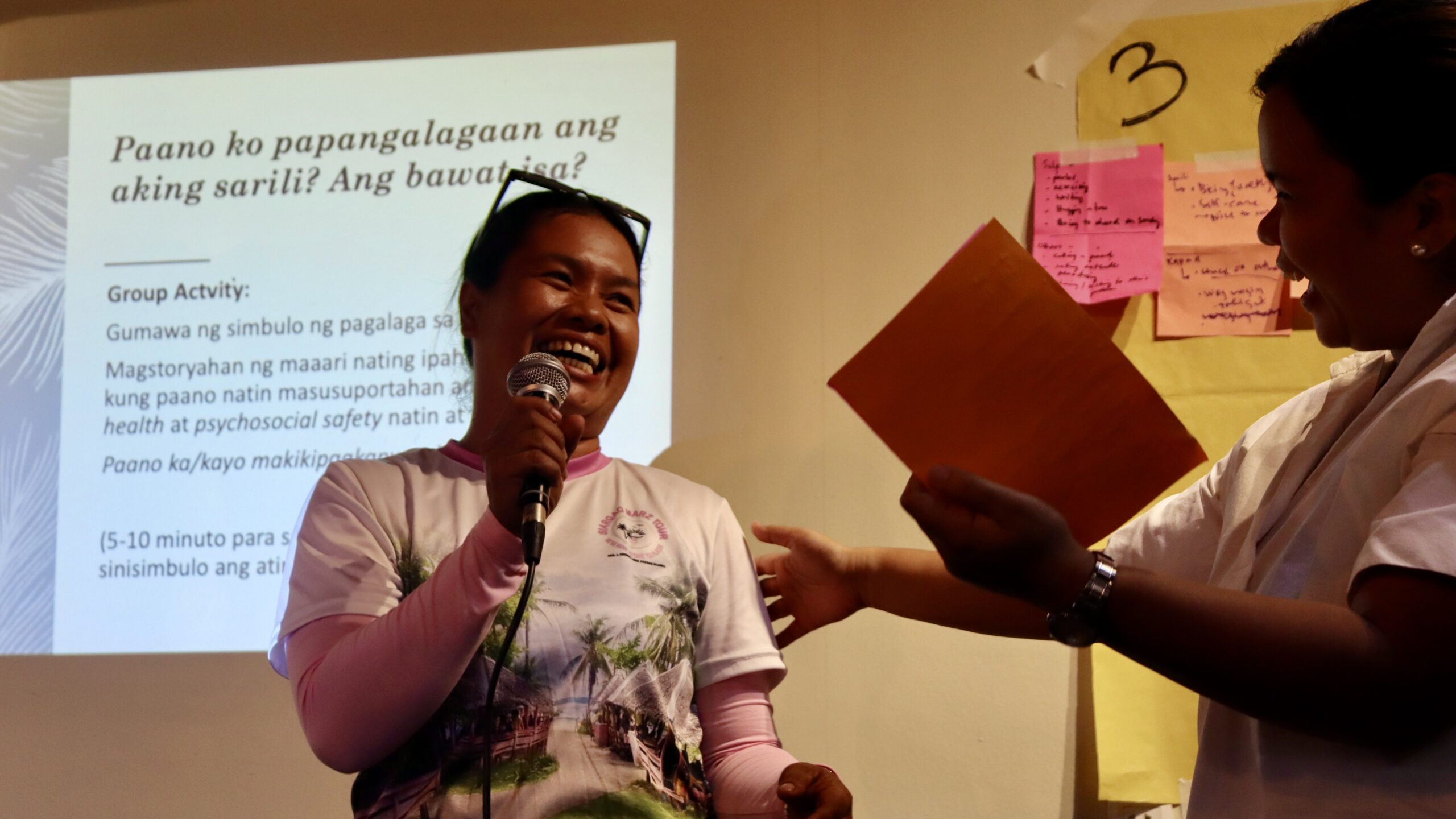
Fr. Raymond Ambray of PANALIPOD Peoples Coalition carried this into the gathering’s solidarity reflection, emphasizing the importance of accompaniment when communities confront difficult questions and unequal power.
The day did not end with the formal program.
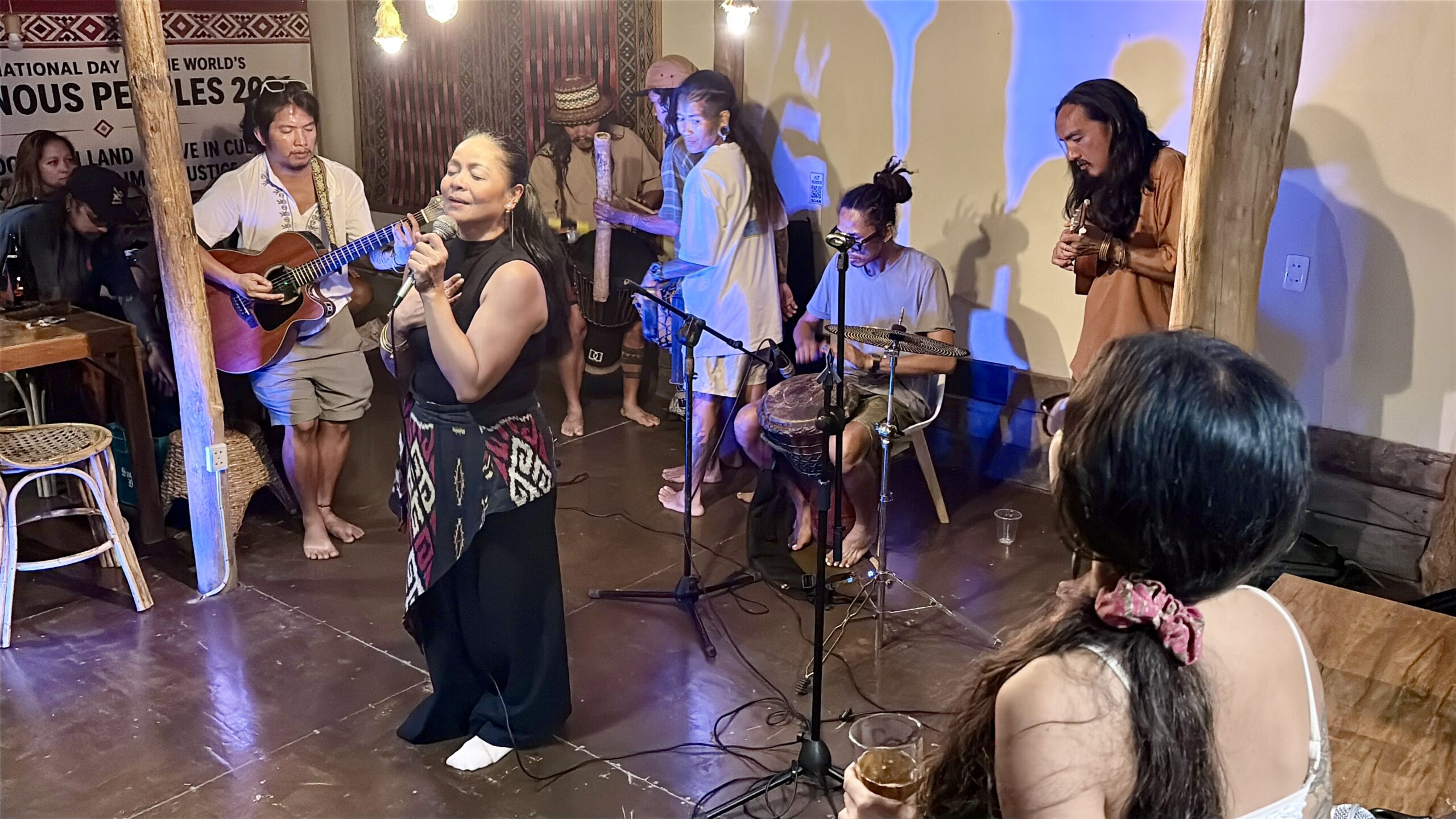
That evening, participants, partners and local artists came together for a Panagtapok—a community gathering of conversation, music, performance and fellowship.
Barrios stayed with the gathering and performed alongside local artists and community members. Earlier in the day, she had spoken about listening before speaking. By evening, that solidarity was being expressed differently—not through another presentation, but through music shared with the community.
For an artist whose work has spent decades bringing Indigenous experience into the wider Filipino cultural landscape, the moment carried particular meaning. Local artists shared their own music and stories; Barrios shared hers. What had begun during the day as conversations about rights, climate justice and collective care continued through culture and relationship.
In an IDWIP gathering, culture is not an ornament after the “real” discussions. It carries memory, identity, relationship and struggle. It is also one of the ways solidarity becomes lived rather than simply spoken.
From knowing our rights to knowing one another
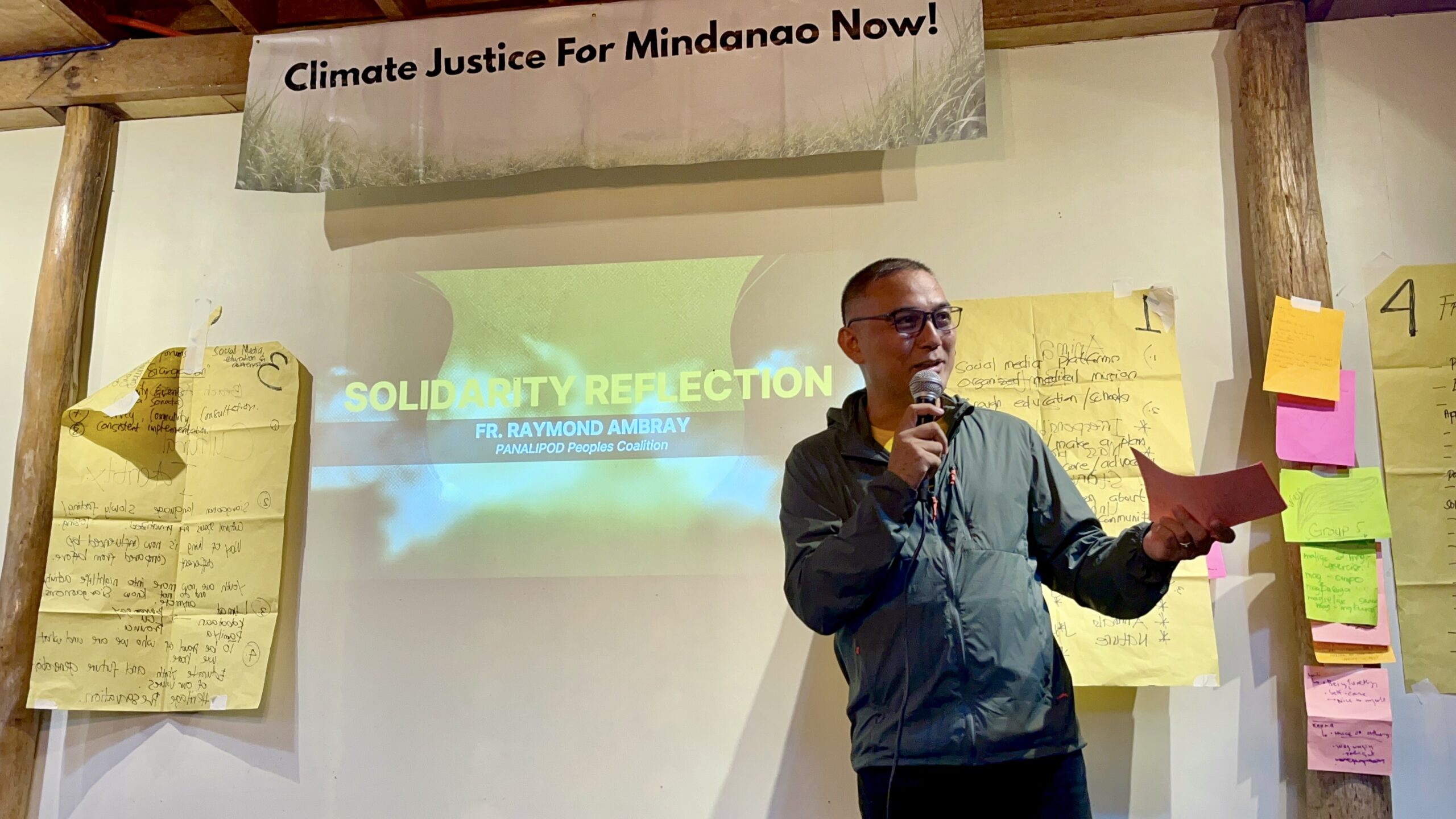
The Siargao leg did not produce a complete diagnosis of the island.
It was not designed to.
MCJ’s engagement was an initial one, and the testimonies heard over several days cannot represent every Siargaonon, every municipality or every perspective on tourism and development.
What it did reveal were questions worth pursuing.
Reported restrictions on fisherfolk access deserve further documentation and legal clarification. Residents’ concerns in Santa Fe deserve transparent answers through appropriate processes. People reporting rights violations deserve access to protection and due process. Tourism and climate policy deserve scrutiny through the experiences of people who live on the island year-round.
But another possibility emerged from the gathering itself.
Organizations and community representatives who may not regularly sit in the same room began hearing one another.
That matters.
Community power does not begin only when a case is filed or a campaign is announced. Sometimes it begins when people know their rights, discover who else is asking similar questions, share information and decide for themselves what deserves collective attention.
For MCJ, several areas are worth further community-led discussion, documentation and learning: coastal access and fisherfolk livelihoods; transparency around developments affecting communities; community protection and referral mechanisms; and the ways tourism can contribute more fairly to livelihoods, ecosystems, water security and climate resilience.
These are not predetermined campaigns for Siargao.
Whether they become dialogues, legal actions, community campaigns, organizational priorities—or something else—is not for MCJ alone to decide.
That direction should grow from Siargaonon organizations and affected communities themselves.
Siargao must remain a home
Across the first three legs of MCJ’s IDWIP 2026 journey, communities differ in history, identity, geography and struggle. There is no single story that can speak for all of them.
But Siargao returned us to a question at the heart of climate justice:
Can development proceed without separating people from the places, relationships and resources that sustain their lives?
For the fisherfolk along Tourism Road, that question is remarkably concrete.
They once walked to the sea.
Today, some say reaching it requires a motorcycle ride.
The distance may appear small on a development map. For a fisherfolk household, it can mean additional fuel, time, expense and uncertainty. For an island deciding what kind of future it wants, it represents a much larger question about access, belonging and power.
Siargaonons should not have to choose between opportunities from tourism and the ability to protect their livelihoods, environment, community spaces and dignity.
And perhaps the next step begins not with outsiders answering that question for them, but with communities continuing to find one another.
Know our rights. Know one another. Find what we can do together.
That, too, is part of what MCJ’s IDWIP journey is seeking to understand: solidarity is not only standing with communities when struggles become visible. It is building relationships early enough that communities can learn from one another, strengthen the organizations they already have and determine what collective action—if any—they want to take.
The measure of Siargao’s future will not be only how many tourists arrive or how many resorts are built. It will also be whether the people who call the island home can reach the sea, sustain their livelihoods, protect their children and participate meaningfully in deciding what development enters their communities.
Siargao must remain a home—not merely a destination.
Reporting note
This article draws from the proceedings of Katungod sanan Tingog on 27 August 2026; community visits and conversations conducted by SIPA and MCJ; official statistics and publicly available information; and published reporting.
The Siargao leg was an initial community engagement, not a formal fact-finding or legal investigation. Community accounts are identified as such, while external factual claims are separately sourced. MCJ had not independently established the current permit status of the proposed Santa Fe development or confirmed through an official site plan the estimated distance between the reported site and Sta. Fe National High School as of publication.
Sources
[1] United Nations, Honouring Indigenous Midwives: Advancing Rights, Ensuring Cultural Continuity and Promoting Intergenerational Well-being, 2026.
[2] Philippine Statistics Authority, 2024 POPCEN municipal population counts. The combined figure of 117,370 is MCJ’s sum for Burgos, Dapa, Del Carmen, General Luna, Pilar, San Benito, San Isidro and Santa Monica.
[3] Department of Tourism–Caraga, Siargao Tourism Statistics, 2023, released through the Philippine government’s Freedom of Information portal: 476,074 domestic and 53,748 foreign arrivals, or 529,822 total.
[4] Philippine Statistics Authority, 2021 City and Municipal Level Poverty Estimates, Small Area Estimates.
Internal publication check: A second MCJ staff member should verify the eight municipal values directly against the PSA spreadsheet before publication.
[5] National Wages and Productivity Commission / RTWPB XIII, Wage Order No. RXIII-20, minimum daily wage of ₱475 effective 1 May 2026.
[6] Chabad of Siargao, official website, Chabad House Siargao Philippines.
[7] No To Chabad House in Siargao, public online petition, 2025. Cited as evidence of publicly expressed opposition, not as independent substantiation of allegations contained in the petition.
[8] Human Rights Watch, Philippines: Planned Climate Relocations Threaten Rights and After the Storm: Climate Change, Planned Relocation, and People with Disabilities in Siargao, Philippines, 2026.
[9] Vera Files, A Year After Odette, Siargao Folk Put the Pieces of Life Back Together.
[10] DOST-PAGASA, ENSO Alert System Status, 26 August 2026.
[11] Cultural Center of the Philippines, Bayang Barrios: Katutubong DIVA – Celebrating 35 Years. CCP describes Barrios as a multi-awarded singer-songwriter, proud Manobo from Agusan del Sur, teacher, theater artist, designer and peace advocate, and discusses her decades of work bringing Indigenous music and culture to mainstream audiences.
Cultural Center of the Philippines — Bayang Barrios: Katutubong DIVA – Celebrating 35 Years