On 14 September 2026, more than 2.39 million voters in the Bangsamoro Autonomous Region in Muslim Mindanao (BARMM) will take part in choosing the region’s first regularly constituted Parliament.
The election marks a historic stage in the Bangsamoro people’s continuing struggle for self-determination and in the implementation of the 2014 Comprehensive Agreement on the Bangsamoro between the Philippine government and the Moro Islamic Liberation Front (MILF).
But casting ballots—while indispensable—will not by itself complete the peace process.
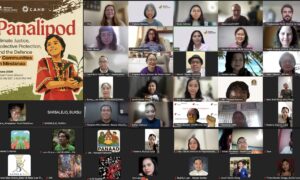
This was the central message of “Peace at Last? Youth and Community Perspectives on the First BARMM Parliamentary Election and the Unfinished Bangsamoro Peace Process,” a public webinar held on 1 September 2026, the opening of Peace Month.
The forum brought together perspectives from Moro youth, Indigenous leaders, peace and human-rights advocates, and climate justice organizers. At its core was a question that extends beyond election day: Is the political transition producing peace that communities can experience in their daily lives?
The webinar was organized by the Kinaiyahan Youth Organization, together with the Mindanao Climate Justice Resource Facility, Inc. (MCJ), PANALIPOD People’s Coalition, and the UP Law Center Institute of Human Rights.
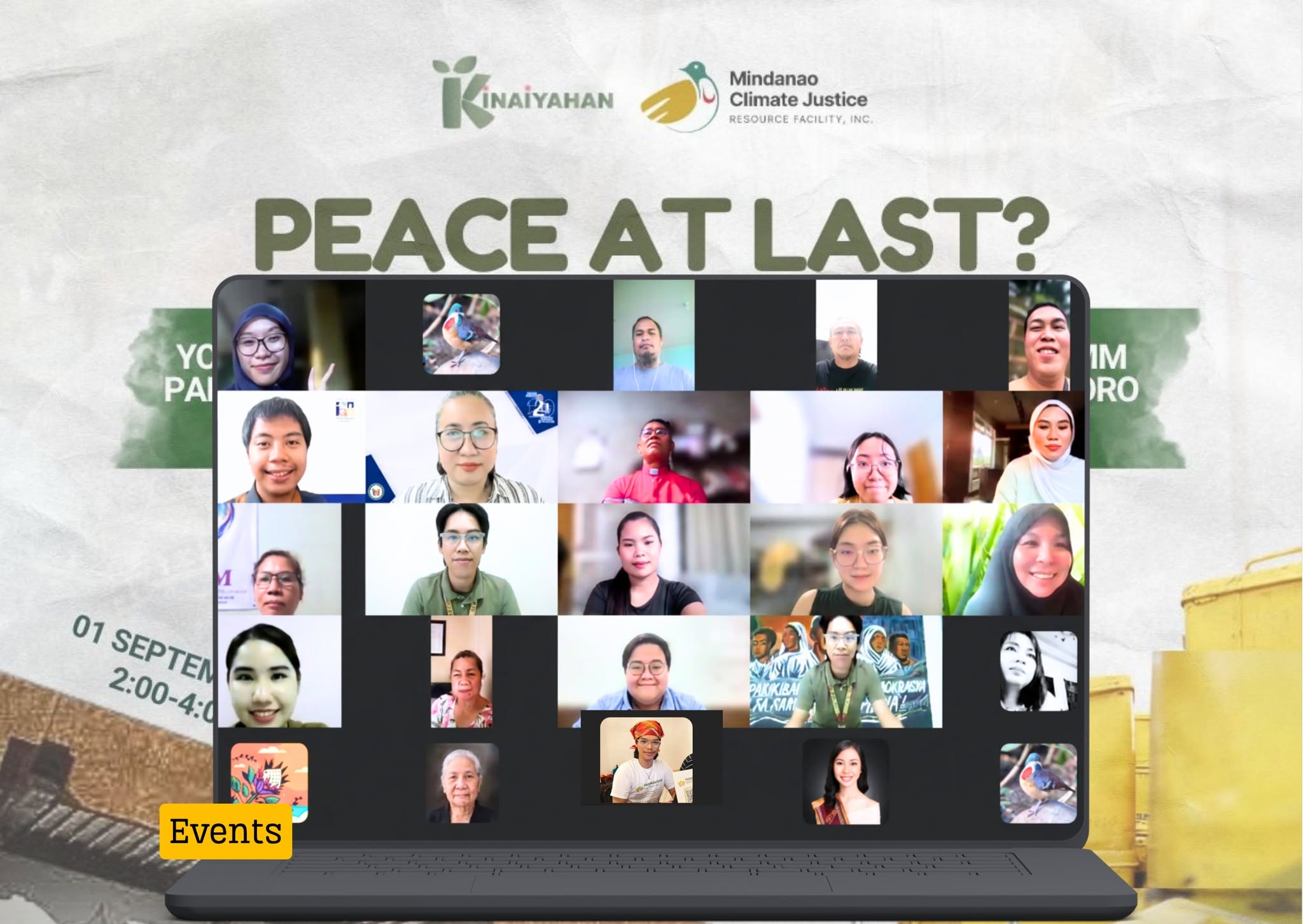
Opening the forum, Aisanie Ibrahim, chairperson of the Kinaiyahan Youth Organization–Marawi Chapter, emphasized that peace cannot be measured solely through agreements, elections, and political institutions.
Peace must also be measured by whether displaced families can return home safely; Indigenous Peoples can defend their ancestral lands; young people can influence public decisions; and marginalized communities can access livelihoods, essential services, and protection from violence.
Her message established the standard that guided the discussion: the success of the Bangsamoro transition must ultimately be judged from the ground.
From transition to an elected Parliament
BARMM is an autonomous region within the Philippines that replaced the former Autonomous Region in Muslim Mindanao. It was established in 2019 following the ratification of the Bangsamoro Organic Law, one of the major outcomes of decades of struggle and negotiations between the Philippine government and the MILF.
During the transition, BARMM has been governed by the Bangsamoro Transition Authority, whose members were appointed rather than elected. The first regular election, now scheduled for 14 September 2026, is intended to move the region from this transitional arrangement to a regularly constituted parliamentary government with a direct electoral mandate. The election date is provided for under Republic Act No. 12317 and has been reaffirmed in official election preparations. (eLibrary)
The system differs from the presidential model used by the Philippine national government. Voters will elect an 80-member Parliament composed of 40 party representatives, 32 parliamentary district representatives, and eight sectoral representatives. Members of Parliament will then choose the Chief Minister, who will head the regional government. (Mindanao News)
The election will therefore determine more than who occupies public office. It will shape which parties and political forces can form the regional government, set legislative priorities, authorize budgets, oversee public resources, and influence the continuing implementation of the peace process.
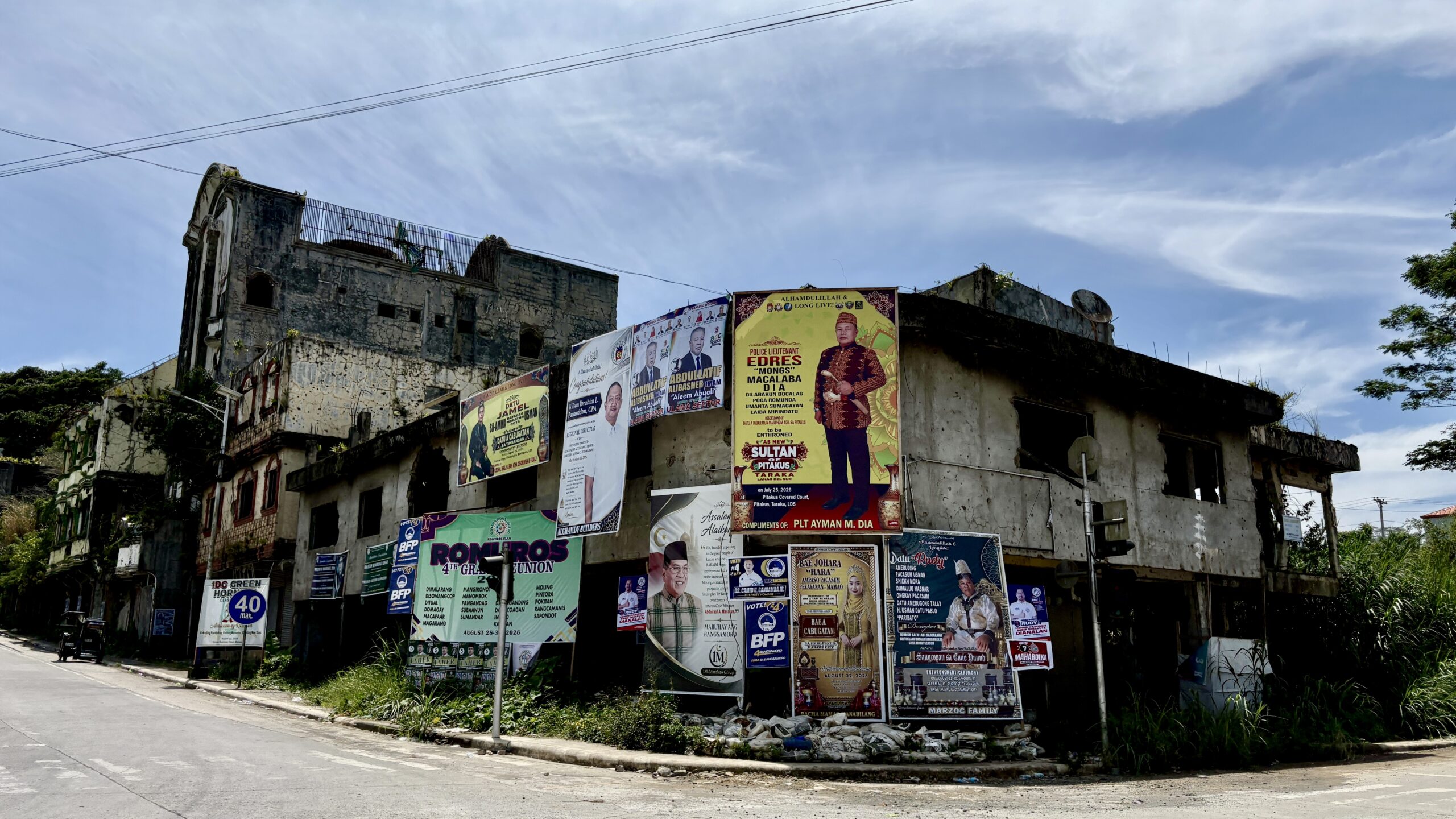
The parliamentary system creates an opportunity to build political parties around programs and public policy rather than individual personalities. Whether it can overcome patronage, clan dominance, and the concentration of political power among established families remains a central democratic question.
BARMM is not an experiment
The forum’s insistence that the election be understood within the longer peace process also resonates with public debate over whether BARMM should be treated as an “experiment.”
In the first and second parts of her Philippine Daily Inquirer column, Mindanao scholar and MCJ Board of Trustees member Prof. Rufa Cagoco-Guiam challenged this characterization of BARMM and its parliamentary election.
Such language risks placing the burden on the Bangsamoro people to prove their capacity for self-government and peaceful coexistence within a Christian-majority country. It overlooks the fact that BARMM was not created through presidential discretion or granted as an act of national benevolence. It emerged from a historical struggle for self-determination and from negotiated agreements that impose responsibilities on both the Bangsamoro and Philippine governments.
The experience of the 1996 Final Peace Agreement with the Moro National Liberation Front also showed that moving from armed struggle to electoral participation cannot, by itself, resolve every conflict or grievance. Elections can open democratic space and establish a public mandate, but they cannot substitute for justice or the fulfillment of peace commitments.
The question, then, is not whether the Bangsamoro people can pass a national “experiment.” It is whether regional institutions and political parties can remain accountable to BARMM’s diverse communities—and whether the Philippine state will respect meaningful autonomy, honor its negotiated commitments, and address the injustices that made autonomy necessary.
Where electoral power is concentrated
According to Commission on Elections records as of 8 May 2026, BARMM has 2,393,530 registered voters.
Figures reported by MindaNews based on those records show that 78.2% of the regional electorate is concentrated in mainland BARMM, covering Lanao del Sur, Maguindanao del Norte, Maguindanao del Sur, Cotabato City, and the Special Geographic Area. (Mindanao News)
Lanao del Sur, including Marawi City, has 727,634 registered voters, or approximately 30.4% of BARMM’s total electorate, making it the region’s largest provincial voting bloc. (Mindanao News)
The distribution demonstrates the political weight of the mainland provinces and the central place of Lanao del Sur and Marawi in the election. It also raises questions about how political parties will represent island provinces, smaller communities, and marginalized sectors that could be overshadowed by larger voting blocs and entrenched political formations.
Thirteen regional parliamentary political parties are contesting the 40 party-representation seats, which will be allocated through proportional representation. (Mindanao News)
The unfinished peace process—and Marawi
Prof. Tirmizy Abdullah situated the parliamentary election within the longer history of the Bangsamoro struggle and the peace negotiations between the Philippine government and the MILF.
“The BARMM parliamentary election is not just an ordinary election. It is part of a long peace process.”
The election represents a critical bridge from an appointed transitional authority to an elected regional government. But Abdullah cautioned that changing the form of government will not necessarily transform political practice if patronage, clan dominance, and personality-based politics remain decisive.
Major commitments under the peace process remain incomplete, particularly normalization measures involving decommissioning and reintegration, the disbandment of private armed groups, the management of loose firearms, socioeconomic support for former combatants and conflict-affected communities, and other security and confidence-building commitments.
Transitional justice, meanwhile, has entered a new institutional phase. On 28 January 2026, the Bangsamoro government enacted Bangsamoro Autonomy Act No. 89, establishing a Bangsamoro Transitional Justice and Reconciliation Program and creating the Bangsamoro Transitional Justice and Reconciliation Commission. (Official Gazette Bangsamoro)
The challenge for the incoming Parliament will therefore include ensuring that this law is effectively implemented alongside the broader transitional-justice and normalization obligations arising from the peace process.
The first regularly constituted Parliament will have important responsibilities for the laws, budgets, oversight, and regional programs affecting these commitments. Their completion, however, also depends on the Philippine government, the MILF, and the mechanisms established under the peace agreements.
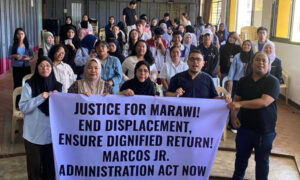
The continuing displacement of Marawi residents reveals the distance between institutional progress and peace as communities experience it.
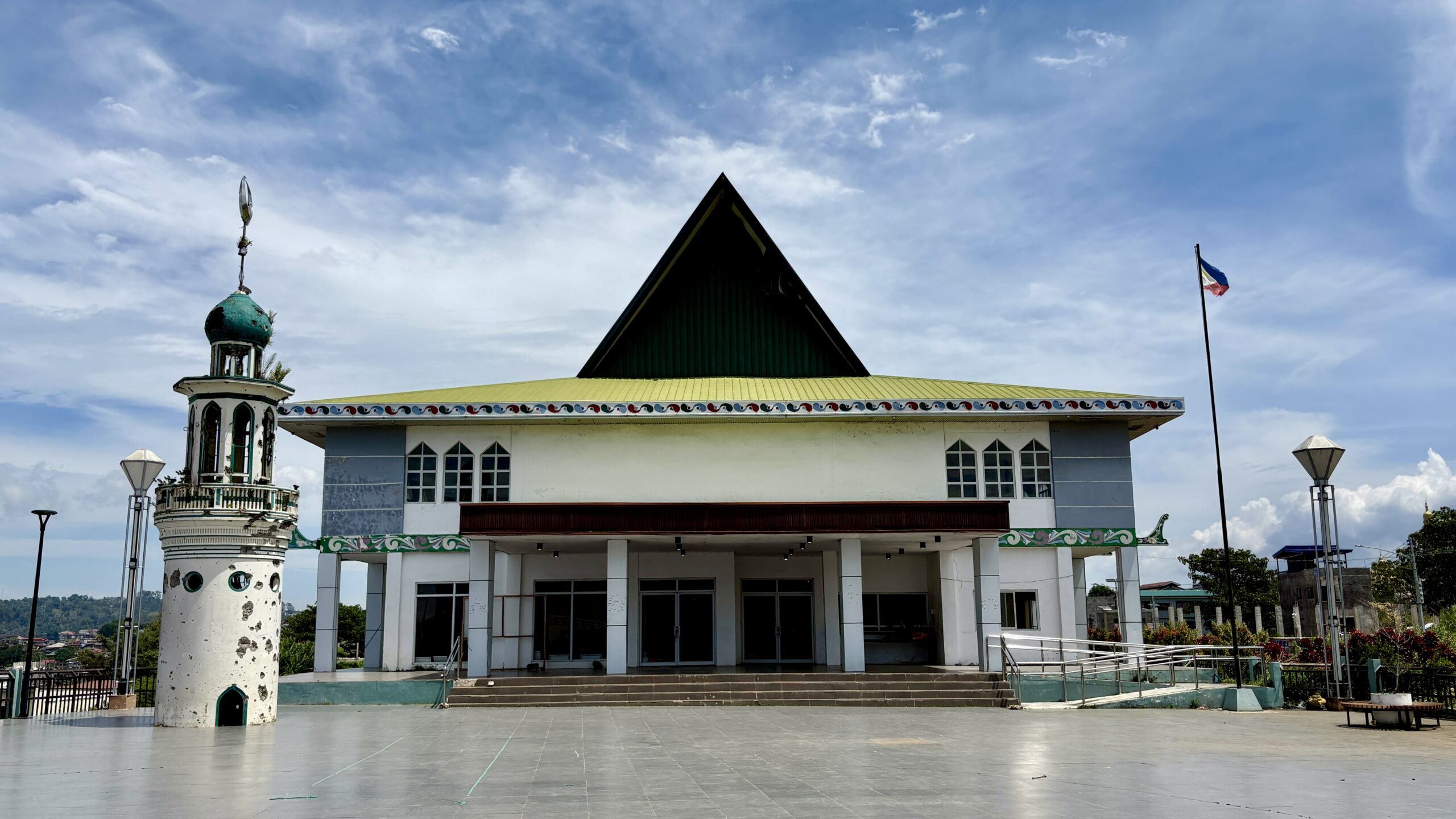
When fighting erupted in Marawi in May 2017, hundreds of thousands of people were forced to flee. Homes, livelihoods, schools, places of worship, and community spaces were destroyed or rendered inaccessible during the five-month siege.
Displacement did not end when the fighting stopped. In June 2024, the Commission on Human Rights, citing United Nations humanitarian data, reported that approximately 16,070 families, or around 80,300 people, were still living as internally displaced persons. (CHR Philippines)
These figures reflect the prolonged consequences of the crisis years after the fighting ended.
For Marawi communities, meaningful peace requires safe and voluntary return, just and timely compensation, secure housing and land tenure, restored livelihoods and public services, and genuine participation in rehabilitation.

Young people are a major electoral force
In her presentation, Asmana Umpat, a Bangsamoro youth leader and student, emphasized that young people are not merely future beneficiaries of the peace process. They are already a major political constituency.
Citing Commission on Elections figures during the forum, Umpat said 60.8% of BARMM voters are young people, representing more than one million voters. The same figure and attribution were reported by Davao Today in its coverage of the forum. (Davao Today)
Because a publicly accessible age-disaggregated COMELEC dataset independently confirming the precise 60.8% figure was not identified, the figure is best understood as one presented by Umpat during the forum based on COMELEC data.
“We need to ask why communities in BARMM continue to face risks despite the progress of the peace process.”
Umpat contrasted choices shaped by clan pressure, familiar names, and personality politics with what she described as conscious voting: informed decisions based on candidates’ records, platforms, principles, and capacity to respond to community needs.
This task has become more difficult as disinformation, unverified claims, and personality-driven political content spread through social media. Political education and digital literacy are therefore essential democratic tools for young voters navigating the region’s first parliamentary election.
Young people, however, should not carry the burden of political reform alone. Their choices are also shaped by poverty, displacement, unequal access to education and reliable information, patronage, and limited access to political institutions.
Political parties and public institutions must create sustained avenues for young people to participate in policymaking, budgeting, community monitoring, peacebuilding, and public accountability. Their participation must continue beyond election day.
No meaningful peace without Indigenous justice
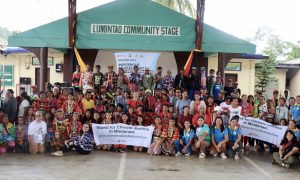
The forum also centered the situation of non-Moro Indigenous Peoples (NMIPs)—Indigenous communities within BARMM that maintain identities, ancestral territories, governance systems, and histories distinct from the Moro majority.
Archie U. Buaya, an Indigenous leader and former senior commissioner of the Bangsamoro Human Rights Commission, emphasized that Indigenous Peoples were not passive beneficiaries of the peace process. They participated in discussions surrounding the Framework Agreement on the Bangsamoro and the Bangsamoro Organic Law and must be recognized as partners in building the region.
“Ancestral land is more than property. It is deeply connected to the identity, history, and survival of Indigenous communities. Peace and development must not come at the expense of Indigenous rights.”
The threats confronting NMIP communities remain severe. According to data from the independent peace monitor Climate Conflict Action (CCA) reported by MindaNews in October 2025, at least 102 non-Moro Indigenous people had been killed in BARMM since the region’s establishment in 2019. (Mindanao News)
The figure does not refer specifically to election-related killings, nor should every case be treated as arising from the same cause. Rather, it points to a broader pattern of insecurity affecting Indigenous communities during the transition, including violence occurring amid disputes over land, territory, and political authority.
Buaya called for the effective protection of ancestral domains, recognition of Indigenous political structures, equitable access to public resources, and the active participation of Indigenous youth.
The Bangsamoro framework provides reserved representation for NMIPs. But meaningful representation requires more than filling designated seats. Selection processes must be independent, transparent, inclusive, and accountable to the communities whose collective rights the representatives are expected to defend.
Climate justice is part of the peace agenda
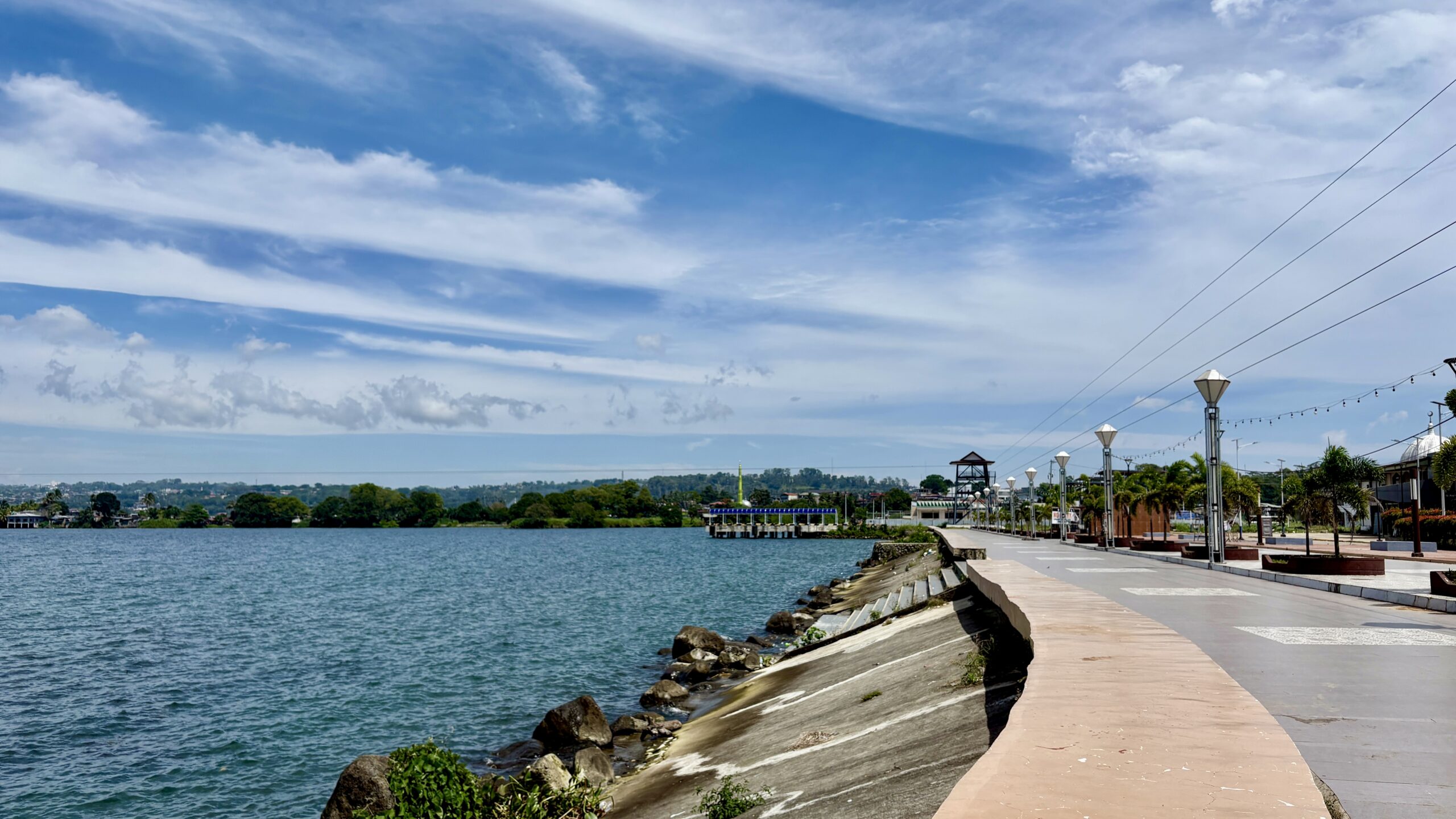
Nosaira A. Gasmala, a Meranaw climate justice advocate and MCJ program staff member based in Marawi, connected the peace process to the climate crisis and the conditions that make communities vulnerable.
Gasmala experienced displacement during the 2017 siege. Her work has also brought her into communities across Mindanao confronting environmental destruction, disasters, displacement, and threats to land and livelihoods.
Conflict and climate disasters are often treated as separate emergencies. In communities, however, they overlap. People already confronting displacement, poverty, land insecurity, damaged infrastructure, or weak public services face greater danger when floods, droughts, landslides, and extreme weather destroy homes, crops, water systems, and livelihoods.
During Severe Tropical Storm Paeng, internationally known as Nalgae, around 470,000 people were reported displaced in BARMM in 2022, according to UNHCR. The agency reported that the recorded displacement in BARMM came from the Maguindanao provinces. (UNHCR)
Gasmala proposed five public tests for the first regularly constituted Bangsamoro Parliament:
- Protect communities before disasters strike;
- Defend land, water, food systems, and livelihoods;
- Uphold the rights of people displaced by conflict, disasters, and development;
- Guarantee genuine community participation in decisions; and
- Confront the structural conditions that turn hazards into disasters.
Those conditions include poverty, land insecurity, weak public services, environmental destruction, and political exclusion. Climate resilience cannot be separated from land rights, housing, livelihoods, social protection, and accountable governance.
Because communities that contributed least to global warming frequently bear its heaviest costs, high-emitting states and fossil-fuel and extractive corporations must meet their responsibilities for emissions reduction, climate finance, remedy, and loss and damage.
Climate-finance institutions and development agencies must support priorities defined by communities, respect Indigenous Peoples’ right to free, prior and informed consent, and avoid projects that reproduce debt, extraction, displacement, or external control over land and natural resources.
Platforms, programs, and electoral accountability
Responding to the presentations, Edward Intang Abelardo, a Teduray Indigenous leader, writer, and community advocate from Upi, Maguindanao del Norte, urged voters to examine what political parties and candidates actually propose to deliver.
“As we face our first parliamentary election, we should ask: What is their platform? What is their vision for good governance? And how will they serve our communities?”
Abelardo warned that the opportunity offered by parliamentary elections could be lost if concentrated family power, corruption, and the exclusion of younger and marginalized voices continue to shape regional politics.
He called for greater scrutiny of campaign financing and for concrete party positions on human rights, ancestral land, housing, livelihoods, climate action, public accountability, and justice for past violence.
Election observers have also emphasized the need for vigilance.
In its first periodic report on the 2026 BARMM Parliamentary Elections, the Legal Network for Truthful Elections (LENTE) said its long-term observers would monitor electoral violence, abuse of state resources, vote-buying, disinformation, compliance with election laws, and other developments that could affect electoral integrity. The report also noted unresolved legal questions and accreditation concerns. (Asian Network for Free Elections)
LENTE called for an electoral process that is safe, accountable, transparent, inclusive, and trusted by the Bangsamoro people. (Asian Network for Free Elections)
These risks are not unique to BARMM. They reflect wider problems in Philippine electoral politics. Their presence in the region’s first parliamentary election, however, could undermine public confidence in both democratic governance and the peace process.
What peace must deliver
In his closing remarks, Atty. Raymond “Ice” Baguilat of the UP Law Center Institute of Human Rights returned the discussion to practical human-rights outcomes: whether Marawi’s displaced families can return in safety and dignity, Indigenous ancestral domains are protected, and communities can participate meaningfully in decisions affecting their lives.
The immediate test is a safe, credible, transparent, and inclusive election—one free from violence, coercion, vote-buying, disinformation, and abuse of state resources.
Beyond election day, communities expect the first regularly constituted Parliament to:
- advance normalization and implement transitional justice;
- secure return, compensation, housing, and sustainable livelihoods for displaced communities;
- protect ancestral domains and ensure substantive NMIP representation;
- guarantee meaningful participation by young people, women, and other marginalized sectors; and
- build rights-based climate resilience while ensuring accountable use of public resources.
These responsibilities do not belong to the Bangsamoro Parliament alone.
The Philippine government remains responsible for fulfilling the peace agreements, financing rehabilitation and normalization, protecting human rights, addressing political violence, and ensuring that autonomy is supported by sufficient powers and resources.
As Cagoco-Guiam’s intervention underscores, the Philippine government is a party to the peace process—not an experimenter entitled to define success for the Bangsamoro people or determine which regional political outcomes are acceptable.
Responsibility also extends beyond the Philippines. High-emitting states and corporations must meet their climate obligations, while donors, development agencies, climate-finance institutions, and solidarity partners must support conflict-sensitive and community-led action, respect Indigenous rights, and avoid interventions that reproduce debt, displacement, extraction, or external control over natural resources.
The concerns and demands surfaced during the webinar will contribute to the 18 September 2026 forum, “Peace at Last? Assessing the First BARMM Parliamentary Election and the Unfinished Bangsamoro Peace Process,” at UP Diliman. The post-election forum will assess the conduct and emerging results of the polls and clarify what the new Parliament and the Philippine government must do next.
The 14 September election will determine who occupies the first regularly constituted Bangsamoro Parliament. Its deeper historical meaning will depend on what follows: whether elected institutions can advance self-determination while protecting the rights, lands, lives, and dignity of all communities within BARMM—and whether the Philippine government fulfills its corresponding obligations under the peace process.
Peace will not be measured only by voter turnout, winning candidates, or parliamentary seats. It will be measured by whether communities experience security, justice, democratic participation, and the material conditions for a dignified life.
The ballot is a milestone—not the finish line for peace.
Sources and Further Reading
- Bangsamoro Parliament — “COMELEC confident on Sept. 14 BARMM polls” — Overview of the election, registered voters, and composition of the 80-member Parliament.
- MindaNews — “Mainland BARMM has 78.2% of the region’s 2.4M voters” — Regional voter figures, including the electorate of Lanao del Sur.
- OPAPRU — Comprehensive Agreement on the Bangsamoro — Background on the 2014 peace agreement between the Philippine government and the MILF.
- Bangsamoro Official Gazette — Bangsamoro Autonomy Act No. 89 — The 2026 law establishing the Bangsamoro Transitional Justice and Reconciliation Program and Commission.
- Commission on Human Rights — Statement on Marawi internally displaced persons — Reports the continuing displacement of approximately 16,070 families, or around 80,300 people, as reported in 2024.
- Davao Today — “Historic Bangsamoro vote is a milestone, not the finish line” — Coverage of the 1 September webinar, including the youth-voter figure presented by Asmana Umpat.
- MindaNews — “102 non-Moro IPs killed in Bangsamoro region since 2019 — peace monitor” — Reports Climate Conflict Action monitoring data on violence affecting non-Moro Indigenous Peoples.
- UNHCR Philippines — Severe Tropical Storm Nalgae (Paeng) — Reports displacement in BARMM during the 2022 storm.
- ANFREL/LENTE — First Periodic Report on the 2026 BARMM Parliamentary Elections — Covers electoral violence, vote-buying, disinformation, abuse of state resources, and other election-integrity concerns.