The afternoon Mindanao Forum expanded the conversation from the Talaingod 13 to the interconnected struggles for peace, Indigenous Peoples’ rights, democratic governance, climate justice, and accountability across Mindanao.
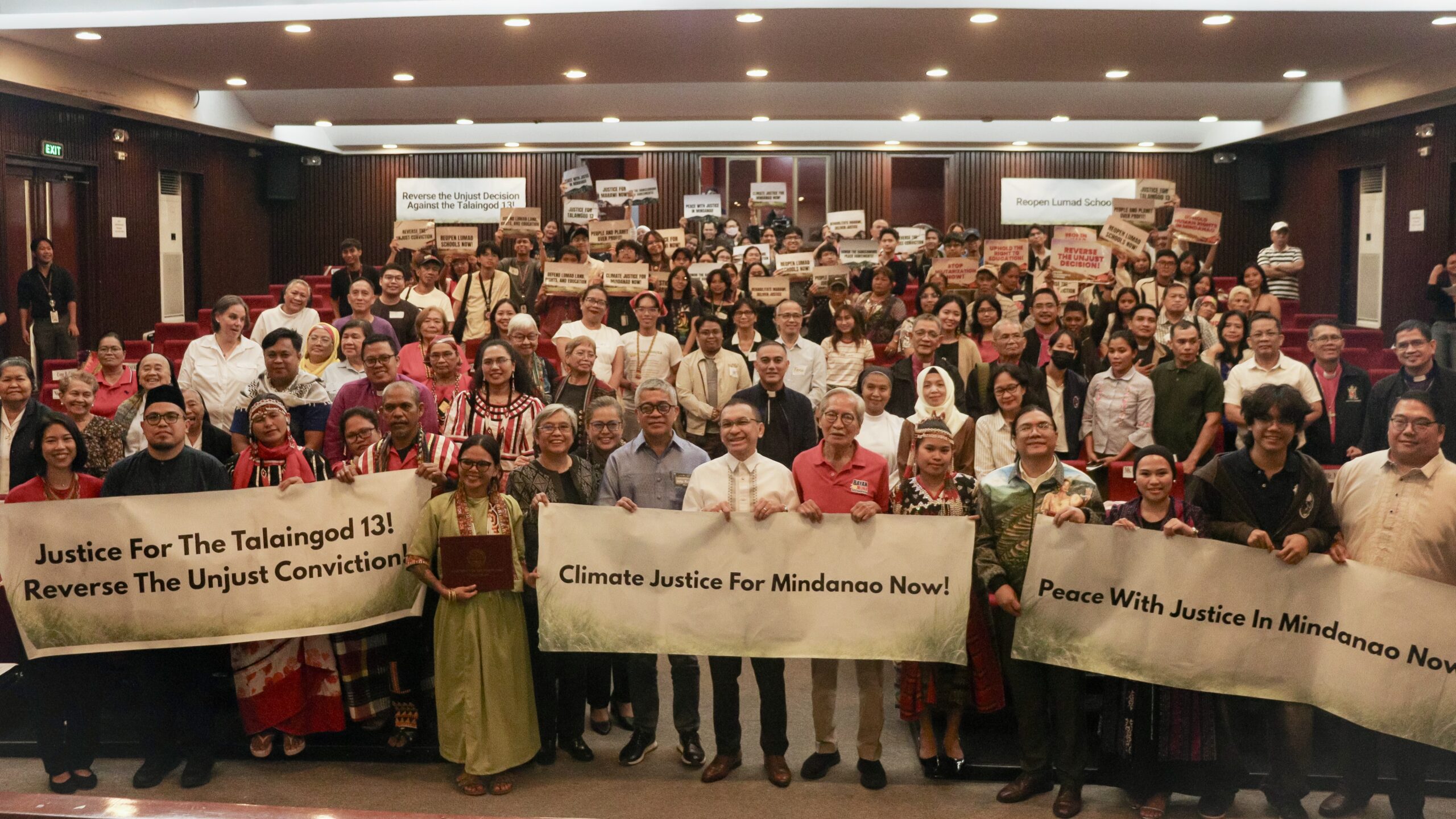
QUEZON CITY, Philippines — After a morning devoted to the Talaingod 13, the afternoon session of KATUNGOD Conference 2026 widened the conversation to the broader realities confronting Mindanao. Community leaders, legal advocates, peacebuilders, environmental defenders, and civil society organizations examined how climate justice is inseparable from Indigenous Peoples’ rights, democratic governance, human rights, and the pursuit of lasting peace across Mindanao.
From the Talaingod 13 to the State of Mindanao
The afternoon session shifted the discussion from the Talaingod 13 case to the wider realities confronting Mindanao, examining how climate change, environmental degradation, Indigenous Peoples’ rights, democratic governance, and human rights are deeply interconnected. Setting the tone for the forum, Atty. Carlos “Kaloi” Zarate, human rights lawyer and former Bayan Muna Representative, argued that the island’s environmental challenges cannot be separated from questions of justice, governance, and political accountability.
Drawing from the recent earthquake that struck parts of Mindanao, Zarate challenged participants to look beyond disasters as purely natural events. While earthquakes and extreme weather may be acts of nature, he emphasized that deforestation, destructive extractive industries, environmental degradation, and weak governance transform these hazards into human tragedies.
“Nature may trigger an earthquake. Nature may unleash torrential rains. But nature does not strip mountains of their forests. Nature does not issue mining permits, convert ancestral lands into plantations, divert rivers, weaken environmental safeguards, or criminalize communities defending the ecosystems upon which they depend. Those are political decisions.”
Building on this, Zarate described climate change as fundamentally a human rights issue, arguing that its impacts are borne most heavily by communities that have contributed least to the crisis. He stressed that climate justice cannot be pursued apart from the protection of Indigenous Peoples’ rights, democratic freedoms, and the right of communities to determine their own future.
Returning to the conference’s central theme, Zarate situated the Talaingod 13 within this broader context, explaining that the case has come to symbolize the continuing struggle of Lumad communities to defend their ancestral domains, protect Indigenous education, and exercise self-determination without fear of criminalization. In doing so, he framed the afternoon discussions around a central proposition: there can be no climate justice without Indigenous justice, democratic governance, and respect for human dignity.
Community Voices from Mindanao
The afternoon forum brought the discussion from policy to lived experience as Indigenous and community leaders shared how climate change, displacement, and the struggle for justice are experienced in their own communities.
Datu Rolando Anglao, Supreme Datu of the Manobo-Pulangiyon Tribe in Bukidnon, spoke about his community’s decades-long struggle to reclaim its ancestral domain amid protracted legal processes and recurring violence. Calling for continued solidarity, he emphasized that Indigenous communities continue to defend their land, identity, and way of life despite the challenges they face in securing recognition of their ancestral rights.
Bae Rhoda Calupe reflected on the realities confronting Lumad communities, offering a stark reminder of how injustice is often experienced by Indigenous Peoples. Her words, “Ang mali ay naging tama, ang tama naging mali,” captured the painful inversion of justice faced by communities whose efforts to protect their culture, ancestral lands, and collective rights are too often met with suspicion rather than support.
Speaking from the perspective of island and coastal communities, Maria Lalaine Tokong, a Lumad from Siargao, reflected on how climate change and rapid development continue to reshape the communities that have long called the island home. While acknowledging the opportunities created by tourism, she emphasized that development must respect local history, culture, and the voices of the people most directly affected by change.
“Development should happen with communities, not simply around them.”
Tokong underscored that climate justice is inseparable from community rights, arguing that progress should be measured not only by new infrastructure or economic growth but also by whether local communities remain at the center of decisions affecting their land, livelihoods, identity, and future.
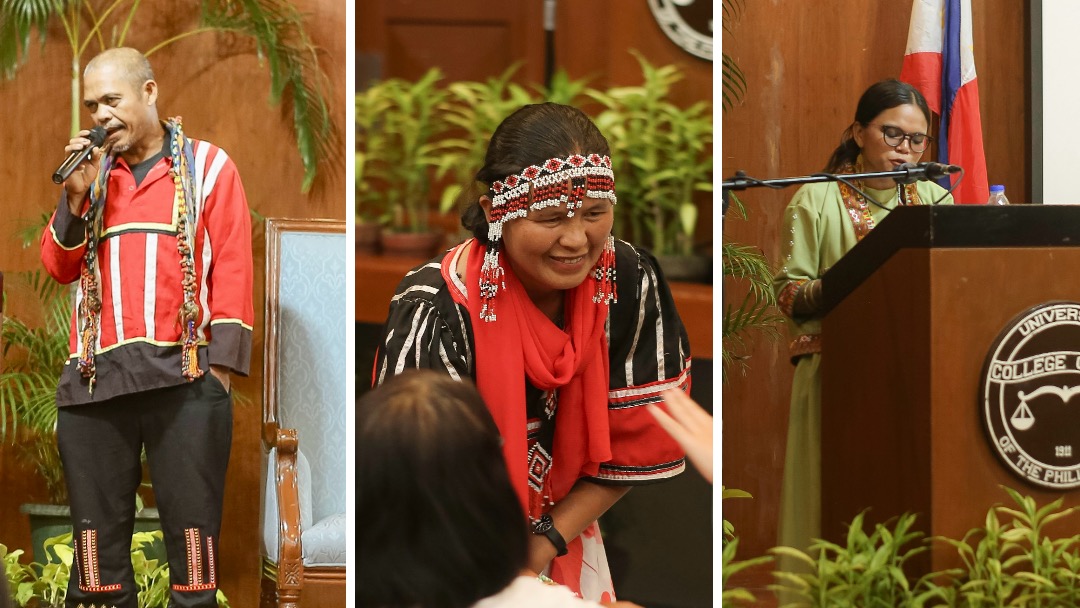
Together, the three speakers demonstrated that the struggle for justice in Mindanao begins with the experiences of communities themselves. From the ancestral domains of Bukidnon to the coastal communities of Siargao, they affirmed that protecting the environment, defending Indigenous Peoples’ rights, and advancing development are only possible when communities are empowered to shape their own future.
Governance, Accountability, and the Pursuit of Peace
Building on the community testimonies, the afternoon forum turned to the institutions, policies, and democratic processes that continue to shape the future of Mindanao. Speakers explored how justice extends beyond individual cases to encompass accountability, governance, and the continuing work of building peace.
Speaking from the perspective of legal advocacy, Atty. Arvin Dexter M. Lopoz, spokesperson of the Union of People’s Lawyers in Mindanao (UPLM), framed accountability within the broader context of the Duterte administration’s war on drugs. He argued that the criminalization of human rights and environmental defenders in Mindanao cannot be viewed in isolation but forms part of a wider pattern of trumped-up charges and attacks against those who challenge abuses of power. Calling for a unified legal response, he emphasized the need to pursue accountability for the cases filed against human rights advocates and environmental defenders.
“There should be a consensus to seek legal accountability for all of these trumped-up charges against human rights advocates and environmental defenders in Mindanao.”
Turning to governance, Maria Victoria “Mags” Maglana of Konsensya Dabaw urged participants to look beyond personalities and electoral politics. Drawing from the United Nations Development Programme’s definition of governance, she emphasized that governance is not simply about government but about the relationships among the state, civil society, and the private sector in shaping decisions for the common good. She called on political actors and citizens alike to work across differences, arguing that meaningful reform requires cooperation that transcends political affiliations and ideological divides.
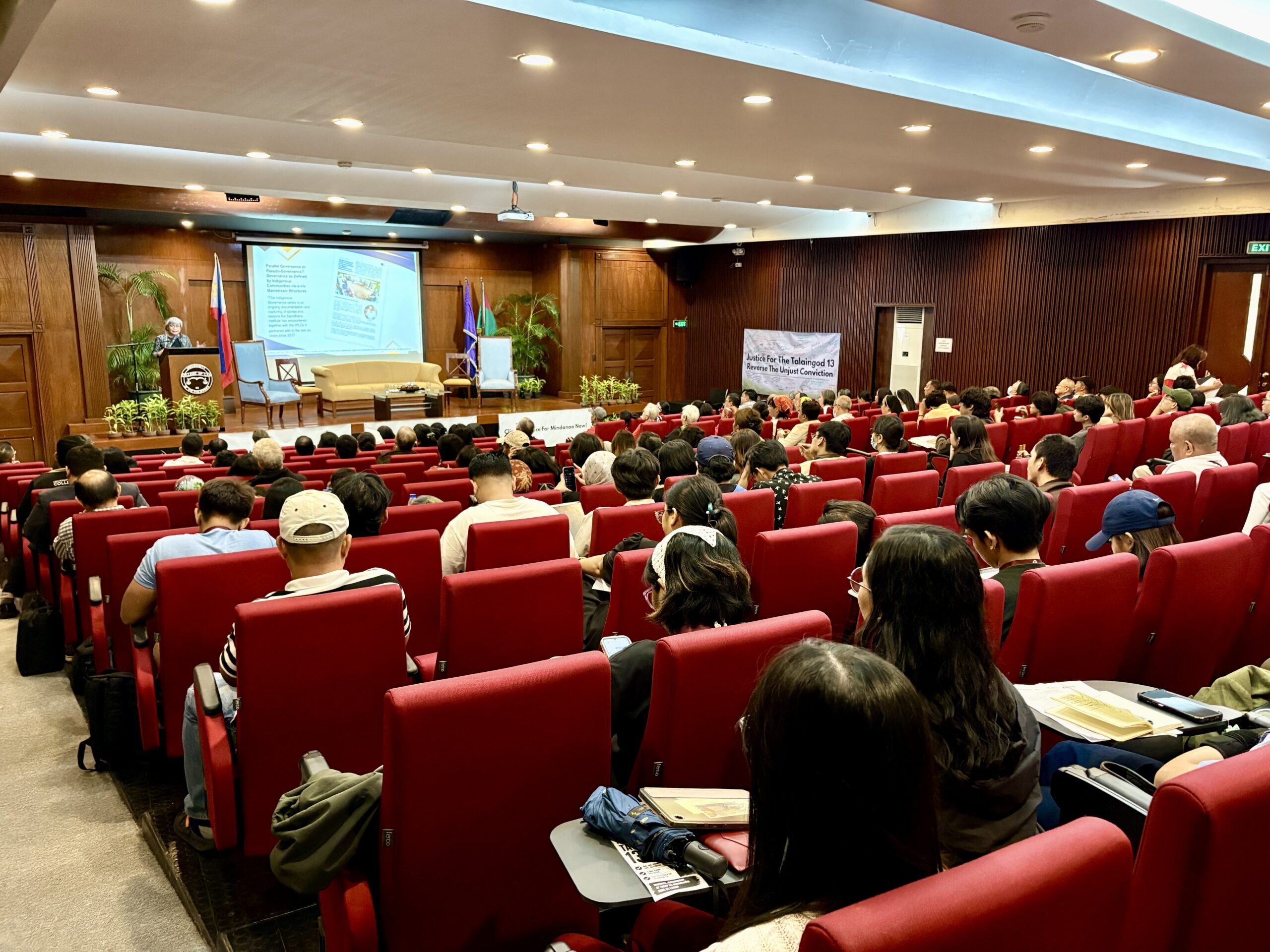
Providing historical and political perspective, Prof. Tirmizy E. Abdullah reflected on the Bangsamoro peace process and the significance of the first BARMM Parliamentary Elections. While acknowledging the importance of the region’s evolving political institutions, he reminded participants that the true measure of peace lies beyond electoral milestones. As the tenth anniversary of the Marawi Siege approaches next year, he stressed that the lasting test of the Bangsamoro peace process will be whether displaced Marawi communities are finally able to return home with dignity, security, and justice.
Together, the discussions reinforced that accountability, inclusive governance, and a peace process grounded in the lived realities of affected communities are indispensable to building a just and sustainable future for Mindanao.
Closing Reflections and Solidarity Across Generations
As the conference drew to a close, the solidarity messages looked beyond the day’s discussions, reminding participants that the pursuit of justice is sustained through the commitment of those who continue to carry it forward across generations.
Veteran journalist, human rights advocate, author, former Bayan Muna Party-list Representative, and member of the Talaingod 13 Saturnino “Satur” Ocampo offered a deeply reflective message on the enduring struggle for justice. Looking back on a lifetime of standing alongside communities defending their rights and dignity, he acknowledged that while many of the aspirations he had long fought for remain unfinished, he expressed hope that the next generation would continue the work. Entrusting the struggle to younger advocates, he reminded participants that lasting change depends on each generation’s willingness to carry the torch forward.
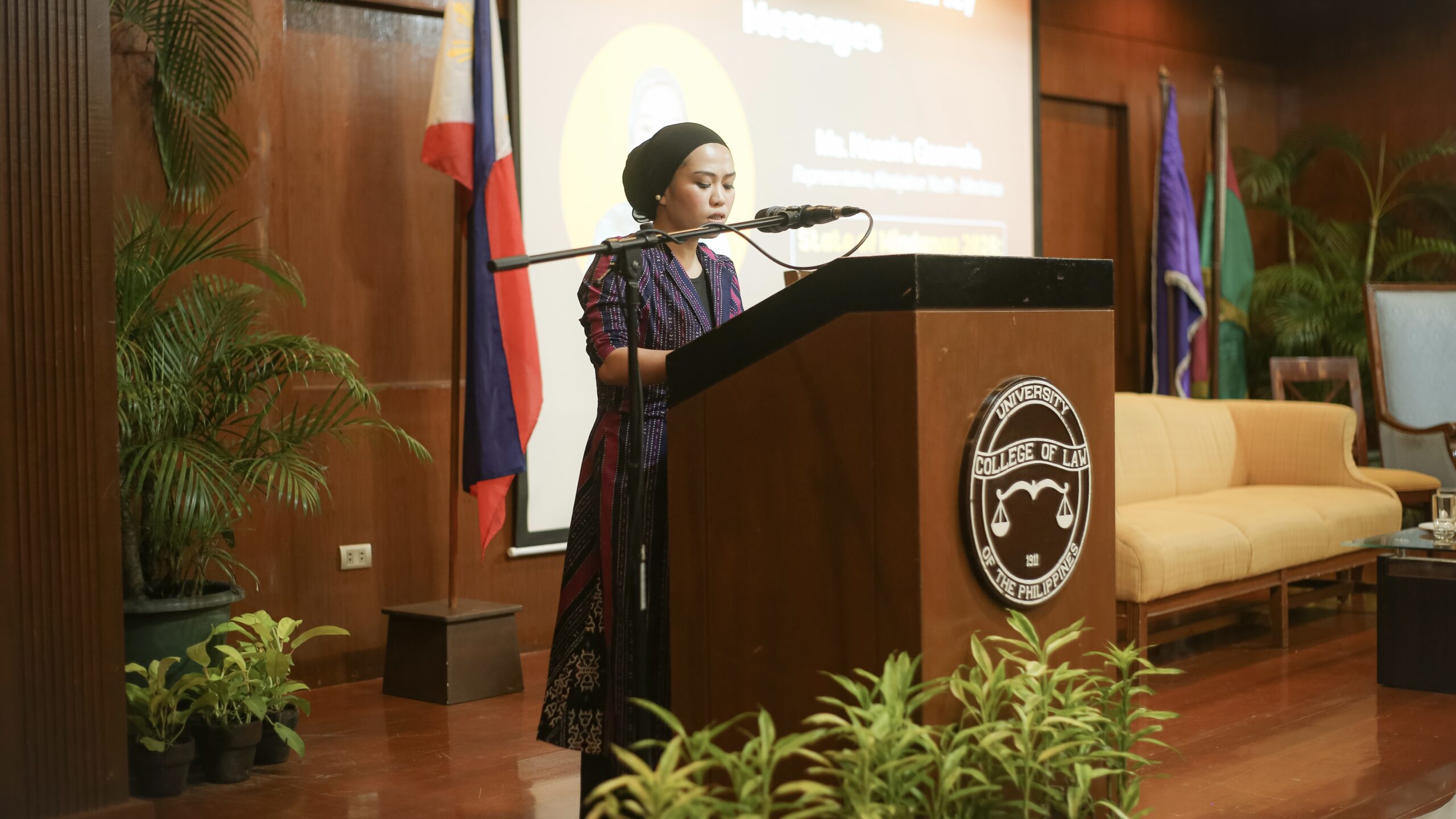
Representing Kinaiyahan Youth–Mindanao, Nosairah Gasmala embodied that passing of the torch. Speaking as a young Maranaw who grew up in the aftermath of the Marawi Siege, she reflected on how the stories of Marawi, the Talaingod 13, and Lumad communities are bound together by shared histories of displacement, resilience, and the continuing struggle for self-determination. For her, these are not separate histories but interconnected experiences that the youth have inherited and must now confront.
Gasmala emphasized that climate justice, human rights, and peace are inseparable, urging young people to organize in their schools, communities, and organizations to address the structural causes of injustice rather than simply endure their consequences.
“Hindi kusang dumarating ang hustisya. Hindi kusang natutupad ang kapayapaan. Hindi kusang nagaganap ang pagbabago. Kailangan itong sama-samang ipaglaban.”
Calling on fellow youth to take an active role in shaping a more just future, Gasmala affirmed that meaningful change is achieved through collective action and solidarity. Together, the messages of Ocampo and Gasmala offered a fitting conclusion to the forum’s reflections, naturally leading into the conference’s final call to action.
Carrying the Work Forward
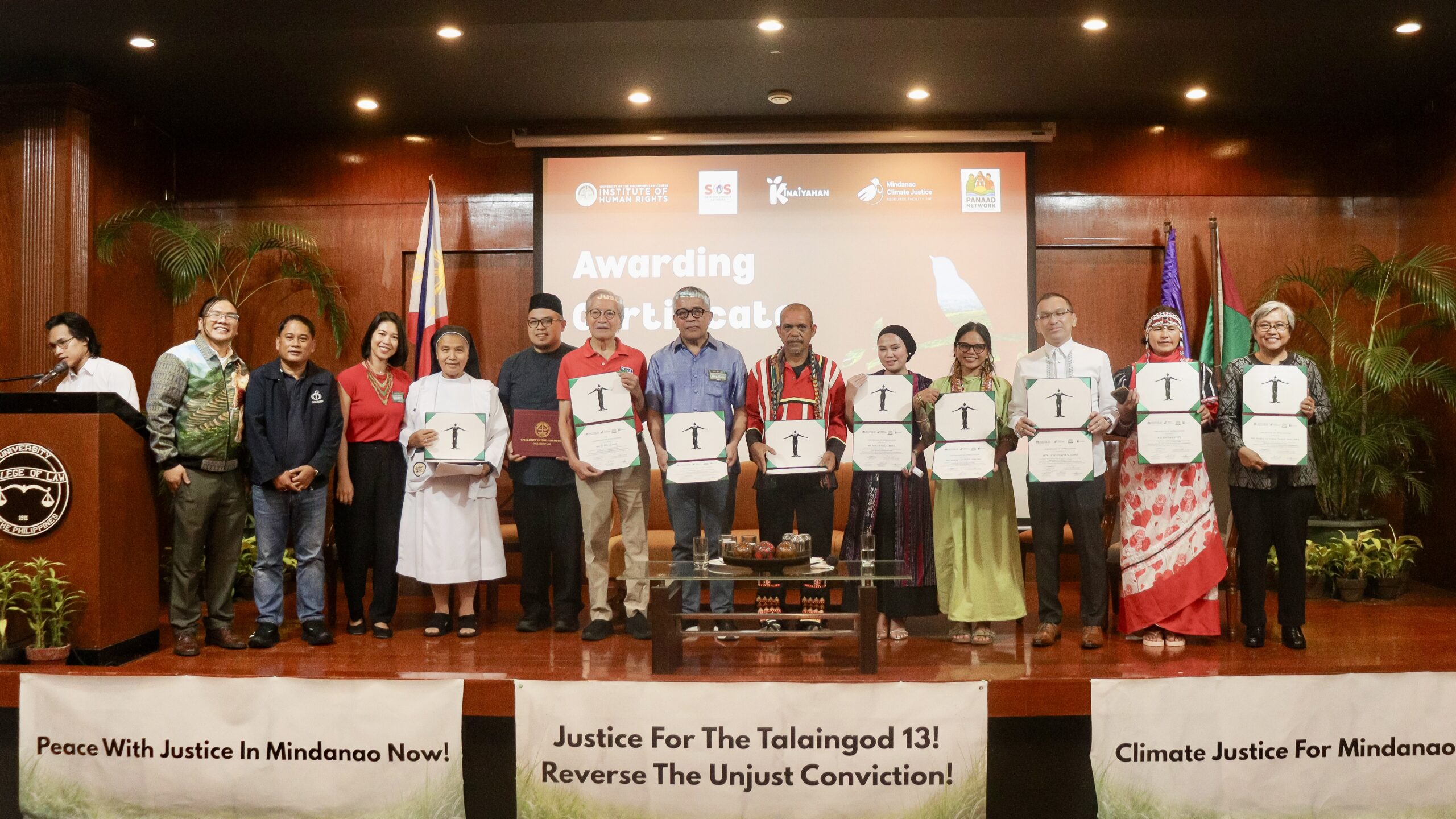
The closing program began with the awarding of certificates of appreciation, recognizing the speakers, community leaders, and partner organizations whose contributions enriched the day’s conversations and strengthened the spirit of solidarity that defined the gathering.
Returning to the stage, climate justice advocate and artist Maria Lalaine Tokong of the Siargao Island Peoples Association offered a closing cultural performance. Through music, she paid tribute to the communities whose stories had shaped the day’s conversations, reminding participants that culture, memory, and the environment remain inseparable in the continuing struggle for justice.
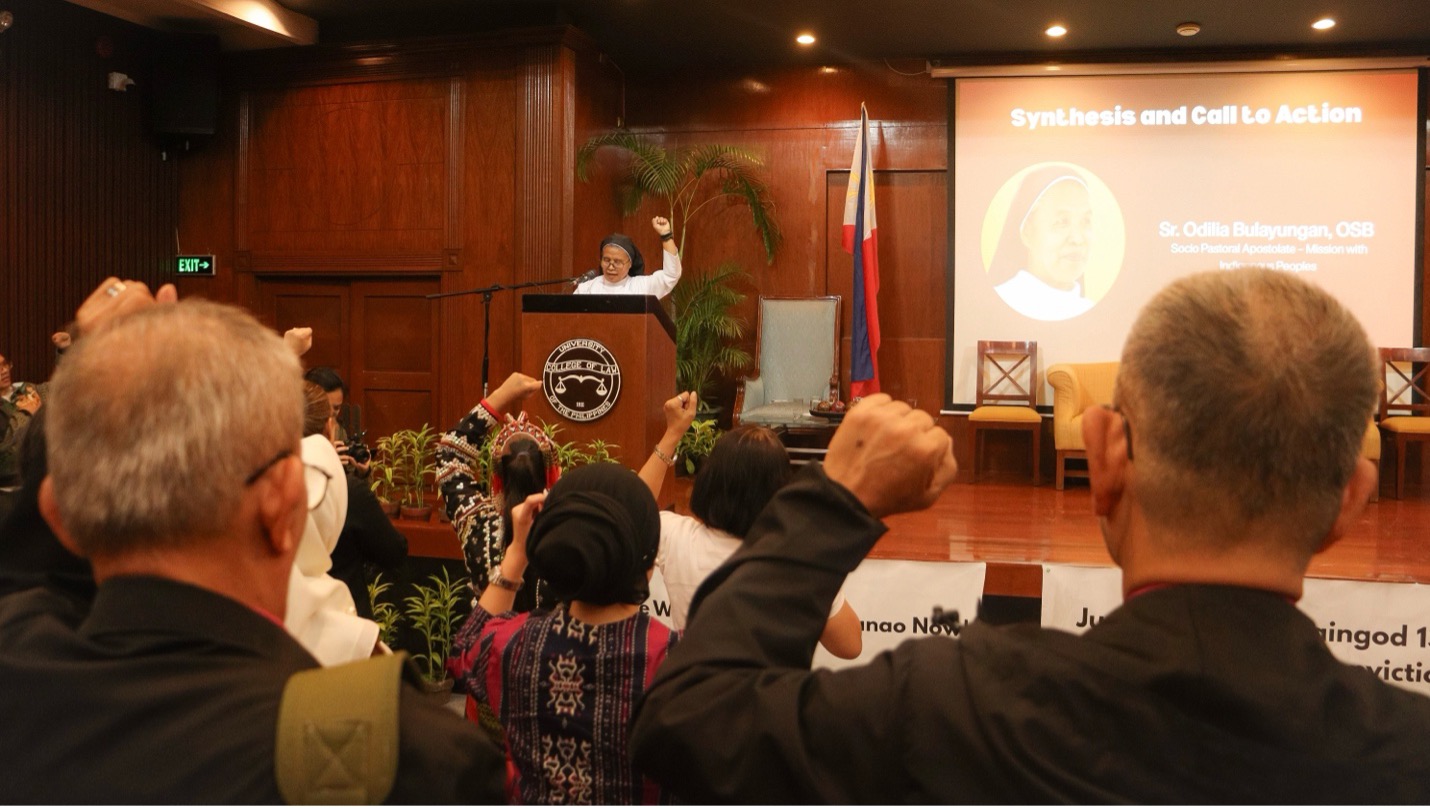
Delivering the conference’s Synthesis and Call to Action, Sr. Odilia Bulayungan, OSB, of the Socio-Pastoral Apostolate – Mission with the Indigenous Peoples of the Missionary Benedictine Sisters of Tutzing, wove together the day’s reflections into a collective challenge. Addressing churches, schools, universities, lawyers, human rights defenders, media practitioners, artists, climate justice advocates, the international community, and the youth, she urged every sector to carry the conference’s conversations beyond the walls of the university and into their own institutions and communities.
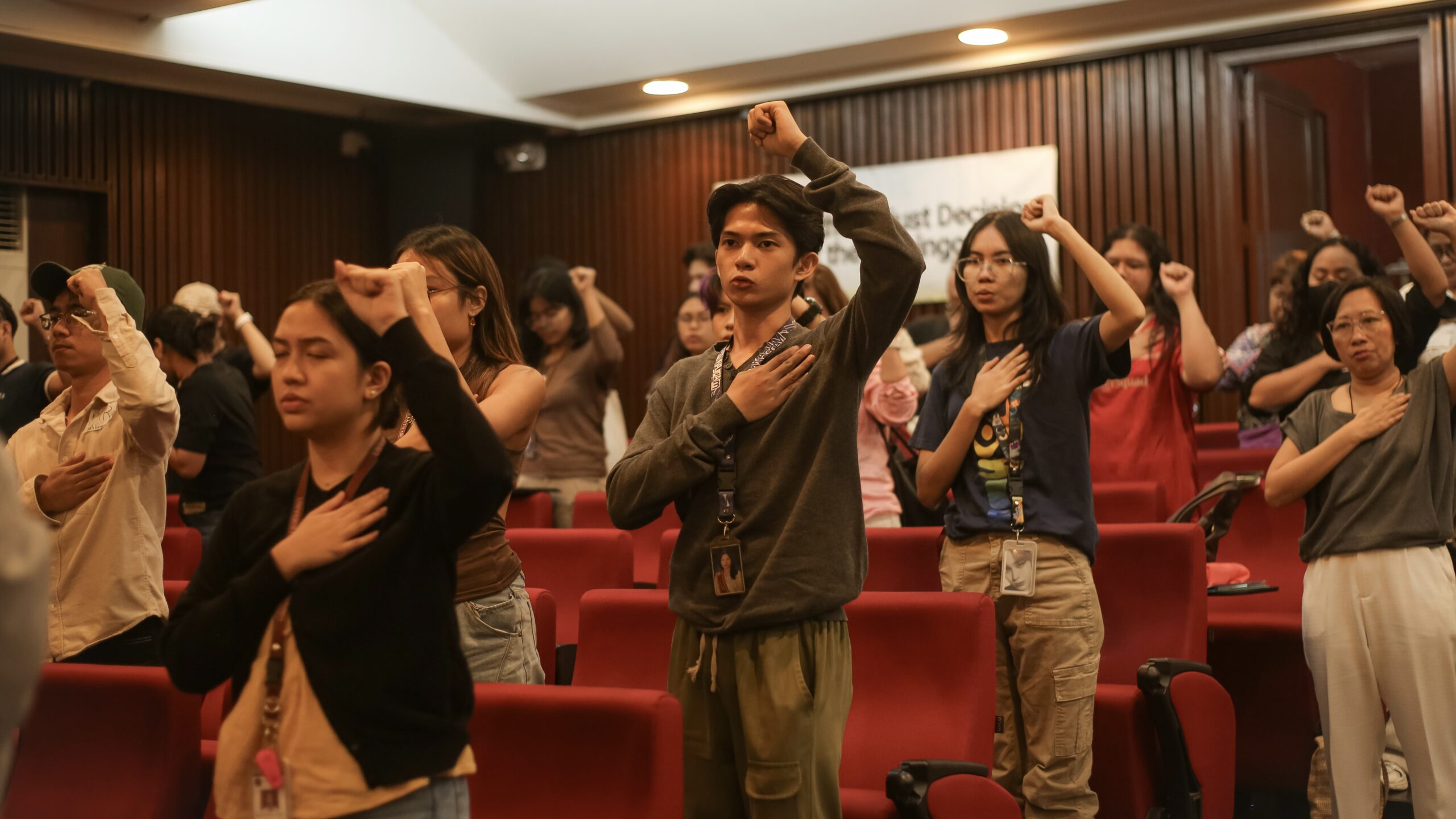
Drawing from Fr. Raymond Ambray’s reflection that “Real solidarity arises when we know that we are upholding the sacred truth,” Sr. Odilia called on participants to deepen accompaniment and solidarity with Lumad and Moro communities while continuing to defend Indigenous Peoples’ rights, climate justice, peace, and human dignity. She then invited everyone to rise and make a collective pledge to sustain these commitments beyond the conference. Echoing the day’s central call to “Reverse the Conviction of the Talaingod 13,” she challenged participants to also “reverse solidarity” by bringing attention, action, and power back to the Lumad and Moro communities that have long remained at the margins.
“Huwag nating hayaang matapos ang mga usapang ito sa loob lamang ng bulwagang ito. Dalhin natin ito sa ating mga komunidad. Sa ating mga paaralan. Sa ating mga simbahan. Sa ating mga organisasyon. Sa ating mga tahanan.”
Standing together in affirmation, participants pledged to carry the conference’s calls for justice beyond the university and into the communities where those commitments would be lived out.
In his closing remarks, Atty. Daniel D. Lising, Officer-in-Charge of the UP Law Center Institute of Human Rights, thanked the participants—particularly the delegates from Mindanao—for making the journey to the conference and generously sharing their communities’ stories and aspirations. He expressed hope that they would see one another again in future collaborations, emphasizing that the partnerships strengthened during KATUNGOD Conference 2026 should continue beyond the event in the shared pursuit of justice, human rights, climate resilience, and lasting peace in Mindanao.
As participants departed, they carried with them more than the conclusions of a day-long conference. KATUNGOD Conference 2026 affirmed that justice for the Talaingod 13 is inseparable from the broader pursuit of Indigenous Peoples’ rights, democratic governance, environmental stewardship, and lasting peace in Mindanao. More importantly, it ended not with a farewell, but with a renewed commitment to continue the work together—across communities, across generations, and until justice is realized.