Whose climate story counts? Young advocates connect community struggles through storytelling, listening, and solidarity.
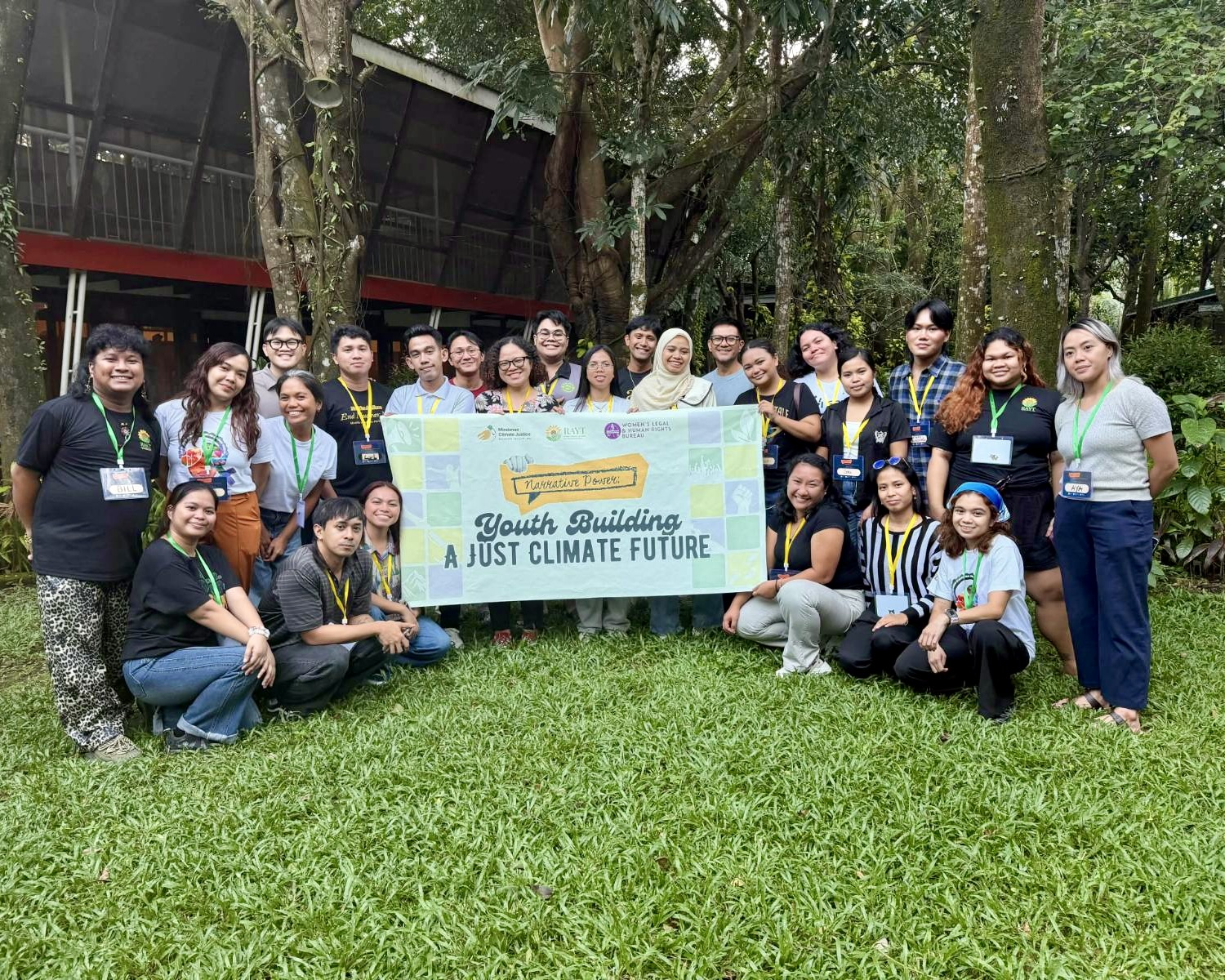
During a youth climate justice convening in Alfonso, Cavite, Raymart, a participant from Bataan, listened to Aisanie Pangandaman Ibrahim speak about Marawi. He wanted to carry her account back to people in his province so they could hear about the Mindanao city from someone who lived there.
Their exchange came during an exercise in which participants passed yarn to someone whose story had stayed with them. As strands crossed the room, so did experiences from places separated by geography, identity, and history.
The connections raised a question that would run through the gathering: How can a story travel to new audiences while keeping the voice of the person and community behind it at the center?
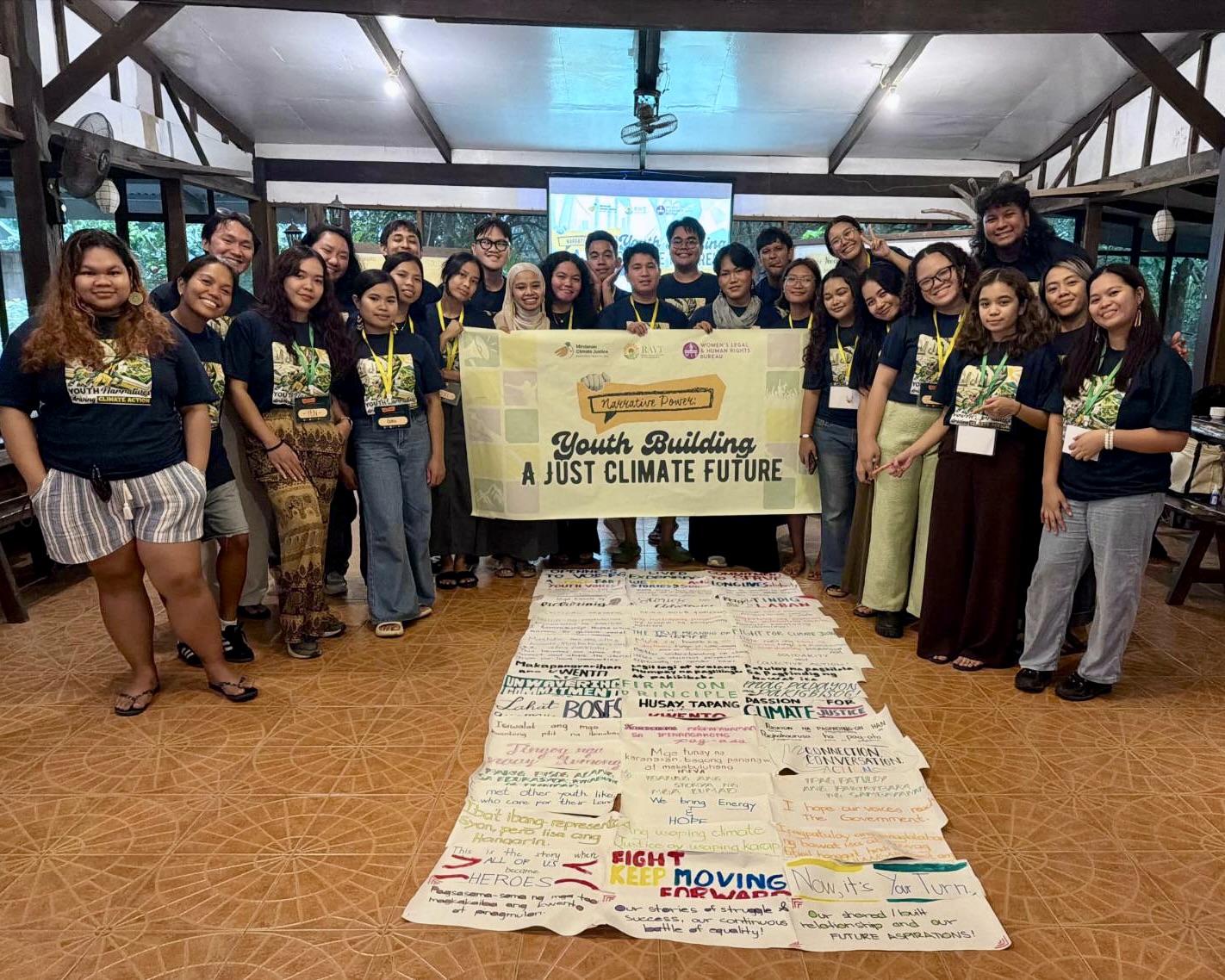
Narrative Power: Youth Building a Just Climate Future brought together young climate, environmental, and social justice advocates from Luzon, the Visayas, and Mindanao for three days of listening, questioning, creating, and imagining what could come next.
The convening was co-created by the Mindanao Climate Justice Resource Facility, Inc. (MCJ), the Fund for Global Human Rights (FGHR), the Rising Alliance of Youth for Transformation (RAYT), and the Women’s Legal and Human Rights Bureau (WLB).
Four young women brought distinct experiences from Mindanao: Angelika Laguisan Moral, a Blaan from Sultan Kudarat province; Lady Jean Baya-on Pacili, a Talaandig from Talakag, Bukidnon; Aisanie Pangandaman Ibrahim, a Moro from Marawi City; and Fatima Nicole Cañon, a Christian from Malaybalay City, Bukidnon.
Blaan and Talaandig are distinct Indigenous peoples. They are among the peoples sometimes collectively called Lumad, a term for non-Moro Indigenous peoples of Mindanao. Moro, or Bangsamoro, refers to several Muslim ethnolinguistic peoples with their own histories and political struggles.
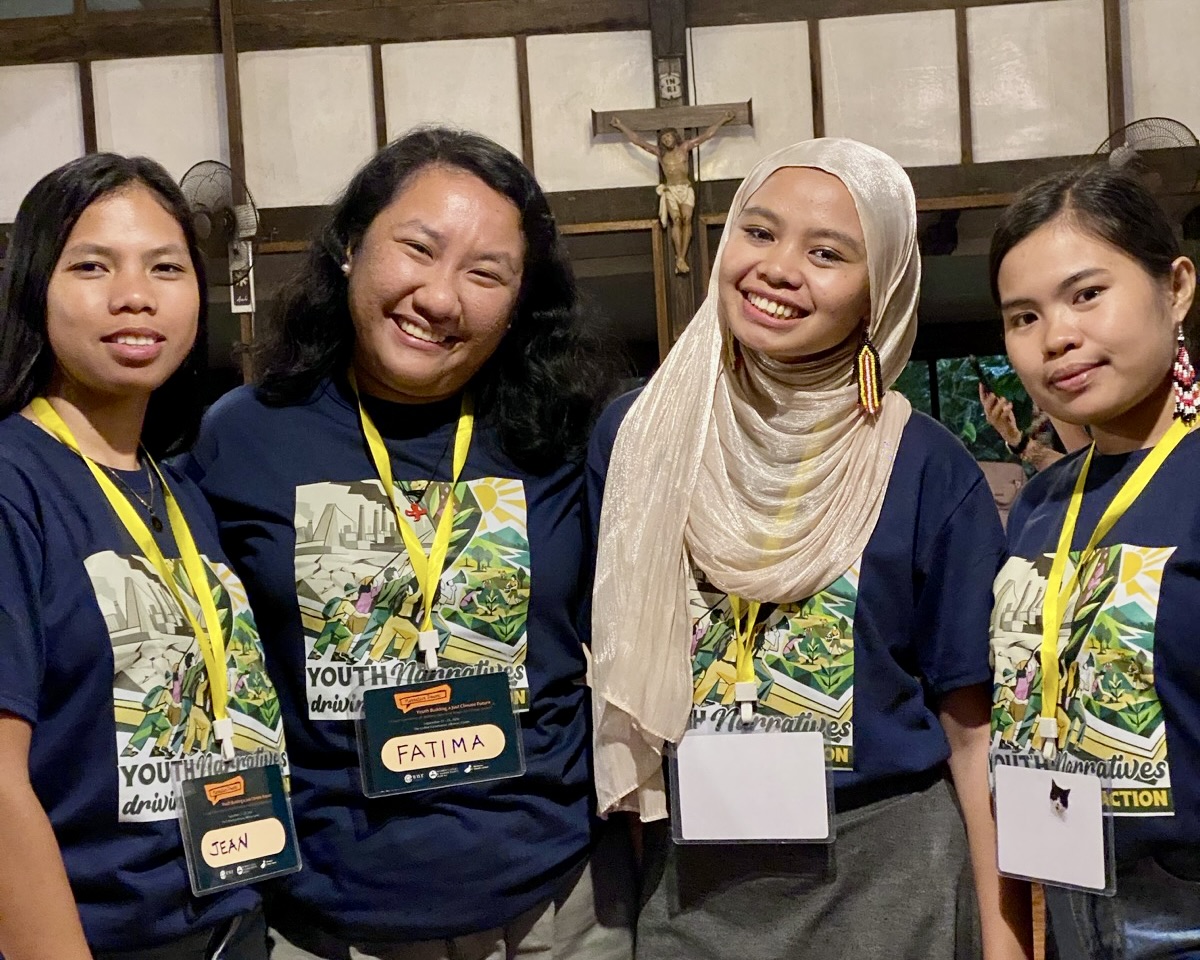
Their presence mattered because Mindanao is too often reduced in national discussions to a single story of conflict or disaster. Yet the experience of a Talaandig community in the uplands of Bukidnon is not interchangeable with that of a Moro family in Marawi, a Blaan community in Sultan Kudarat, or farmers and workers around Malaybalay.
The four women were not there to represent an entire region. They brought knowledge rooted in particular places and communities into conversation with equally specific experiences from Bataan, Metro Manila, Dumaguete, and elsewhere in the country.
That diversity became part of the convening’s method: begin with what people actually live through.
Starting with lived experience
MCJ facilitators Aya and Miles led the first day’s activities by asking participants to start with their communities rather than with abstract definitions of climate justice.
Raymart described concerns in Bataan about coal plants, flooding, pollution, and fishing livelihoods. Lianne, from Dumaguete in the Visayas, recalled a shore where children had played football before access was fenced off. She also described how fishers could lose working time when water turned muddy after rain.
On the Story Wall, each person named a place, struggle, question, or hope shaping their understanding of climate justice. Small groups then asked what was changing in their communities, who was affected, whether the effects were equal, and how people were already responding.
The answers moved between sudden hazards and slower changes affecting access to land, water, food, and work.
Fatima spoke about extreme heat making farming harder and the pressure on farmers when land no longer earns enough to support them. Her experience with relief work connected with an account from Marikina, in Metro Manila, about women’s sanitary needs being overlooked in assistance to flood-affected communities.
A practical question emerged: Who decides what a community needs after a disaster, and who gets asked?
Lady Jean shared an account of an Indigenous woman in her community who stood up for land rights and the community’s ability to decide its future. Her story connected environmental questions with the risks people take to defend their land.
A participant from the Lake Lanao area described how rising water could interrupt the collection of gravel, a source of livelihood. Others raised the difficulty of documenting how disasters affect LGBTQIA+ people when official data fail to capture their experiences. Eddie, from the Center for Trade Union and Human Rights, brought workers’ climate concerns into the discussion.
Together, these experiences complicated the idea of a single “climate victim.” Climate impacts are shaped not only by hazards but by where people live and work, what resources they can access, whose knowledge institutions recognize, and who has influence over decisions.
Taking familiar claims apart
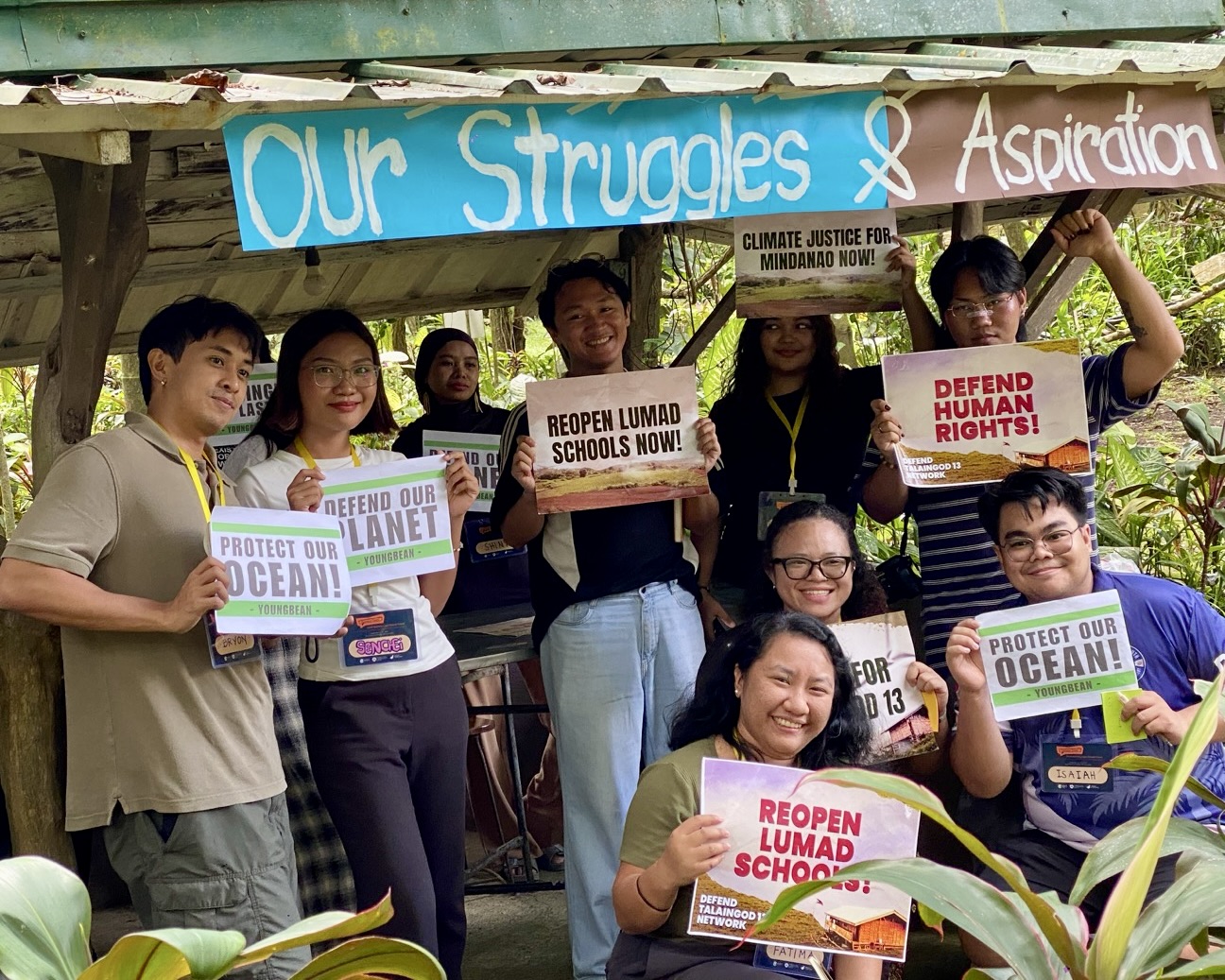
The next step was to examine the stories already shaping those decisions.
In a Narrative X-Ray session facilitated by Matt Wamil of Oxfam Pilipinas, groups took apart familiar claims about climate change and environmental action. They asked who had the power to repeat a claim, whose experience it left out, and what might look different if those missing voices were heard.
One group examined the idea that everyone is equally responsible for the climate crisis. Participants considered how focusing on household choices—such as recycling or planting trees—could draw attention away from corporations and government decision-makers with much greater power over energy and resources. The group’s alternative account emphasized collective action and accountability at the level of policies and systems.
Another group examined the claim that activism is terrorism. Participants discussed how labeling defenders as threats can push Indigenous peoples and other affected communities out of public discussions about land and development. In the Philippines, such labeling is often called red-tagging: associating activists or critics with communist insurgency or terrorism. The Philippine Commission on Human Rights has investigated its effects on human rights defenders.
A third group discussed claims about genetically modified crops and food security. Its members asked whose knowledge is heard when a technology is presented as an answer to hunger and whether farmers and consumers can shape the choices offered to them. The exercise reflected participants’ analysis of a public claim; it did not establish a scientific finding about genetically modified crops generally.
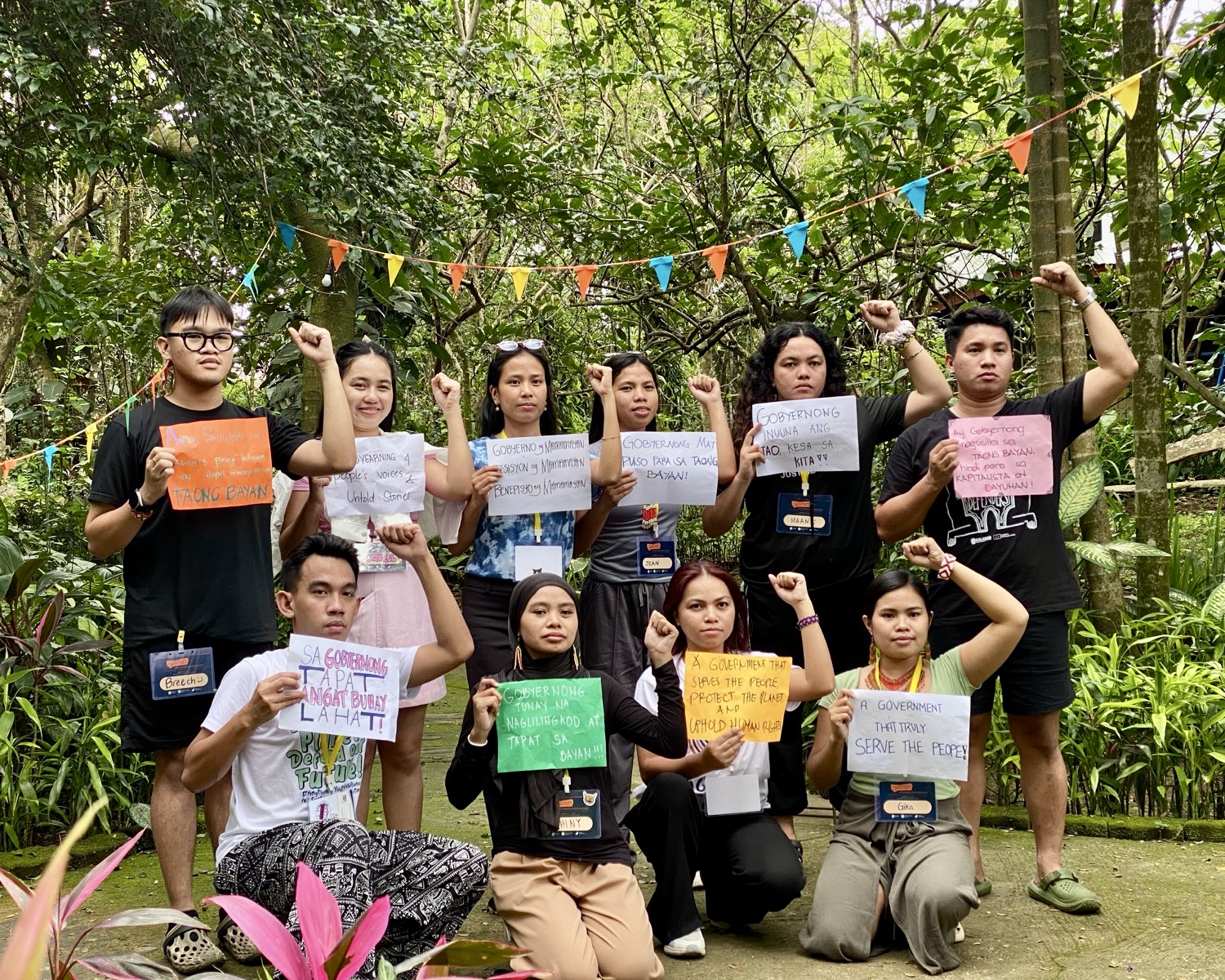
Across the exercises, a common tension became clearer. A project may be presented as beneficial, necessary, or even “green” while people who stand to lose land, livelihood, or control over resources have little power to change it.
A panel moderated by FGHR’s Karen Brutas brought together the different lenses of WLB, RAYT, and MCJ, including women’s rights, youth organizing, and Indigenous and Bangsamoro experiences from Mindanao.
The discussion distinguished between being invited into a consultation and having meaningful influence. A community may be present in a meeting yet have little ability to challenge a plan, propose another option, or determine what happens to its land and water.
Participants also examined the word just in a “just transition.” Changes in energy or infrastructure may reduce emissions while shifting costs onto people whose land, work, care responsibilities, or safety are affected.
The conversation connected climate decisions with gender, ancestral domain, displacement, livelihood, workers’ concerns, and the rights of Indigenous and Bangsamoro peoples. It pushed the idea of a climate solution beyond technology alone to include who shapes the decision and who lives with its consequences.
Imagining a different future
On the second day, RAYT invited participants to imagine themselves in 2060, looking back at a harmful claim their communities had challenged since 2026.
They turned those imagined futures into artworks, then explained the experiences behind them in story circles.
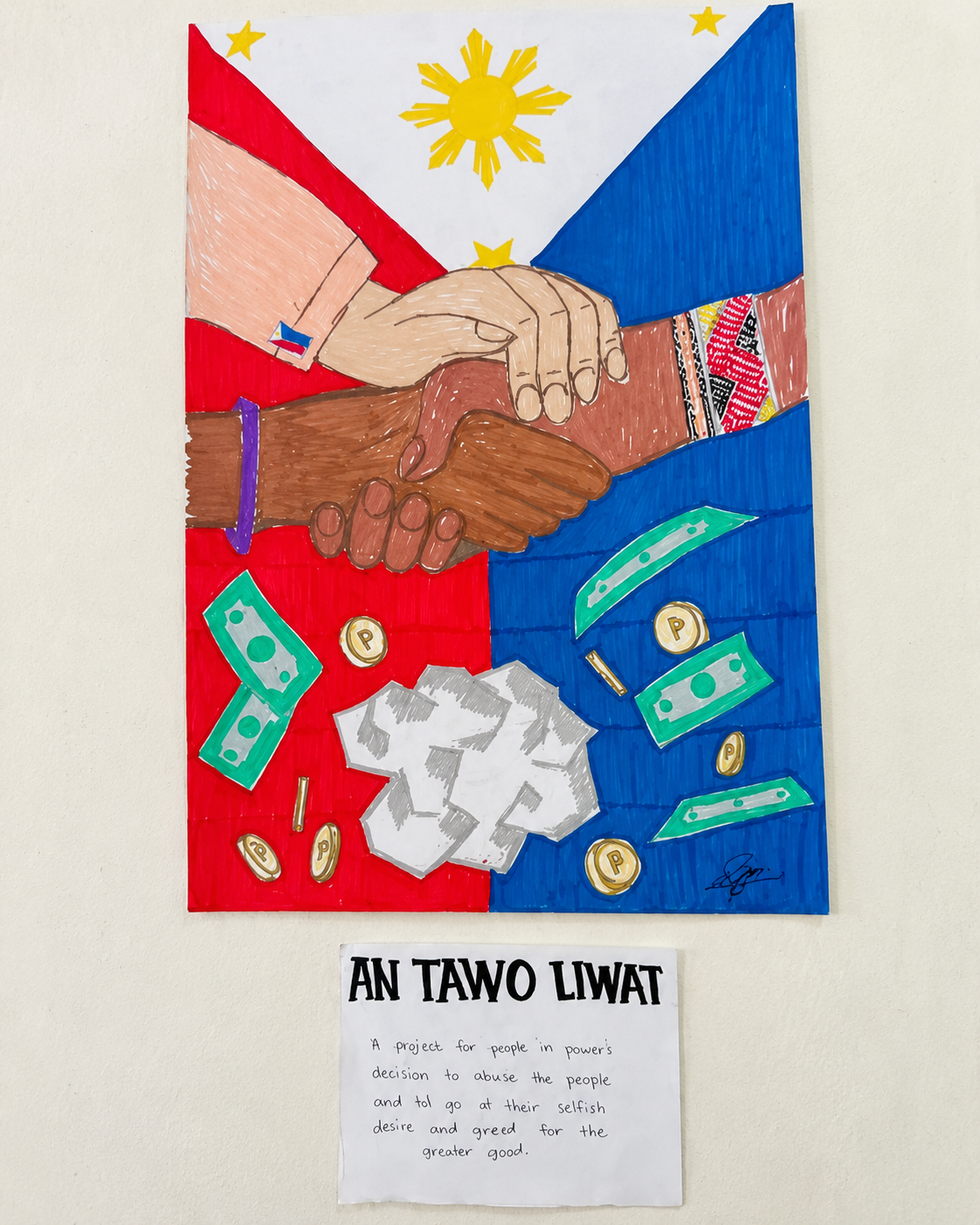
Participants listened to each artist before arranging the works into small exhibitions about shared problems, resistance, and possible futures.
The process allowed connections to emerge without requiring everyone’s experience to become the same.
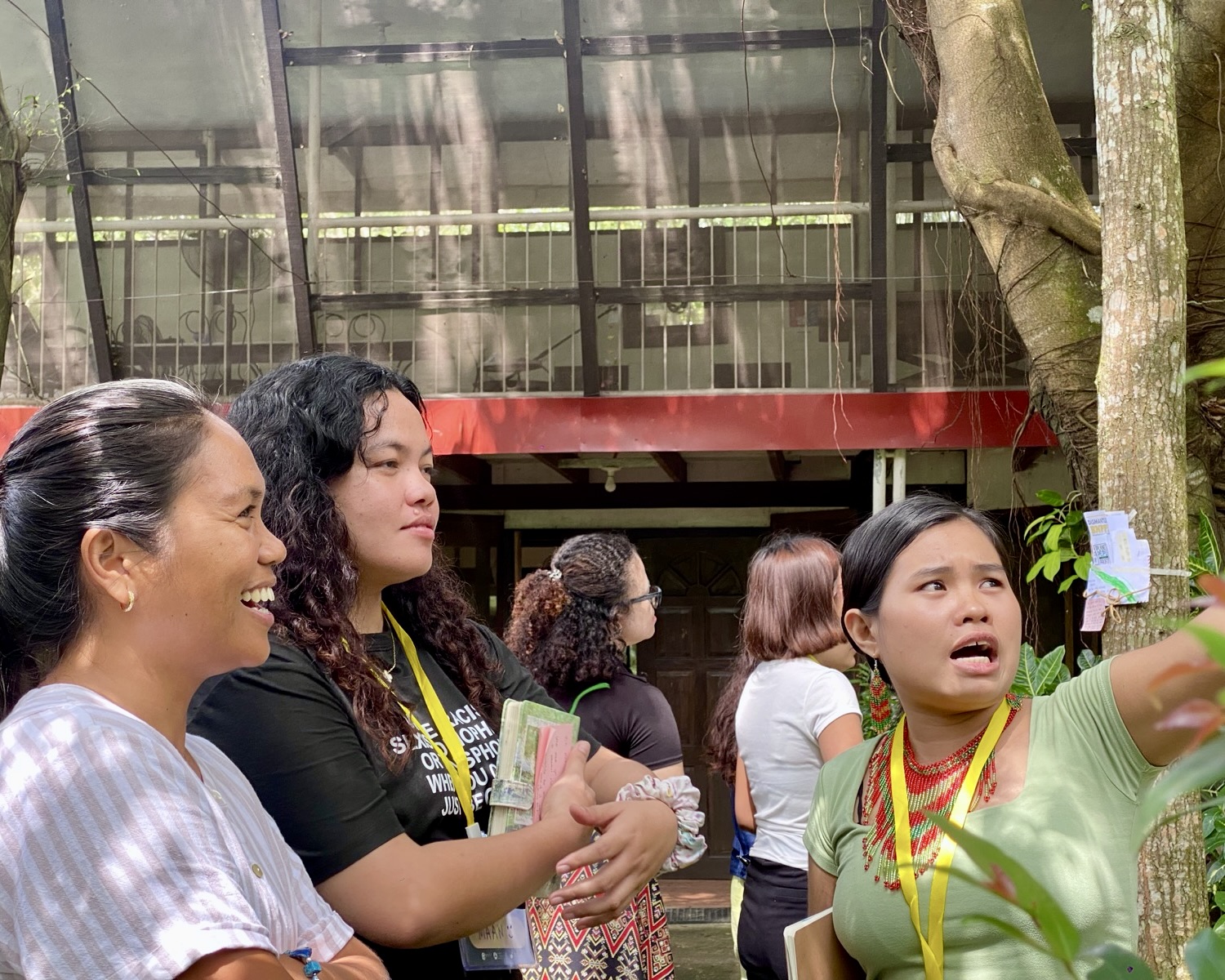
One group developed Pahuway sa Painitan, a proposal for a relaxed, recurring space where Indigenous community members, farmworkers, and fisherfolk could meet and discuss the issues they face.
The group imagined a monthly gathering flexible enough to account for people’s needs and harvest schedules. The proposal included space for community products and attention to cultural practices, safety, and privacy when people’s accounts are documented.
Those details pointed to something fundamental about storytelling: before asking how a story can reach a wider audience, there has to be time, trust, and freedom to tell it.
Pahuway sa Painitan remained a proposal rather than a program already underway. Another group explored a podcast using photo and video material as a possible way to reach people beyond the gathering.
Participants then tested their ideas against a practical challenge: How could these stories reach young people who had not been in Alfonso?
They considered who might listen, what could make an account meaningful beyond its place of origin, and what an audience might do after hearing it. The question was no longer only about choosing the right format. It was also about the relationship between the community that holds a story and the person who carries it elsewhere.
When stories travel
WLB facilitated the final day, when participants returned to the accounts they had heard and considered what working together after Alfonso might mean.
The yarn exercise made some of those connections visible.
Fatima connected disaster relief with needs of women that assistance can overlook. Raymart reflected on bringing Aisanie’s account of Marawi to Bataan. Another participant questioned how campaigns centered in Manila can miss what is happening in the Visayas and Mindanao.
Elsewhere in the web, one participant recognized in an artwork the possibility of women living freely and safely. Another was struck by the patient work of visiting communities and building trust before telling their stories. A participant from Dumaguete hoped LGBTQIA+ young people leading local organizations would not be overlooked in community decisions.
The exercise offered a lesson in connection without sameness. Raymart did not need Aisanie’s experience of Marawi to mirror his experience in Bataan for it to matter to him. Participants could recognize common questions about land, livelihood, disaster, work, gender, identity, and public voice while respecting the differences between their communities.
That distinction matters when stories cross regions. Reaching more people is not enough. The context in which a story was told, the person who told it, and the choices that person or community makes about how it is shared all matter.
What could come next
Before leaving Alfonso, regional groups considered how the relationships formed there might continue.
Participants from Luzon discussed small learning sessions, community visits, and educational toolkits whose content could be checked with communities. The Visayas group proposed conversations in schools, cultural gatherings, and “human books,” where people share their experiences directly with listeners. They also considered photography developed through sustained attention to community life.
The Mindanao group proposed strengthening community-based environmental education and creating more room for young people, Indigenous and Moro communities, farmers, fisherfolk, and displaced people to tell their own accounts.
Ideas included situationers—short explanations of current conditions and issues affecting Moro and Lumad communities—and a possible citizen journalism workshop in Marawi connecting participants from Luzon, the Visayas, and Mindanao.
Participants also identified resources they could share: existing learning materials that could be adapted to local contexts, invitations to youth activities, volunteers, and spaces for exchanging knowledge.
These were possibilities to develop, not completed programs or a finished national campaign. Participants were also still shaping a shared message asserting communities’ voices and rights and calling for accountability from government and corporations as the convening ended.
What had already begun was a set of relationships across communities and regions that do not often have opportunities to exchange experiences directly.
The gathering also showed why those differences matter. There is no single Mindanao climate story, just as there is no single experience of climate injustice across the Philippines. Aisanie, Angelika, Lady Jean, and Fatima brought experiences rooted in different communities; participants from Luzon and the Visayas brought their own. The value was not in making those stories fit together neatly, but in creating space for them to encounter one another.
Each co-organizer helped make that exchange possible, bringing different relationships, experience, and ways of understanding climate justice. The young participants gave it meaning through the stories they shared, the questions they challenged one another with, and the possibilities they imagined together.
Raymart’s wish to carry what he heard from Aisanie back to Bataan captures both the promise and the responsibility of that work.
A story from Marawi can reach Bataan. A story from Bataan can find listeners in Mindanao.
What matters is not simply how far those stories travel, but whether they travel with context, whether people listen across difference, and whether those living each struggle remain at the center of telling what their experience means.