When President Ferdinand Marcos Jr. delivers his fifth State of the Nation Address, he will likely speak of growth, infrastructure, investment, and peace. He will likely present the World Bank’s new classification of the Philippines as an upper-middle-income economy as an achievement of his presidency. But that statistical milestone cannot answer the question that official reports often avoid: progress for whom?
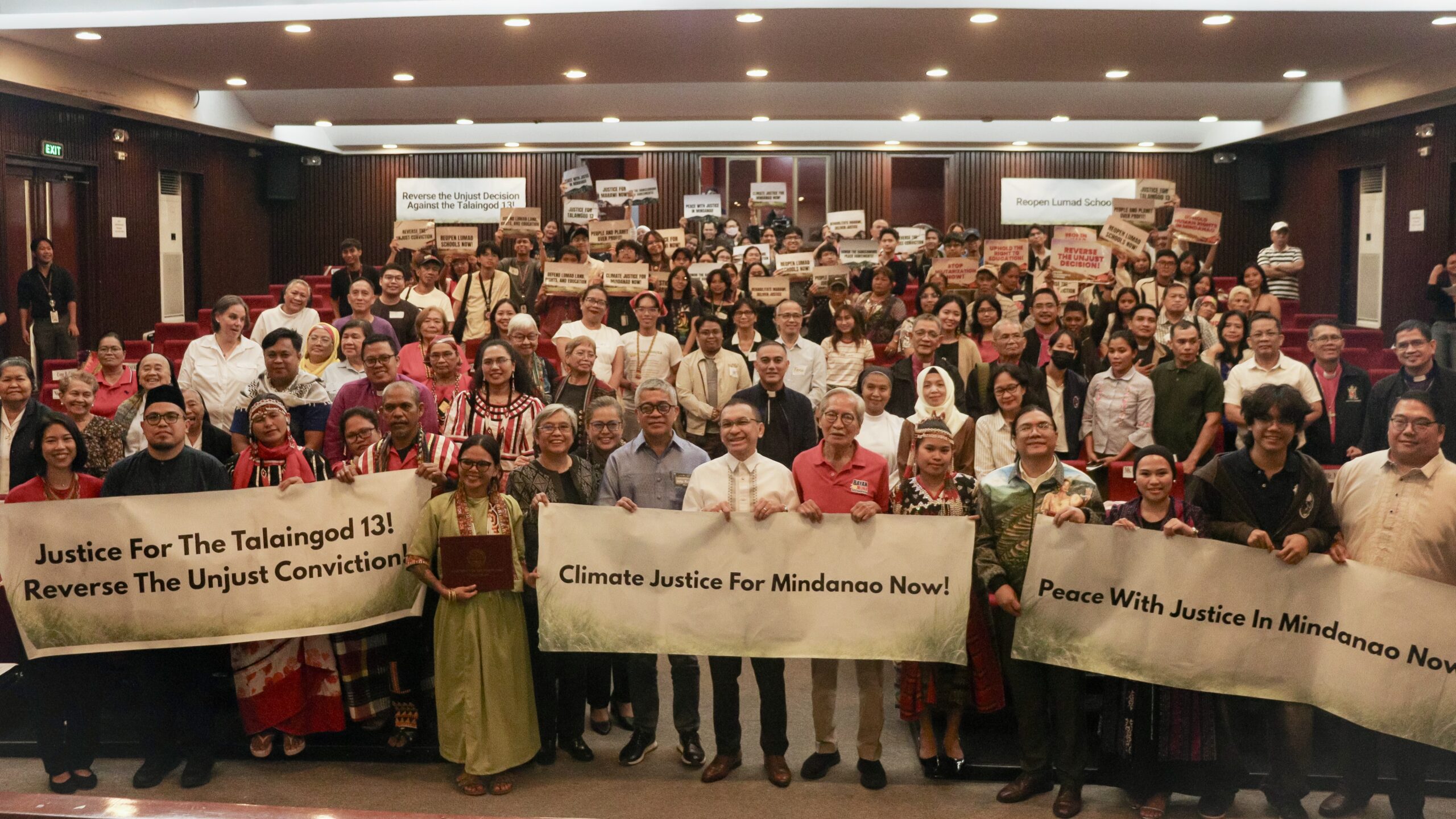
The KATUNGOD Conference 2026 brought together Lumad and Moro leaders, displaced residents, religious leaders and church workers, lawyers, educators, journalists, human rights and environmental defenders, youth organizers, and solidarity partners. Their histories and demands are distinct, but their accounts exposed a common condition: Mindanao’s land, resources, and labor generate wealth vital to the country, while many of its people remain poor, displaced, criminalized, and denied power over their future.
Mindanao is home to more than 26 million people (2020 census)—about one-fourth of the Philippine population. The Mindanao Climate Justice (MCJ) paper of April 2026, drawing on government and sectoral data, estimates that the island accounts for roughly 43 percent of national agricultural output. More than half of the country’s estimated mineral resources are also located in Mindanao, according to 2019 Mines and Geosciences Bureau data cited in the paper.
Mindanao is not poor because it lacks wealth. Poverty is produced alongside the wealth extracted from its land, labor, and natural resources. Political dynasties combine public office with control over land, businesses, contracts, and patronage. Corporations secure access through permits, concessions, and state-backed projects. National and Mindanawon elites accumulate much of the value, while communities absorb displacement, ecological destruction, low wages, and violence. Some local elites serve as political intermediaries and junior business partners of transnational corporations, helping facilitate the extraction of resources and exploitation of Mindanawon labor while much of the resulting wealth flows outside the island.
Four years into the Marcos presidency, this socioeconomic and political order remains intact. The Talaingod 13 remain convicted. Many Marawi residents remain displaced or deprived of full justice. Attacks on ancestral domains continue, while organizers and defenders still face red-tagging, surveillance, and prosecution. This is part of the national record Marcos Jr. must answer in his SONA.
Mindanao must not be reduced to the Marcos-Duterte rivalry. Beneath that contest lie historical injustices, militarization, land dispossession, and the oppression of Moro and Indigenous Peoples—conditions reproduced across administrations from the Marcos dictatorship to the present. These are the realities Marcos Jr.’s penultimate SONA must confront: the persistence of authoritarian governance, corruption, structural inequality, and subservience to foreign interests.
The Talaingod 13 brought the KATUNGOD gathering together, but their case was never only about thirteen people. It asks what remains of democracy when humanitarian action, Indigenous education, and solidarity with displaced communities can be treated as crimes.
The case arose from a November 2018 solidarity mission responding to Lumad students and teachers who, according to community witnesses, had fled their school in Talaingod, Davao del Norte, amid armed threats and insecurity. Members of the mission were convicted in July 2024 under Republic Act 7610. The Court of Appeals affirmed the conviction in November 2025, a ruling their supporters continue to challenge as the criminalization of humanitarian action.
Angelika Moral, a young Blaan woman who was among the children present, answered the allegations directly: “Hindi kami biktima ng aming mga guro. Hindi nila kami kinidnap. Hindi nila kami inabuso. Biktima kami ng karahasan. Biktima kami ng kasinungalingan.”
“We were not victims of our teachers. They did not kidnap us. They did not abuse us. We were victims of violence. We were victims of lies.”
Angelika recalled armed men threatening their school and children walking through darkness and rain while frightened and hungry. In her account, those later convicted were not their abusers but the people who came to help. Angelika’s testimony exposes the violence of red-tagging: the accounts of Indigenous children and communities are dismissed as lies, while those they identify as sources of fear and displacement are presented as their protectors. Her words compel the country to ask why security narratives are repeatedly given greater authority than the people who lived through the violence.
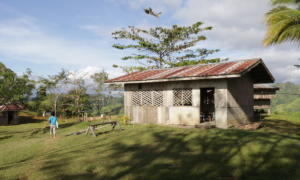
The case belongs to the broader attack on Lumad education. Church and Indigenous education advocates report that more than two hundred Lumad schools have closed or been forced to stop operating over the past decade. These community-built schools answered the state’s failure to provide accessible education and linked learning with agriculture, health, Indigenous history, environmental stewardship, and ancestral-domain rights.
For the Lumad, education cannot be separated from land. Closing a school weakens a people’s ability to transmit knowledge, defend territory, and determine development. The country celebrates Indigenous culture in festivals and tourism campaigns, yet treats Indigenous Peoples as threats when they build schools, defend ancestral domains, or reject destructive projects. They are welcomed when decorative but criminalized when self-determining.
Atty. Arvin Dexter Lopoz of the Union of Peoples’ Lawyers in Mindanao documented similar cases against Lumad educators, church workers, rural missionaries, paralegals, and rights advocates. Some charges were dismissed or ended in acquittal, but years lost to detention and prosecution cannot be restored. Even when the state loses a case, the process can become punishment. Prof. Walden Bello traced this approach to Cold War counterinsurgency and decades of Philippine-US military cooperation: demands for land and structural change are treated as security threats before their grievances are addressed.
US military involvement in Mindanao is no longer limited to counterinsurgency. Lumbia Air Base in Cagayan de Oro is a confirmed location under the Philippine-US Enhanced Defense Cooperation Agreement (EDCA) and is accessible to US forces. When American troops arrived there in March 2026, City Council Majority Floor Leader Edgar Cabanlas demanded an inquiry, saying local officials had not received sufficient information or a genuine opportunity to question the deployment. He warned that residents feared a military installation near populated communities could become a “magnet for war.” His intervention exposed the democratic deficit at the center of EDCA: decisions carrying grave national and local consequences are made before affected communities can question, examine, or oppose them.
The buildup extends beyond Lumbia. The US military is pursuing a contractor-operated depot along the Davao Gulf capable of storing up to 41 million gallons of naval and aviation fuel. At the PHIVIDEC estate in Tagoloan and Villanueva, the Philippine government is proposing a major naval base and dockyard but has not adequately disclosed whether US forces could gain access. Balikatan 2026 used Cagayan de Oro for military logistics, while the separate Marine Exercise 2026 brought US and Philippine forces near Cotabato City. Taken together, these confirmed, planned, and proposed facilities could create a network of airfield access, port capacity, fuel storage, and military interoperability usable in a regional war.
Philippine and US defense officials call these arrangements deterrence. But infrastructure prepared for conflict involving China, Taiwan, or the South China Sea could increase Mindanao’s exposure to attack and place its ports and surrounding communities on the front line of a regional war. The planned Davao Gulf depot would place fisherfolk, coastal ecosystems, workers, and surrounding communities near infrastructure intended to sustain US military operations—without clear public consent or accountability. Israel’s destruction of Gaza, sustained by US military and political support, and the US bombing campaign against Iran since February 2026 show what happens when entire populations are made to pay for geopolitical domination. Mindanao must not be transformed into a platform for another war its peoples did not choose.
Rejecting this buildup does not mean accepting China’s coercion or expansive maritime claims. Philippine sovereignty cannot be defended by subordinating the country to one great power against another. The Marcos government must disclose all military arrangements, subject them to national and local scrutiny, and pursue an independent foreign policy against domination by any foreign power.
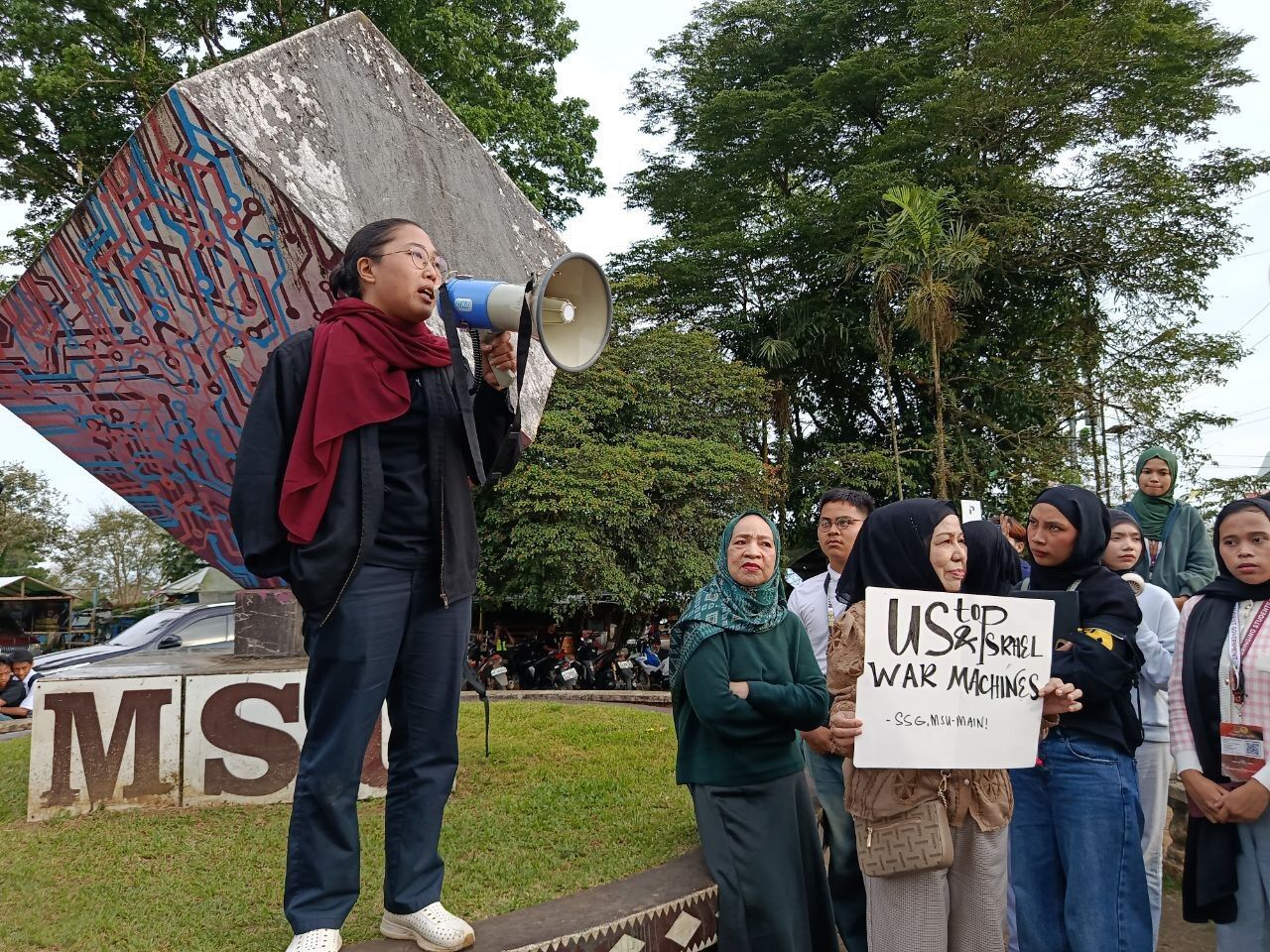
The same gap between rights on paper and power in practice shapes the Bangsamoro transition. The Bangsamoro autonomous government is an important gain won through generations of Moro resistance, war, and peace negotiations. It must be defended and strengthened. But autonomy remains incomplete if powers promised in the peace process are constrained from outside, or if regional clans capture institutions created in the Bangsamoro people’s name. The transition must also guarantee the distinct identities, ancestral domains, and political representation of non-Moro Indigenous Peoples within BARMM. Data reported by the independent peace monitor Climate Conflict Action indicate that at least 102 non-Moro Indigenous people were killed in BARMM from its establishment in 2019 through October 2025. A just autonomy must protect the collective rights—and the lives—of all peoples within its territory.
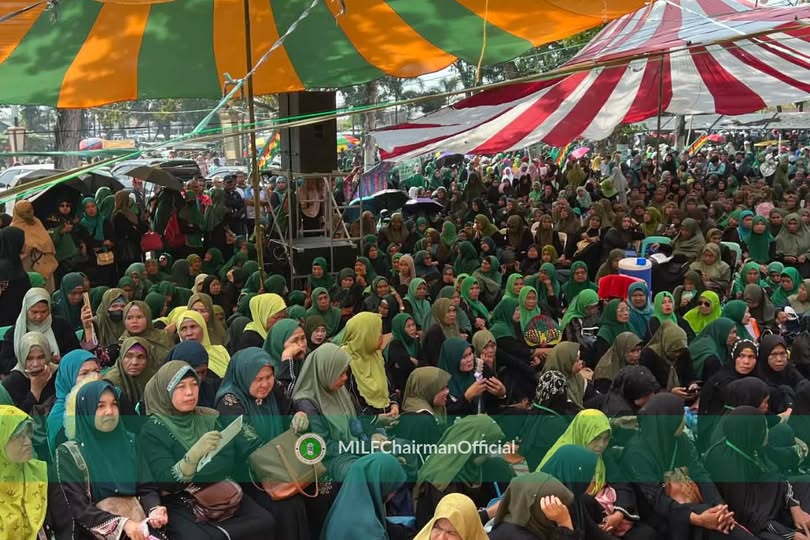
Marawi is a decisive test. Prof. Tirmizy Abdullah, himself displaced by the 2017 siege, described two sieges: the armed conflict that destroyed the city and a rehabilitation process that prolonged displacement while denying residents meaningful control over rebuilding. Nine years later, displaced Maranaos continue to demand safe return, just compensation, recognition of property claims, restored livelihoods, and accountability for civilian deaths, destroyed property, and alleged abuses during military operations. Roads, mosques, and government buildings matter, but a city has not been rehabilitated while residents remain outside their homes or excluded from decisions over their communities.
The damage is also psychological. According to 2023 Department of Health data cited by MCJ, Mindanao had only 41 psychiatrists for more than 26 million people. For young Maranaw organizer Nosairah Gasmala, her generation has inherited war, displacement, attacks on Indigenous education, and the climate crisis. Yet the youth are not merely victims of this inheritance; they are organizing to change it.

The struggle over power is equally visible in Bukidnon. Datu Rolando Anglao and Bae Rhoda Calupe described communities facing displacement despite decades spent seeking recognition of ancestral rights. While documents moved between government offices, families lost homes, harvests, schooling, livelihoods, and years of their lives. In Sitio Sinandigan, Quezon, Bukidnon, MCJ documented a 5,000-hectare watershed project being implemented within a recognized Matigsalug-Manobo ancestral domain without free, prior and informed consent, restricting traditional farming and damaging food sources. Conservation imposed without Indigenous consent can become another form of dispossession.
Moro and Indigenous Peoples are not simply poor communities asking to be included. They are peoples defending territories, identities, and systems of governance that preceded the present Republic. Their distinct histories lead directly to Mindanao’s wider land question.
MCJ estimates that around 500,000 hectares—about 12 percent of Mindanao’s agricultural land—are devoted to export-oriented plantations producing bananas, pineapples, oil palm, and other commodities for corporate and global markets. Indigenous Peoples defend collective territories, while tenant farmers, agricultural workers, and poor settlers confront land monopoly, insecure tenure, low wages, and contractual work. Their histories and rights differ, but those who work the land rarely control it or receive the wealth it creates.
Recognizing the historical dispossession of Moro and Indigenous Peoples does not exclude ordinary settlers from the struggle. It requires an honest reckoning with colonization and state-sponsored settlement while building unity among peoples and sectors constrained by landlessness, exploitation, and dynastic rule.
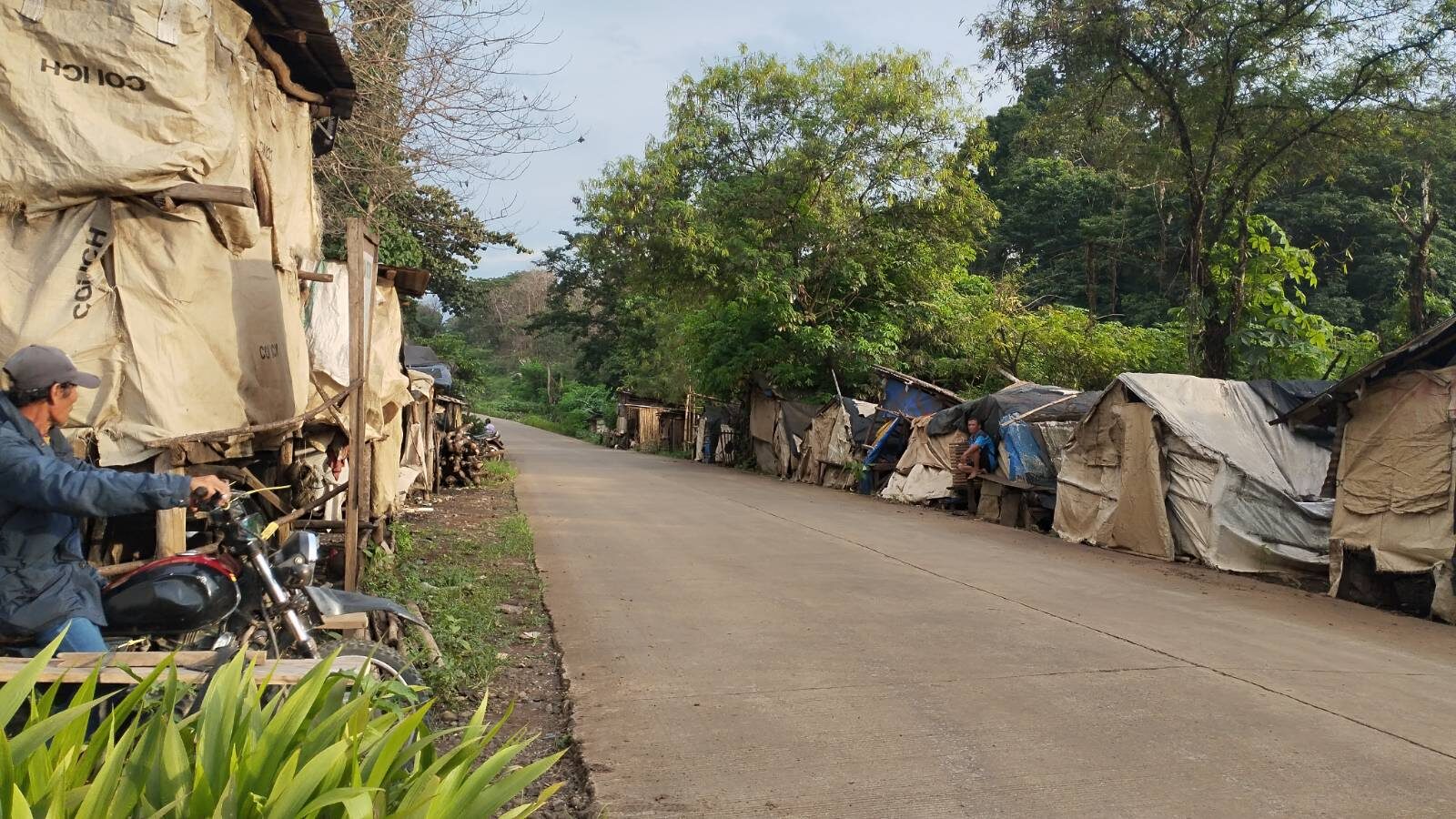
Siargao reveals another face of dispossession. Maria Lalaine Tokong described an island that was home before it became an international tourism brand. Tourism created jobs, but rising land prices, private construction, and restricted access to shorelines and fishing grounds have weakened the power of residents and fisherfolk to shape the island’s future. Land, coastlines, culture, and community life are increasingly treated as commodities by those with greater capital and political access.
Siargao also connects a local struggle over land and community control to the wider demand for accountability over Palestine. Residents have protested the growing presence of Israeli visitors, including persons reportedly serving in or recently discharged from the Israeli military amid Israel’s war on Gaza and the mass killing and displacement of Palestinian civilians. The Marcos government must explain what screening and accountability measures apply to current or former foreign military personnel entering or staying in the Philippines amid credible allegations of grave abuses. Responsibility must be established individually and through evidence; nationality or religion alone is never proof of guilt. This is not collective blame against Jewish people or all Israelis. It is opposition to Zionist militarism and a demand to protect Siargaonons, enforce domestic law, and investigate any individual against whom credible evidence of involvement in war crimes exists.
The Tampakan copper-gold project exposes the same contest over land and power in a different industry. Its supporters invoke investment, jobs, exports, and minerals needed for electrification. Blaan leaders and affected communities, however, warn of threats to ancestral land, water, agriculture, and future generations. A mine does not become just because its output is described as green. A transition that destroys ancestral territories to supply wealthier economies is not climate justice; it is the old system of extraction presented in new language.
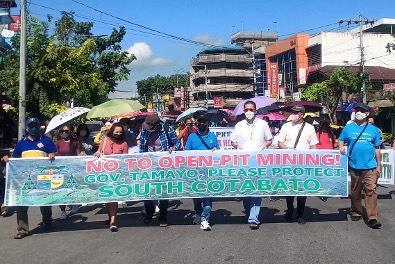
Siargao and Tampakan ask the same fundamental questions posed by former Bayan Muna representative Carlos “Kaloi” Zarate: development for whom, decided by whom, and at whose expense? The wealth is counted in national and global financial centers. The costs are endured by local communities.
Mindanao’s people need genuine land redistribution and secure livelihoods, decent work, public services, accessible energy, and climate-resilient infrastructure. Communities must possess real power to approve, reject, or reshape projects affecting their land. This is urgent because hazards do not strike an equal society: their impacts are shaped by poverty, unsafe housing, inadequate public services, and unequal political power. In 2025, 23 tropical cyclones entered the Philippine Area of Responsibility, while government disaster reports recorded more than 20 million instances of people being affected by cyclones and related weather events nationwide. Earthquakes are not caused by climate change, but seismic and climate-related disasters expose many of the same failures in land use, infrastructure, public services, preparedness, and recovery.
That failure is now visible in Sarangani. The magnitude 7.8 earthquake of June 8, 2026, followed by continuing aftershocks, affected more than 1.65 million people. By July 20, nearly 95,000 remained displaced and 121,362 houses had been damaged, including 19,193 destroyed, according to DSWD. These are families whose rights to shelter, livelihood, education, health care, and safe return depend on whether rehabilitation is treated as a public obligation rather than another occasion for delay, patronage, and contractor profit.

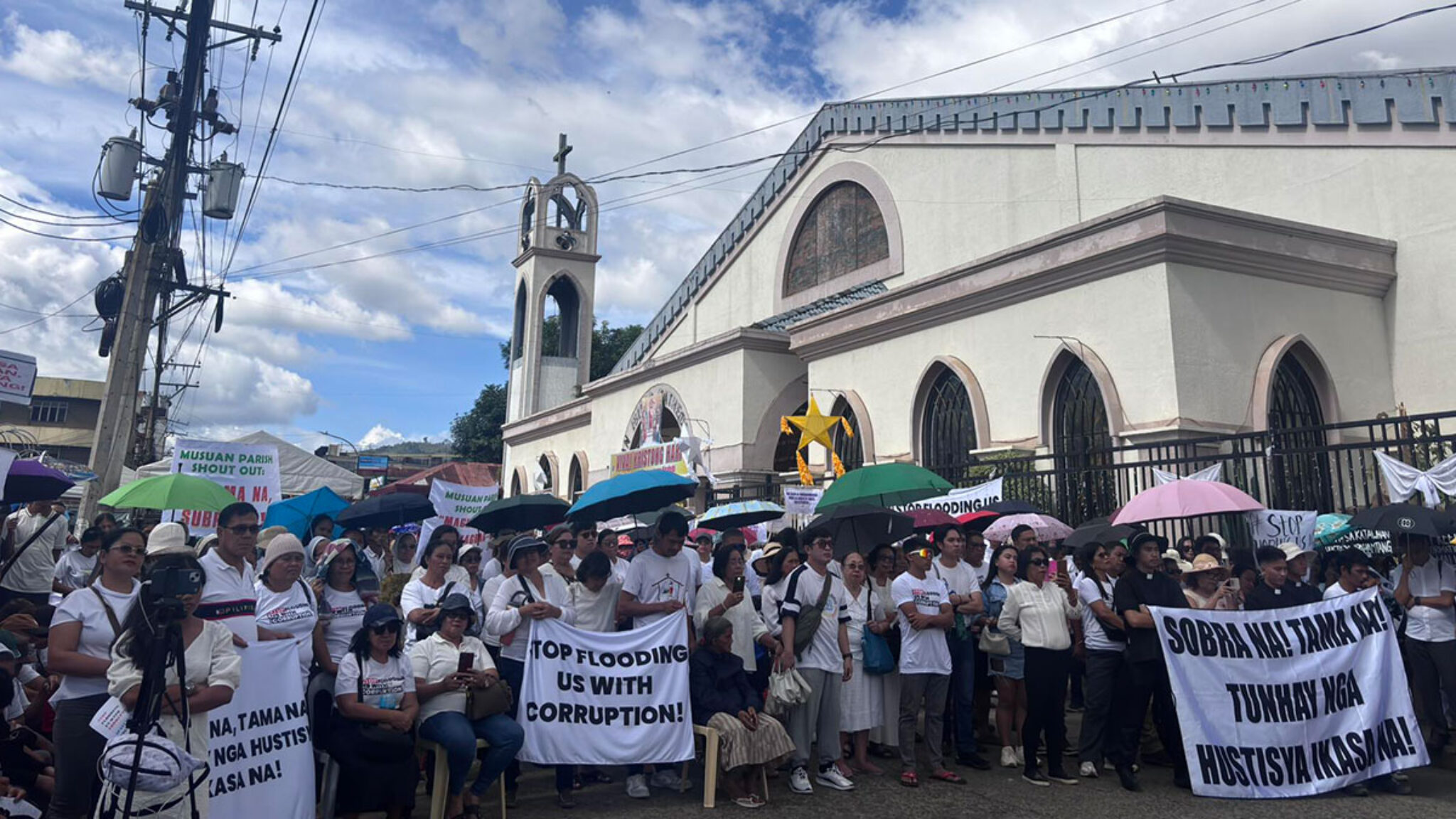
The government has delivered relief, emergency cash, tents, medical and psychosocial assistance, and funds for affected local governments. These measures are necessary, but emergency aid is not rehabilitation. As of July 20, publicly available national government announcements reviewed by MCJ had yet to set out a consolidated, time-bound plan specifying permanent housing, livelihood restoration, reconstruction of schools and health facilities, community consultation, funding, and public accountability. Mindanao has already seen in Marawi how temporary displacement can be prolonged for nearly a decade by an inadequate and unaccountable rehabilitation process. Sarangani must not be subjected to the same prolonged abandonment. The same demand applies to flood-control, disaster-mitigation, and rehabilitation funds across Mindanao: corruption determines who is protected, who recovers, and who remains displaced.
Political dynasties cannot be separated from this land and resource economy. They survive not only through inherited surnames but through control of employment, public assistance, contracts, security, and access to government. Mags Maglana therefore challenged the national habit of treating Mindanao as a constituency deliverable by one family. There is no single “Mindanao vote.” Geography does not erase peoplehood, class, history, or political conviction.
As 2028 approaches, Mindanao is again being treated as an electoral prize in the Marcos-Duterte conflict. Accountability for killings and grave abuses under Rodrigo Duterte is necessary. But justice for Duterte-era crimes cannot be used to rehabilitate Marcos or conceal abuses continuing under his administration.
Duterte harnessed legitimate anger at crime, poverty, and weak institutions to build support for punishment and authoritarian rule. Marcos projects a calmer institutional image, but he has retained the NTF-ELCAC while red-tagging, terrorism-financing cases, and attacks on organizers continue. Marcos cannot call Duterte’s abuses a closed chapter while preserving the machinery that enabled them. Opposition to Marcos, in turn, cannot require silence about the drug war, attacks on Lumad communities, and repression under Duterte. Mindanawons must not be reduced to reserve forces for one ruling family against another.
Ordinary people in Luzon and the Visayas are not Mindanao’s adversaries. Powerful Mindanawon dynasties, landlords, corporations, and political brokers also reproduce and profit from the system that concentrates land, wealth, and political power in the hands of a few. They exploit regional divisions to conceal the shared roots of poverty, dispossession, labor exploitation, and state repression. Across the country, people seek secure land and livelihoods, democratic rights, peace, accountable government, and power over their future. Their histories, identities, and immediate struggles are not identical, and principled unity does not require these differences to be erased. It requires democratic movements to act together against their common oppressors while defending Moro and Indigenous self-determination, workers’ and farmers’ interests, environmental justice, and people’s control over land, resources, institutions, and development.
Marcos’s SONA must therefore be judged not by projects announced or investments pledged, but by whether people can return to their land and homes, educate their children, defend their rights without criminalization, and share in the wealth they create. The answer is not another dynasty, another campaign of militarization, or another development program imposed from above. It requires organized communities, a redistribution of land and democratic control over public resources, and democratic power built from below.
KATUNGOD’s immediate demands begin with overturning the unjust conviction of the Talaingod 13, protecting Indigenous education and ancestral domains, ending red-tagging and the criminalization of solidarity, and holding those responsible for displacement and violence accountable. They must be joined by safe return and just rehabilitation for Marawi and Sarangani, protection of communities from destructive projects, and full public scrutiny of foreign military facilities and operations.
For generations, the country’s economic and political powers have demanded what Mindanao can provide: food, minerals, energy, labor, and votes. KATUNGOD asserts what its peoples have long struggled to exercise: their rights to land, justice, peace, self-determination, and the power to shape their future. Mindanao’s crises are not isolated failures. They are produced by an order that draws wealth and political power from the island while denying its peoples control over land, resources, institutions, and genuine development.
Mindanao is not a problem at the edge of the nation. It is one of the centers of the struggle to transform the nation itself.