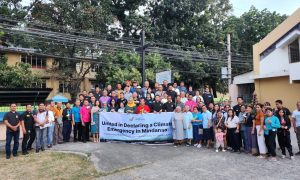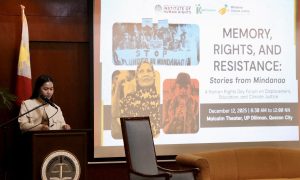
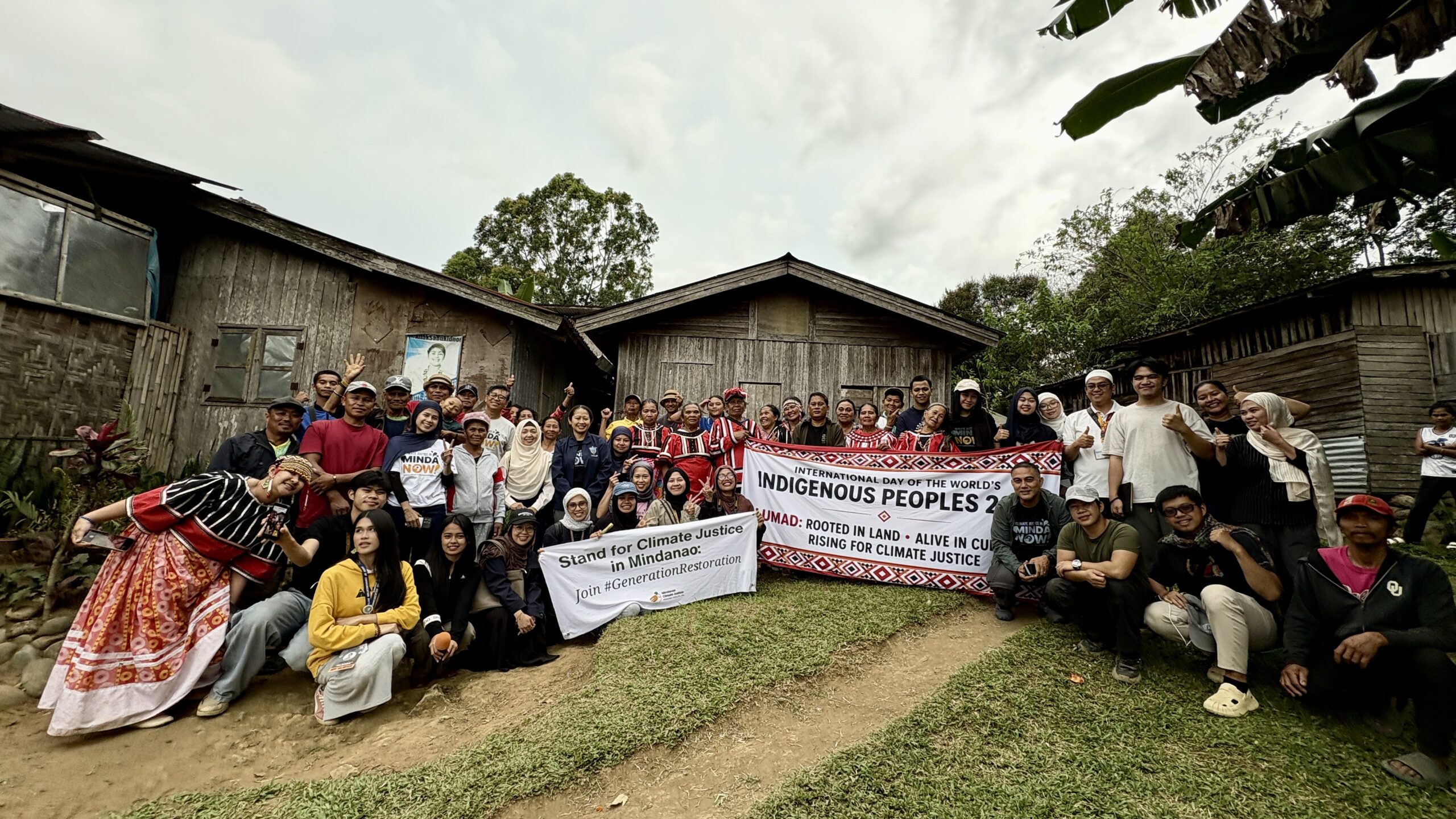
More than 100 participants gathered in Sitio Gabonan to celebrate Talaandig culture, strengthen community rights and health, and bring public attention to families’ accounts of losing access to farms they say they have cultivated for generations.
By Mindanao Climate Justice
Talakag, Bukidnon, Philippines | 17 August 2026
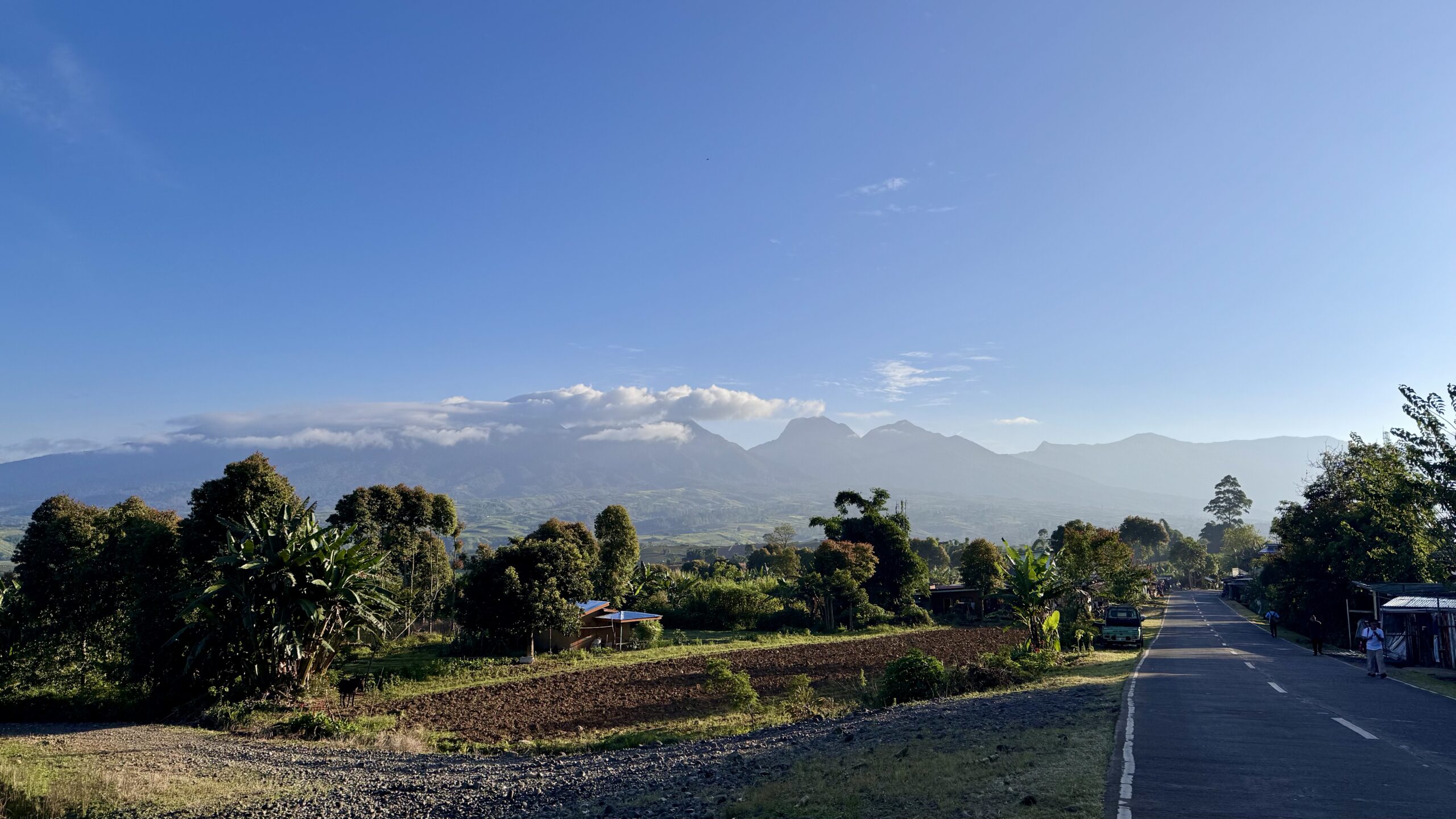
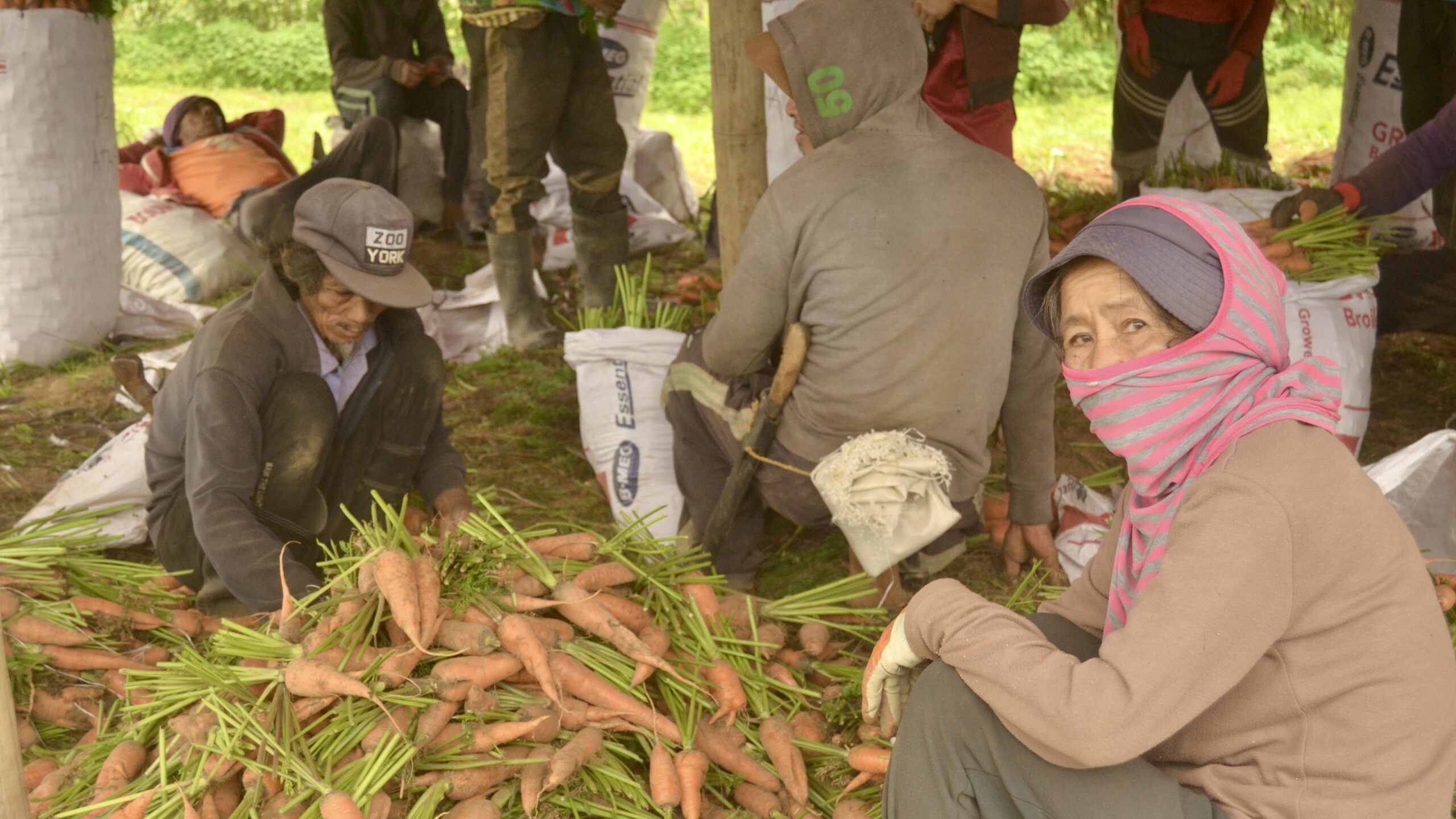
Under a temporary shelter in the highlands of Bukidnon, freshly harvested potatoes were piled high on the earth. Farmers sorted and packed the crop into sacks while, nearby, carrots were cleaned and bundled for market. Beyond the shelters, rows of vegetables stretched across the slopes toward the mountain ranges framing the Talaandig highlands.
This landscape helps feed Northern Mindanao.
Barangay Miarayon is at the heart of Talakag’s highland vegetable-producing area, and the municipality is widely recognized as one of the region’s vegetable baskets. Farmers cultivate carrots, white potatoes, cabbage, broccoli, cauliflower, lettuce, coffee, and other high-value crops across a potential production area of around 11,000 hectares.
Sitio Gabonan is a smaller Talaandig community in neighboring Barangay Lapok. Together with Miarayon and other highland communities, it forms part of a wider agricultural and cultural landscape sustained by generations of Talaandig farming, knowledge, and relationships with the land.
Behind the abundance of the harvest are farmers carrying the costs of seeds and other farm inputs while confronting unstable buying prices and uncertainty over agricultural land. Their crops sustain families and supply regional markets, yet farmers shoulder much of the risk.
For some Talaandig families, that insecurity has become a struggle to return to farmland they say they and their relatives cultivated for generations. In interviews with Mindanao Climate Justice (MCJ), community members described armed intimidation, the entry of heavy machinery, damage to standing crops, criminal proceedings, and years of efforts to regain secure access to their livelihoods.
A court record shared with MCJ confirms that grave-coercion proceedings involving members of the community and other parties were filed during this period, while other aspects of the families’ accounts remain based on community testimony and records still being gathered.
It was against this backdrop that more than 100 participants gathered in Sitio Gabonan on 17 August to commemorate the
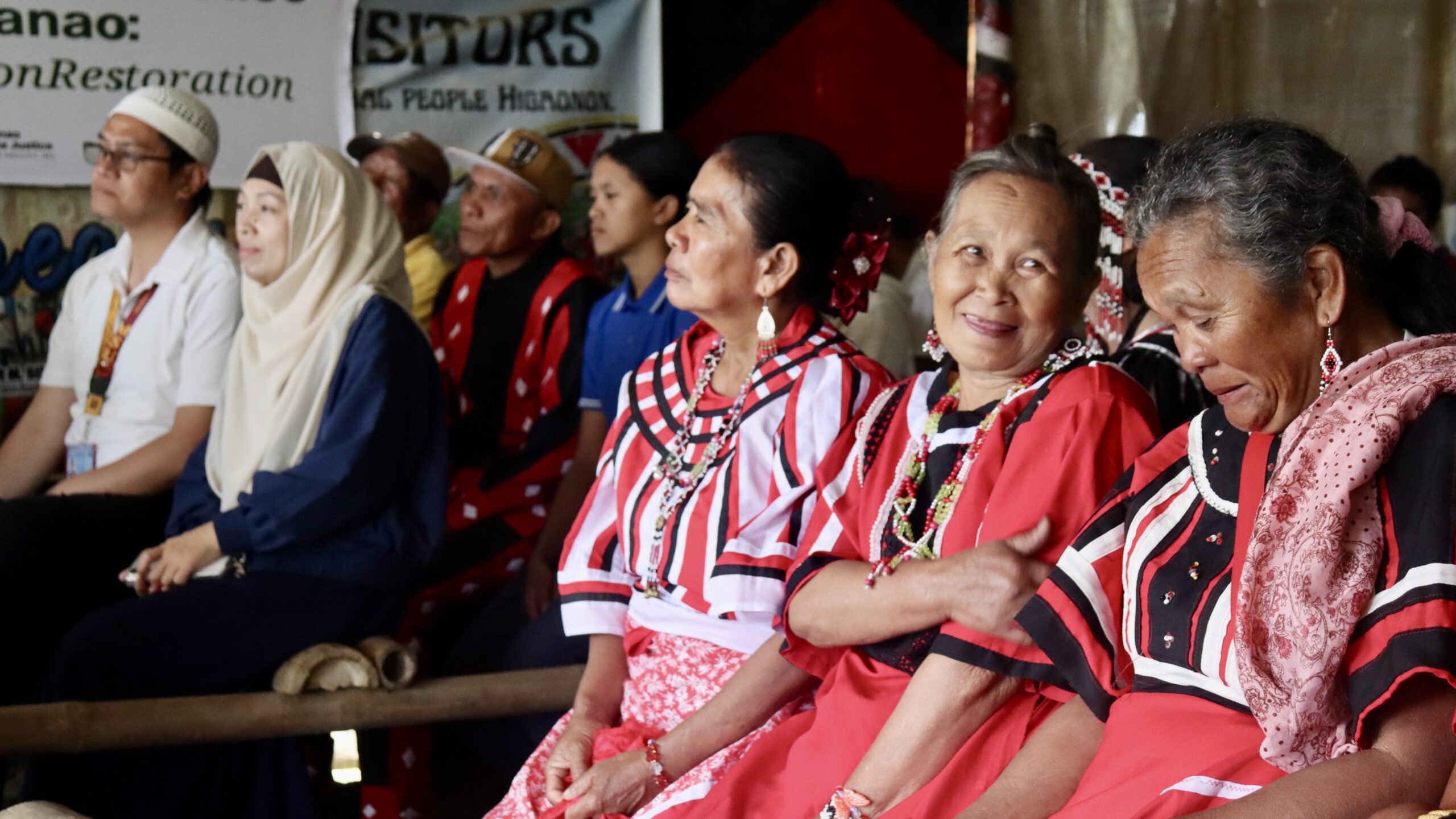
Led and attended primarily by Talaandig elders, women, farmers, and youth, the gathering also brought together Moro youth, church workers, students, educators, lawyers, health professionals, volunteers, and solidarity partners. Under the local theme “Lumad: Rooted in Land, Alive in Culture, Rising for Climate Justice,” participants shared in cultural and spiritual practices, community legal education, health services, farm immersion, and conversations about land, livelihood, and Indigenous self-determination.
The gathering connected the global observance of IDWIP with the lived realities of the Talaandig community: the relationship between ancestral land and livelihood, the continuity of culture and knowledge, access to health and justice, and the ability of Indigenous Peoples to shape decisions affecting their territories and future.
The Gabonan gathering formed part of MCJ and PANAAD Network’s wider 2026 IDWIP initiatives across Bukidnon, Metro Manila, Surigao del Norte, and Sarangani, undertaken with Indigenous communities and church, youth, academic, legal, health, and local partners.
People of the Slopes
Approximately 60 percent of the Philippines’ Indigenous Peoples live in Mindanao, according to the United Nations Development Programme. They belong to distinct peoples, each with its own name, language, history, customary institutions, culture, and ancestral territory.
Lumad, commonly understood as “native” or “born of the earth,” is a collective identity used by many Indigenous Peoples of Mindanao. It does not refer to a single tribe. The Bukidnon gathering was rooted specifically in the identity, leadership, and lived realities of the Talaandig people.
Talaandig cultural accounts commonly associate the name with andig, or “slope,” reflecting the community’s relationship with Bukidnon’s highland landscapes. The Talaandig are therefore often described as the people of the slopes. Talaandig communities are found across the highlands associated with the Kitanglad and Kalatungan mountain ranges, including communities in Talakag such as Miarayon.
The Mount Kitanglad and Mount Kalatungan ranges are ecologically and culturally significant landscapes and vital watersheds for Bukidnon and neighboring areas. Their montane and mossy forests sustain threatened and endemic species as well as Indigenous communities whose cultures, spirituality, and livelihoods are inseparable from the land. Together, the ranges are included on the Philippines’ UNESCO World Heritage Tentative List as the Kitanglad and Kalatungan Mountain Ranges: Sacred Sites of Bukidnon.
In this landscape, a struggle over ancestral land reaches beyond a question of property. It concerns food, water, livelihood, cultural survival, and the right of Indigenous Peoples to participate meaningfully in decisions about the territories on which their communities depend.
Safeguarding Life and Well-being
Every 9 August, the world observes the International Day of the World’s Indigenous Peoples. The 2026 theme, “Honouring Indigenous Midwives: Safeguarding Life and Well-being,” recognizes Indigenous midwives as knowledge holders whose systems of care connect health, culture, spirituality, land, and intergenerational well-being.
The 2026 theme speaks to a wider Indigenous understanding of care: safeguarding life and well-being is inseparable from land, food, health, culture, and the transmission of knowledge across generations. In the Talaandig context, these relationships are visible in farming and food production, the work of women and other knowledge holders, community care, and the responsibility to sustain ancestral territory for generations to come.
This is also where Indigenous rights and climate justice meet. Protecting life means protecting the conditions that allow communities to flourish—the land that produces food, the watersheds and forests that sustain ecosystems, the knowledge passed between generations, and the ability of Indigenous Peoples to make decisions about their territories and futures.
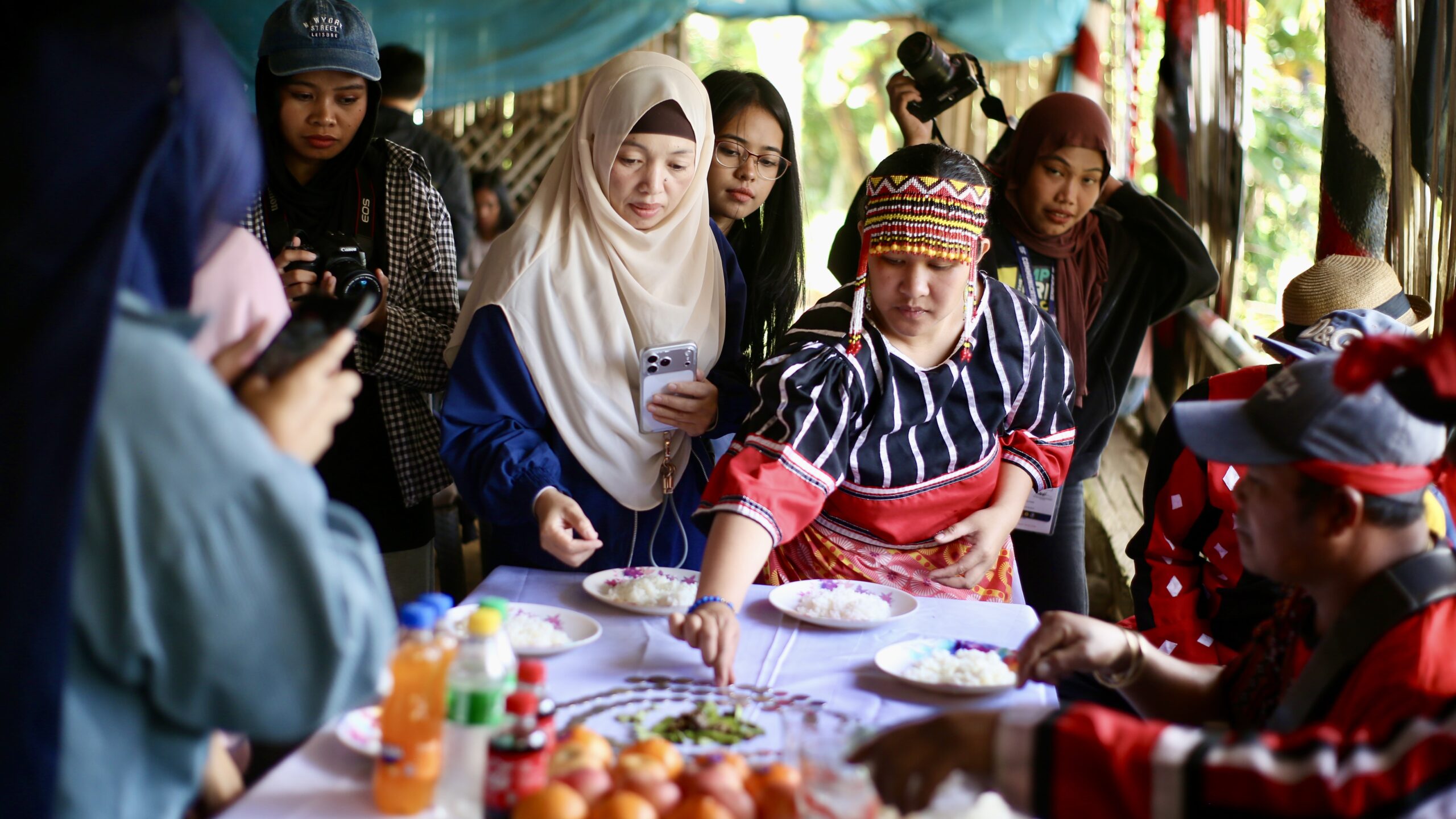
Before the formal program began, Talaandig elders led a traditional ritual to welcome the gathering and seek guidance and protection in accordance with the community’s cultural and spiritual practices. Through chants, prayers, and customary offerings, the gathering was first grounded in Talaandig tradition and in the community’s relationship with land, ancestors, and the spiritual world.
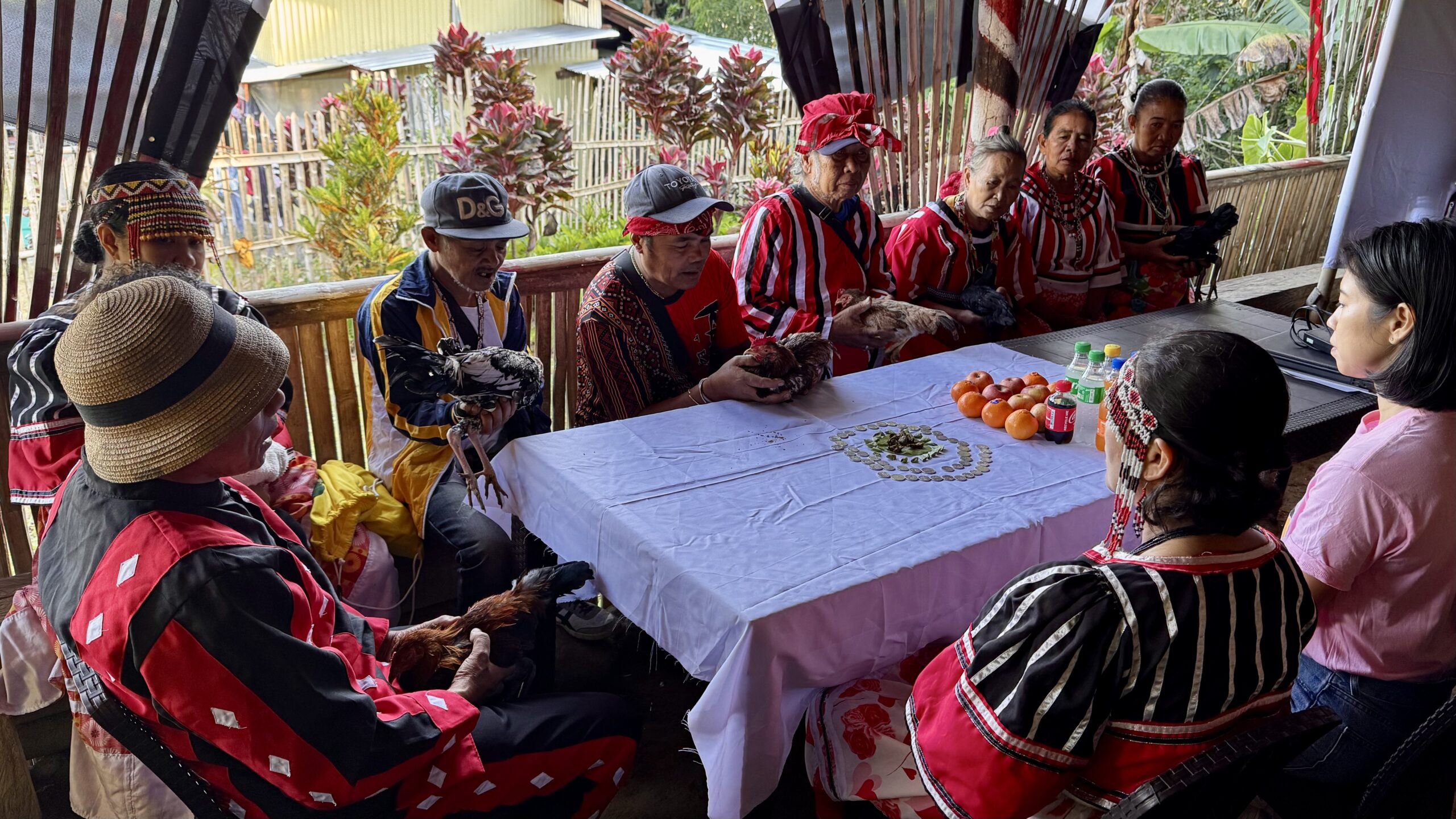
The formal program then opened with an interfaith prayer, reflecting the diversity of those who had come to accompany the community. A Talaandig woman leader offered an Indigenous prayer, followed by a Muslim prayer led by a Moro youth participant. The interfaith opening recognized the presence of guests and solidarity partners, including students and young people from Marawi, and created a shared space of respect across different faiths, cultures, and communities.
From prayer and welcome, the gathering turned to the everyday realities of Talaandig life. Community leaders and farmers spoke about what it means to sustain their families through agriculture, the difficulties they now face, and their hopes for their children and ancestral land. Their stories connected the day’s celebration of culture with the material conditions that allow culture and community life to continue.
One Talaandig woman leader spoke directly about the struggle of families to sustain themselves through farming:
“Nangita mig kinabuhi para maka-survive.”
We look for ways to sustain our lives—to survive.
Her words brought the gathering back to a central truth: for the families in Gabonan, land, food, work, health, culture, and the future of their children are deeply connected. Ancestral land is not merely a commodity or source of income. It is part of a living homeland—a source of livelihood, identity, memory, spirituality, and continuity.
Fr. Arturo “Art” Paraiso of the Indigenous Peoples Apostolate–Diocese of Malaybalay and PANAAD Network discussed Miarayon’s historical and cultural importance. Drawing from local oral history, he spoke about the Talaandig people’s enduring relationship with the area and reflected on the Bukidnon hymn.
Fr. John Lester O. Tajon, SJ, parish priest of Miarayon, emphasized that Indigenous Peoples must be recognized throughout the year—not remembered only during commemorations. He summarized the aspiration in three phrases:
Mailhan ang IPs. Respected. Celebrated.
To be known and recognized. To be respected. To have Talaandig identity, culture, and heritage celebrated—and meaningfully considered in decisions affecting the community’s land, rights, and future.
A Recognized Ancestral Domain—and Questions Still Unresolved
The Talaandig ancestral domain in Talakag is covered by Certificate of Ancestral Domain Title No. R-10-TAL-0703-0010.
A Certificate of Ancestral Domain Title, or CADT, formally recognizes the rights of possession and ownership of Indigenous Cultural Communities/Indigenous Peoples over their ancestral domains. Under the Indigenous Peoples’ Rights Act of 1997 (IPRA), ancestral-domain rights are rooted in the recognition of Native Title and Indigenous Peoples’ pre-existing rights to their ancestral territories.
In its 2015 decision in Unduran v. Aberasturi, the Philippine Supreme Court recorded that the Talaandig CADT covers 11,105.5657 hectares in Talakag. The Court stated that the CADT was issued on 25 July 2003 and formally awarded on 30 October 2003.
The property involved in Unduran was a separate 105.7361-hectare area involving different parties. The case does not establish the facts of the present Gabonan–Patag conflict. It is relevant because it confirms the existence and extent of the Talaandig CADT and shows that questions involving competing claims within the wider ancestral domain have a longer history.
Formal recognition of the ancestral domain, however, has not ended questions over land tenure on the ground. A 2018 Philippine Daily Inquirer report on MILALITTRA—the Miarayon, Lapok, Lirongan and Tinaytayan Tribal Association—reported that registration of the CADT with the land-registration system remained pending at the time. The report also documented community concerns over land transactions and the entry of migrants and private interests within the ancestral domain.
The current registration status of the CADT with the Registry of Deeds and Land Registration Authority still needs to be clarified through the relevant government records.
It is against this wider history that eight Talaandig residents shared with MCJ their experiences of a more recent conflict affecting agricultural areas they call Gabonan or Patag, in Barangay Lapok.
Community members described approximately 73 hectares as the broader area affected. One resident said her household had cultivated approximately five hectares within an area divided among several families. For those interviewed, these were not simply parcels of land: they were farms from which families drew food, income, farm capital, and resources for their children’s education and other household needs.
The exact boundaries of the approximately 73-hectare area still need to be clarified. Community-led mapping, together with the CADT technical description, official survey and parcel maps, land records, and relevant court documents, can help establish how the Gabonan–Patag area described by residents relates to the wider Talaandig ancestral domain.
At the heart of the community’s struggle are therefore two questions that remain unanswered: Does the Gabonan–Patag area described by affected families fall within the ancestral domain recognized under the Talaandig CADT? And what is the documentary basis of the competing claims over the land?
For the affected families, answering these questions is not simply a matter of settling boundaries on a map. It is central to determining whether they can safely regain access to farmland on which their families have depended and exercise the ancestral-domain rights already recognized under Philippine law.
“They Told the Families to Leave”
For several Talaandig families in Gabonan, 15 January 2021 marked a turning point in their struggle over the land.
A Talaandig woman leader recalled armed individuals entering an agricultural area and telling families to leave, saying that the land belonged to a businessman. With children present and fearing that resistance could lead to violence, she said the families chose to leave rather than put their children at greater risk.
Another resident described the same period as the beginning of their displacement. Families also recounted the entry of heavy machinery and the destruction of carrots, corn, bananas, and other crops they depended on for food, farm capital, school expenses, and everyday household needs.
The families also sought legal remedies. A Notice of Hearing dated 17 November 2022, shared with MCJ as part of the community’s records, identifies Gerry Martin Tamsi and other persons as accused in four grave-coercion cases before the 1st Municipal Circuit Trial Court of Talakag–Baungon–Malitbog. The cases, People of the Philippines v. Gerry Martin Tamsi, et al., Criminal Case Nos. 22-06-3847 to 22-06-3850, had scheduled trial dates extending from 2023 to 2025.
The document confirms the existence of these criminal proceedings, but it does not by itself establish guilt or resolve the underlying dispute over the land.
For the families, however, the struggle is larger than a court docket. Years after they say they lost access to their farms, fundamental questions remain unresolved: What is the basis of the competing claim over the Gabonan–Patag area? How does this land relate to the Talaandig ancestral domain recognized under their CADT? And what remedies are available to families seeking to return safely to the land and rebuild their livelihoods?
When Access to Land Is Lost, Livelihoods Unravel
For the Talaandig families who shared their experiences with MCJ, losing access to farmland meant losing much more than a piece of property. Farming had provided food, income for everyday household needs, resources for their children’s education, and capital for the next planting season.
Several families described periods when they had no productive land to cultivate and had to find other ways to survive.
A younger Talaandig resident recalled that his family went for several months without land to farm until a relative offered them a smaller parcel to cultivate. Another farmer said that before the displacement, a successful harvest could bring around ₱100,000 in gross proceeds over roughly four months, with about half remaining after financing and production costs. After losing access to the farm, he said he sometimes relied on agricultural labor earning around ₱200 a day.
Other families described borrowing or renting land, entering financing arrangements to continue planting, selling livestock to meet household needs, or working as daily-paid agricultural laborers on other people’s farms.
These figures reflect the experiences of individual households and should not be taken as income estimates for the entire community. But the experiences shared across the interviews point to the same reality: access to productive land was central to how these families sustained themselves, and losing that access brought significant economic hardship.
The effects reached into nearly every part of family life. Parents repeatedly spoke about keeping their children in school, putting food on the table, finding enough capital to plant again, and rebuilding the livelihood that had allowed them to support their families through their own labor.
In a municipality known for producing vegetables for markets across Northern Mindanao, some Talaandig farmers now find themselves cultivating borrowed or rented land—or working for daily wages on other people’s farms—while the questions surrounding the land they previously cultivated remain unresolved.
Intimidation and the Long Burden of Seeking Redress
The loss of livelihood has unfolded alongside another burden. Community members described years marked by fear, legal proceedings, repeated hearings, and uncertainty over when—or whether—the conflict would be resolved.
One Talaandig resident recalled a shooting incident in April 2022 in or near an area where members of his family were located. He said no one in his family was physically injured and that the incident was reported to authorities. He also described later facing criminal proceedings that he associated with the wider conflict.
Records concerning the reported shooting and the complete history of those proceedings still need to be obtained. Until then, these details remain the resident’s account of what happened.
Other residents described community members being arrested or detained during the wider conflict. Several also recalled being included in persona non grata declarations, which they experienced as intimidation and as making them fearful of organizing, moving freely, or continuing to assert their concerns over the land.
The relevant resolutions and other official records are still needed to clarify who was covered by these declarations, what they stated, and what actions, if any, were taken under them.
For affected families, seeking redress has itself carried a cost. Interviewees spoke of repeated journeys to court, transportation and legal expenses, days taken away from farming, and years of waiting for cases to move forward.
A November 2022 Notice of Hearing shared with MCJ shows how long at least one set of proceedings was expected to run. The four grave-coercion cases involving Gerry Martin Tamsi and other accused persons had trial dates scheduled from February 2023 through March 2025. The notice does not show that every scheduled hearing actually took place, and the complete court records are still needed to establish what has happened in the cases since then.
Behind those dates are families who say they have spent years trying to protect their livelihoods and seek remedies while living with uncertainty over the land.
For the community, access to justice cannot be measured only by whether cases have been filed. The deeper question is whether the institutions and processes available to them can lead to meaningful protection of their rights, safety, livelihood, and relationship with their ancestral land.
Knowing the Law as a Shield and a Voice
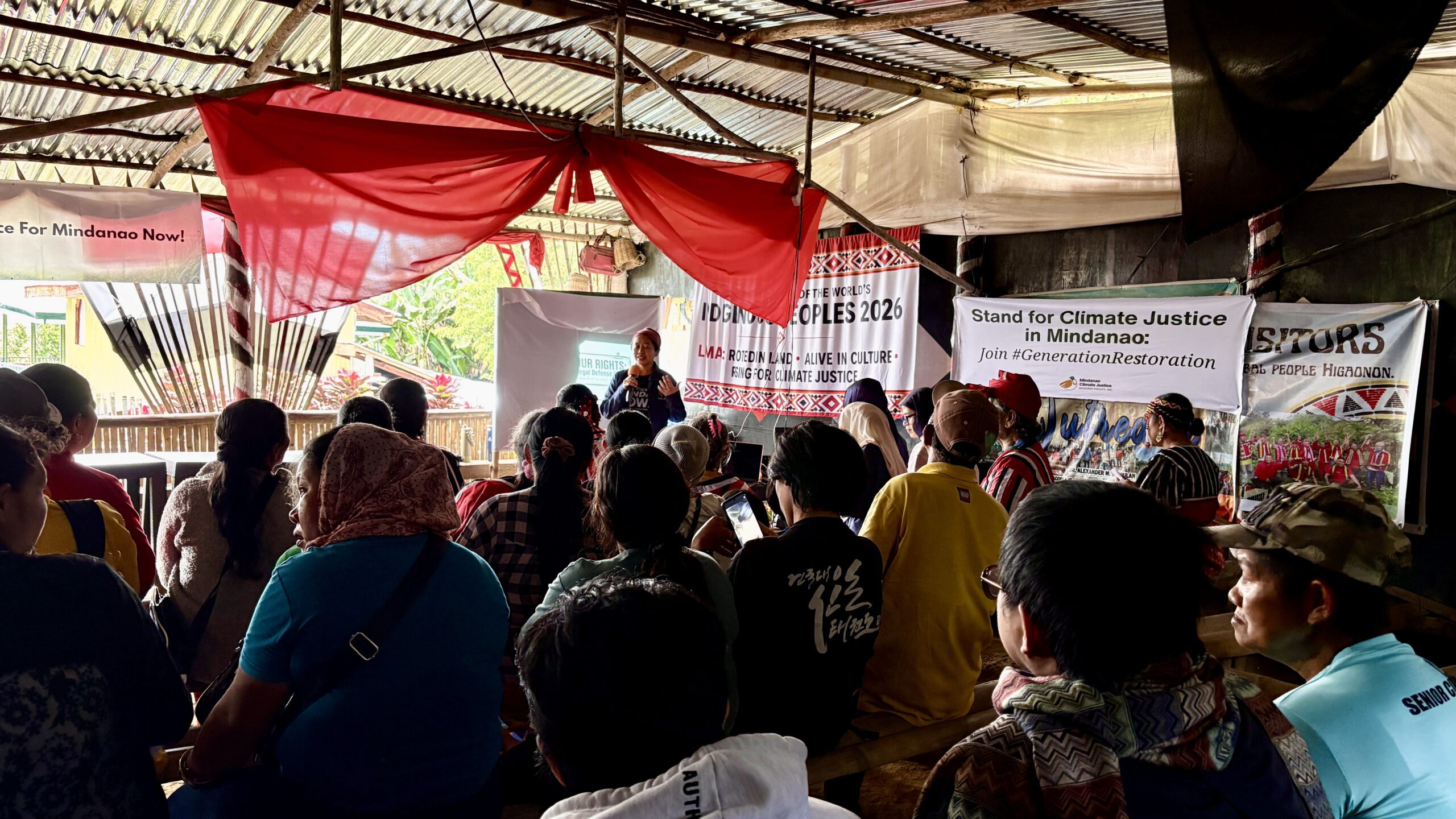
Against the backdrop of the community’s continuing land concerns, Atty. Angelisa L. Razo facilitated the community legal education session, “Know Your Rights.”
The discussion brought the law closer to situations community members may actually encounter. It covered ancestral domain and native title, Free, Prior and Informed Consent, the rights of Indigenous women and children, customary processes, and the respective roles of the NCIP and the courts. Atty. Razo also discussed practical ways of protecting one’s rights during searches, arrests, questioning, and other encounters with authorities.
Three reminders stood out:
Stay calm. Ask, rather than argue. Do not sign a document you do not understand.
When safe and lawful, community members were encouraged to record names, dates, places, witnesses, and documents presented; keep copies of important records; ask for explanations before signing anything; and seek assistance from trusted Indigenous leaders, lawyers, church workers, and human-rights organizations.
For families who have spent years navigating land disputes and legal proceedings, knowing their rights is not an abstract exercise. It can help them make informed decisions, protect themselves and one another, preserve important records, and participate more confidently in processes that directly affect their land and future.
One morning of legal education cannot resolve a conflict that has developed over years. But it can be part of something longer: sustained legal accompaniment that strengthens the community’s own capacity to understand the law, protect itself against abuse, assert its rights, and decide what steps it wants to take.
Health, Food, and Climate Justice
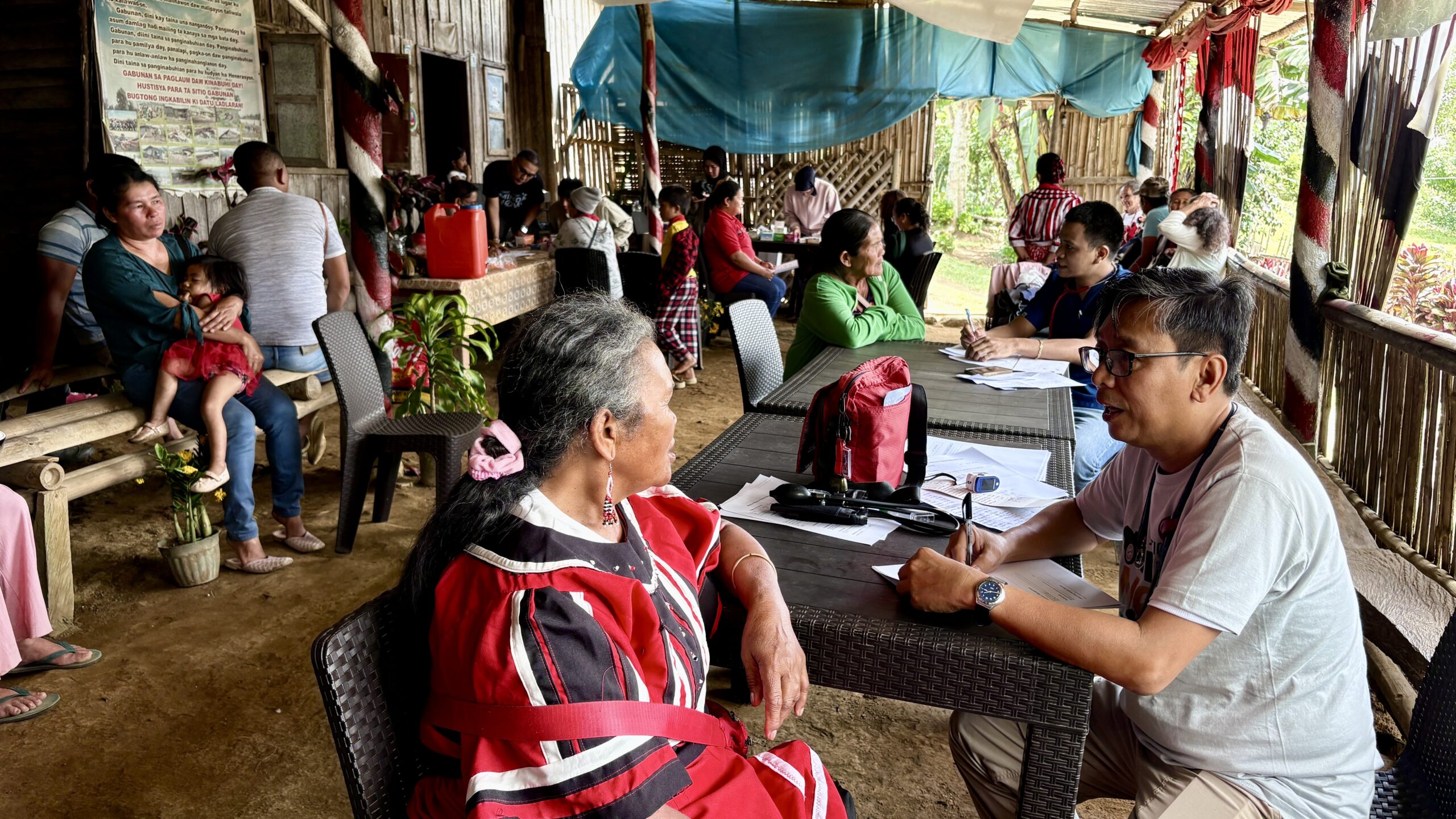
Alongside the legal education, volunteer health professionals provided basic consultations, health assessments, blood-pressure checks, and available medicines to community members.
Health, livelihood, and land are closely connected. When a farming household loses access to productive land, when a harvest fails, or when vegetable prices fall below what farmers need to recover their costs, the consequences reach the food a family can put on the table, the medicines it can afford, and the education and care it can provide.
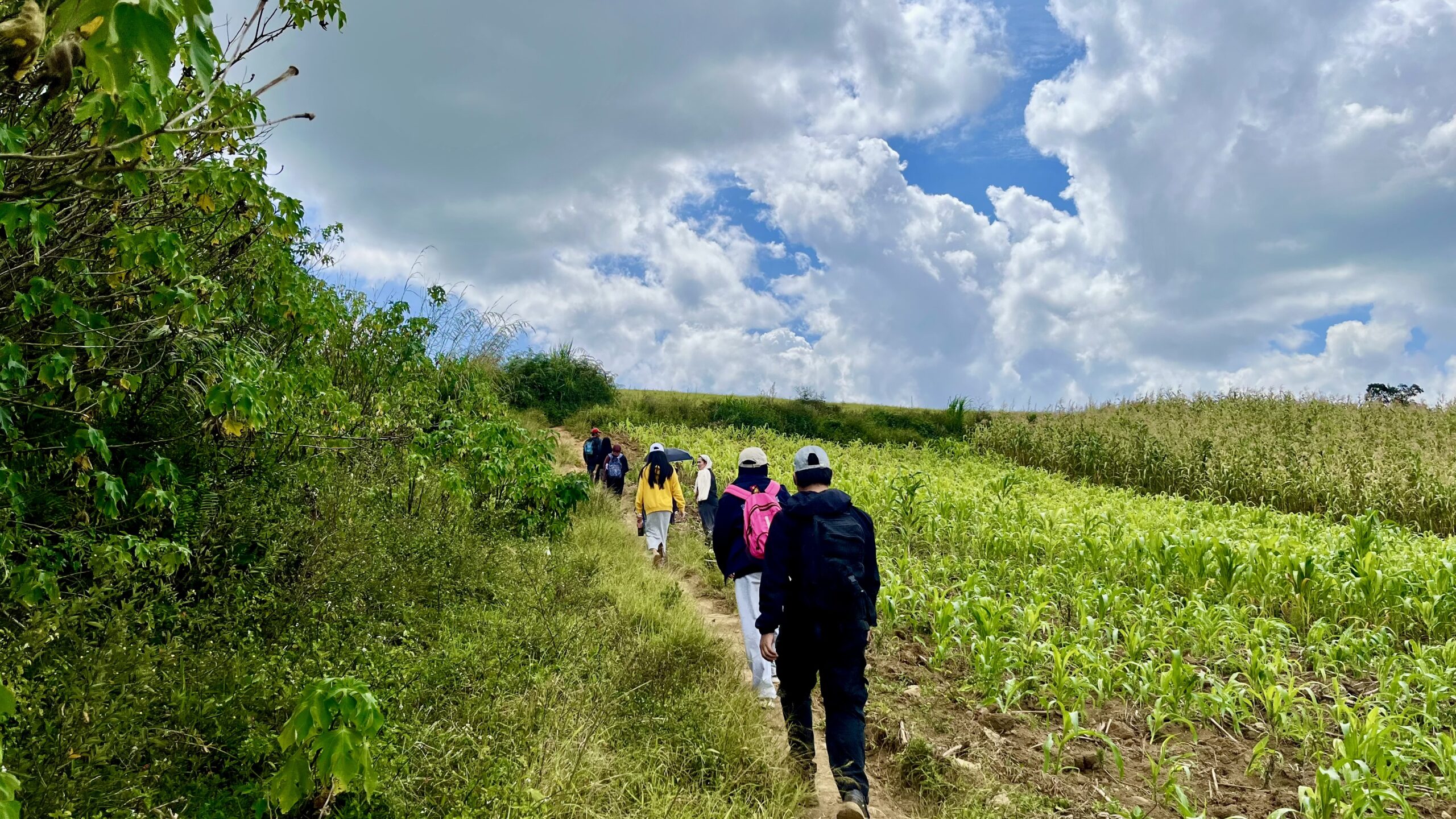
The connection became visible during visits to farms in Gabonan and Sitio San Abil. Participants saw the work behind potatoes, carrots, cabbage, coffee, broccoli, corn, bananas, root crops, and other produce cultivated in the highlands.
Under temporary shelters, farmers harvested, cleaned, sorted, bundled, and packed vegetables for market. Women carried essential roles throughout this work—not only in planting and harvesting, but also in sorting and packing produce, preparing food, caring for families, exercising cultural leadership, and sustaining community life.
Conversations with farmers also brought attention to the pressures surrounding highland agriculture: the cost of farm inputs, changing soil conditions and weather, uncertain harvests, and the economic risks farmers carry from planting until their produce reaches the market.
These realities connect directly to the larger landscape. The communities visited during the gathering are part of a wider highland landscape shaped by the Kitanglad and Kalatungan watersheds, where Indigenous tenure, food production, forests, water, biodiversity, and climate resilience cannot easily be separated.
This is why climate justice in Bukidnon cannot be understood only through forests, watersheds, or carbon. It must also ask who has secure access to land, who produces the food, who carries the risks of farming, whose knowledge sustains the landscape, and whether the people caring for and cultivating these territories can themselves live with dignity.
For the Talaandig, protecting land is inseparable from protecting life.
Listening, Representation, and Moro–Lumad Solidarity
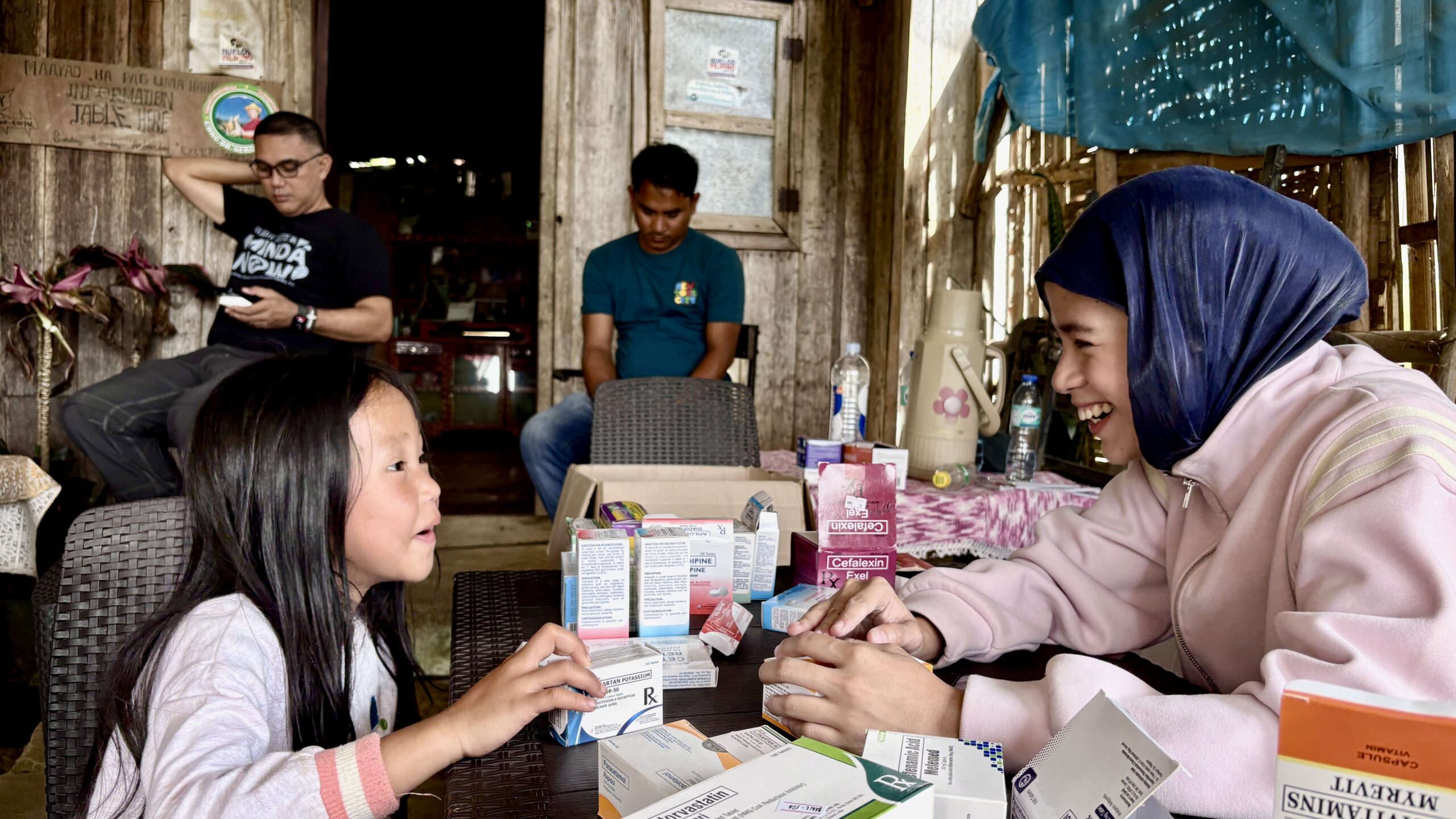
The gathering also created space for students, educators, communicators, and solidarity partners to reflect on what it means to accompany an Indigenous community—and how its stories should be carried into public life.
A media educator participating in the gathering emphasized the responsibility to understand, respect, and create space for Indigenous voices. Documentation should help communities make their experiences visible without taking ownership of their stories or exposing people to unnecessary risk.
That principle mattered throughout the immersion. Students and youth were not there simply to collect stories. They were being asked to listen: to understand the community on its own terms, respect cultural protocols, and recognize that solidarity begins with the agency and leadership of the people being accompanied.
For the Moro youth who travelled from Marawi and other communities to join the gathering, the encounter also created space for Moro–Lumad solidarity.
Their presence carried particular meaning. Talaandig and Moro peoples have distinct histories, cultures, faith traditions, ancestral territories, and political experiences. Solidarity does not require those differences to disappear. It asks people to encounter one another with respect and to recognize struggles for dignity, land, peace, and self-determination across those differences.
Culture made that encounter tangible. It was present in prayer and ritual, language and attire, customary leadership, food, stories, relationships, and the cultural presentations shared by Talaandig and Moro participants during the closing program.
For young participants, the immersion offered a responsibility beyond the two days in Bukidnon: to carry what they had learned into their schools, professions, organizations, and communities without speaking over the Talaandig people whose experiences they had been invited to witness.
From Commemoration to Accountability
The concerns raised in Gabonan cannot be resolved through one gathering.
Legal education, health services, cultural exchange, and solidarity are meaningful when they become part of longer-term accompaniment. For the Talaandig families who shared their experiences, the questions surrounding land, livelihood, safety, and access to justice remain after the visitors have gone home.
The next steps must begin with the community itself. Talaandig leaders and affected families should be supported in clarifying the boundaries and status of the land they are seeking to regain access to, preserving the records and testimonies they consider important, understanding the cases that affect them, and deciding what legal and community actions they want to pursue.
This will require sustained legal accompaniment, community-led mapping and documentation, and engagement with the NCIP and other institutions responsible for ancestral-domain rights and land administration. It must also include livelihood, health, and organizational support for families living with the consequences of losing secure access to farmland.
The responsibility does not rest with the community alone. Government institutions and other parties concerned must provide clear and substantive responses on the status and boundaries of the ancestral domain, the basis of competing claims over the Gabonan–Patag area, the status of cases arising from the conflict, and the remedies available to affected families.
Any further action must respect the community’s decisions, customary processes, informed consent, priorities, and security. Support should strengthen—not substitute for—Talaandig leadership.
For MCJ, accompaniment means remaining present beyond the commemoration: connecting the community with trusted legal, health, church, youth, and other partners; helping open pathways to institutions that have responsibilities toward the community; supporting livelihood and well-being; and standing with Talaandig-led efforts to protect their rights and determine their own future.
The gathering ended, but the work continues in the farms, homes, and community spaces of Gabonan.
The potato harvest beneath the temporary shelter tells the larger story. From the land comes food. Behind the food is labor. Behind that labor are families, histories, knowledge, and a people’s continuing relationship with ancestral territory.
Respecting that relationship is a shared responsibility—not only of public institutions and solidarity movements, but of everyone who depends on the food, water, forests, and ecological systems sustained by Indigenous territories.
The land is life. Culture is living strength. There can be no climate justice without Indigenous self-determination.
Duyog ta. Makighiusa ta.
Let us accompany one another. Let us stand together.
Editorial Note on Testimony, Consent, Safety, and Verification
This article draws from conversations with eight Talaandig community members, the August 2026 gathering in Gabonan, field observations and documentation, and legal and public records consulted in preparing the story.
The experiences of affected families are central to this account. Because the community continues to face a land dispute involving allegations of intimidation, violence, and legal proceedings, MCJ has taken precautions in identifying community members. Full names are generally withheld in connection with sensitive testimony, even where individuals agreed to be interviewed, unless naming them serves a clear purpose, has been consented to, and is considered safe.
Where events remain disputed or documentation is incomplete, community accounts are presented as testimony. Available records are used to provide context and establish the specific facts they document.
Among the documents consulted is a November 2022 Notice of Hearing in People of the Philippines v. Gerry Martin Tamsi, et al., Criminal Case Nos. 22-06-3847 to 22-06-3850, for grave coercion. The document establishes the existence of the proceedings and identifies Gerry Martin Tamsi among the accused. It does not determine guilt or establish the final outcome of the cases. The presumption of innocence applies.
The article also cites the Supreme Court’s 2015 decision in Unduran v. Aberasturi for legal and historical context concerning the Talaandig CADT. That case involved a separate property and different parties and is not presented as proof of the present Gabonan–Patag conflict.
MCJ’s documentation and public communication are guided by Talaandig leadership, informed consent, community safety, confidentiality, accuracy, fairness, and do-no-harm principles. Information that could unnecessarily expose affected families or compromise their security is withheld from publication.
Substantive responses, corrections, and relevant records may be submitted to MCJ. Material information will be reviewed and, where appropriate, reflected in subsequent updates.
Sources and References
Supreme Court of the Philippines. Unduran et al. v. Aberasturi et al., G.R. No. 181284, 20 October 2015.
Read the decision on Lawphil
Republic of the Philippines. Republic Act No. 8371, Indigenous Peoples’ Rights Act of 1997.
Read Republic Act No. 8371
Philippine Daily Inquirer. “IPs Seek to Make the Most of Their Land,” 28 January 2018.
Read the Inquirer report
MindaNews. “Bukidnon’s Vegetable-Farming Capital Is in Trouble,” November 2021.
Read the MindaNews report
United Nations. “International Day of the World’s Indigenous Peoples.”
United Nations IDWIP page
United Nations Development Programme Philippines. “I-LEAD: Indigenous Women and Girls Transforming Communities in Mindanao.”
UNDP Philippines source
Philippine Information Agency / Department of Agriculture–10. “P14-M Regional Food Terminal Opens in Bukidnon,” 29 October 2021.
UNESCO World Heritage Centre. “Kitanglad and Kalatungan Mountain Ranges: Sacred Sites of Bukidnon.”
View the UNESCO Tentative List entry
Court Record Reviewed
1st Municipal Circuit Trial Court, Talakag–Baungon–Malitbog, 10th Judicial Region. People of the Philippines v. Gerry Martin Tamsi, et al., Criminal Case Nos. 22-06-3847, 22-06-3848, 22-06-3849 and 22-06-3850. Notice of Hearing (For Trial), 17 November 2022. Community-provided copy reviewed by Mindanao Climate Justice.
MCJ Community Documentation
Mindanao Climate Justice. Interviews with eight Talaandig community members concerning land, livelihood, displacement, legal proceedings, and community conditions in the Gabonan–Patag area, 2026. Unpublished field documentation. Identifying information withheld where necessary for community safety.
Mindanao Climate Justice. Field documentation from the IDWIP 2026 gathering in Sitio Gabonan on 17 August 2026 and related community and farm visits in Talakag, Bukidnon, 17–18 August 2026.